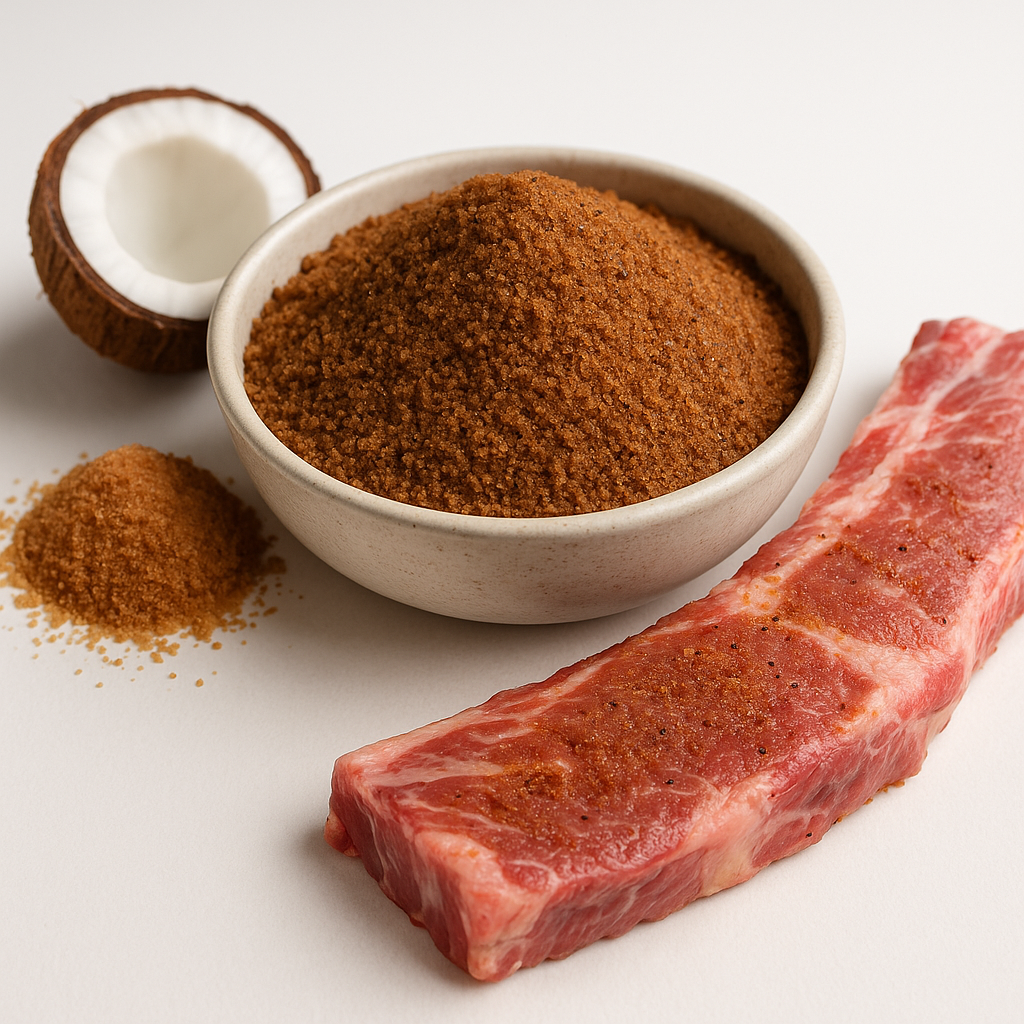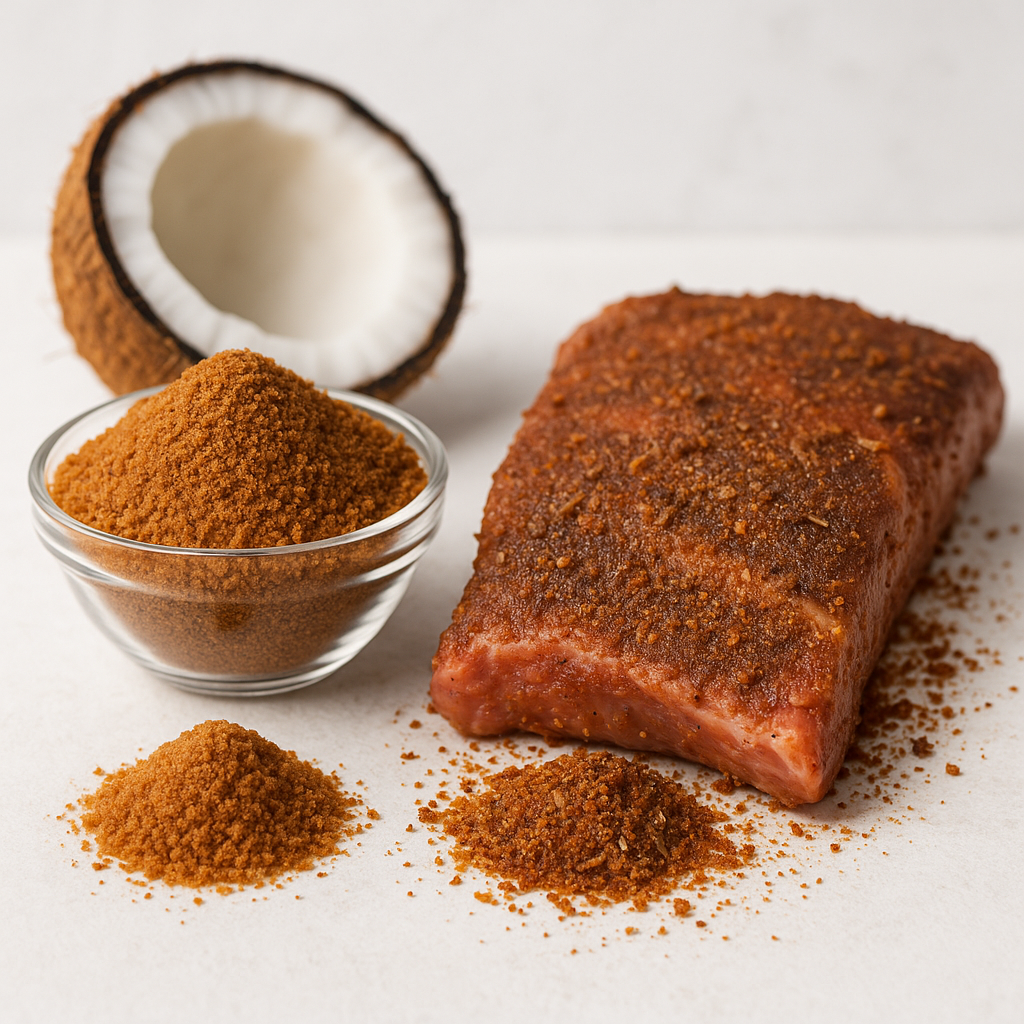
Most people switching to natural sweeteners don’t expect coconut sugar to behave so differently under pressure – especially in dry rubs and cures. The low glycemic index and rich flavor are the draw, but moisture is the real challenge: Using Coconut Sugar in Dry Rubs and Curing introduces hygroscopicity issues that pull water from the air like a sponge. Great for baked goods, less great for a dry rub that needs to stay free-flowing.
That deep, caramelized crust on a brisket is the goal, so why does the rub clump after two days in the pantry? Moisture – and coconut sugar feeds it. Every time the jar opens, humidity sneaks in, which means serious moisture control is needed. A straight 1:1 swap with white sugar and walking away doesn’t work here.
This isn’t just about taste – shelf stability is the real battle. The mix might taste earthy and complex, but if it’s caked solid by January, it’s useless. Even small amounts of coconut sugar contribute meaningfully to moisture retention.
Using Coconut Sugar in Dry Rubs and Curing is still entirely doable – just not without a strategy. Anti-caking agents, airtight storage, maybe blending with drier sugars, all help. Get it right, and the rub gains real depth without losing function.
The real deal on that moisture problem
Pulling out a spice jar to season the brisket and finding it’s clumped into a solid lump isn’t a mistake – it’s just what coconut sugar does. It pulls moisture from the air like a sponge, and that hygroscopic nature can turn a carefully blended rub into a sticky mess before it even touches the meat.
Why your dry rub keeps turning into a rock
A dry rub hardening isn’t a failure of technique – it’s chemistry. Coconut sugar acts as a natural humectant, grabbing ambient moisture and binding with salt and spices until the mix hardens like concrete. It’s not expired; it’s just doing exactly what coconut sugar does.
Understanding water activity in coconut sugar explains why this happens and why it predicts mold and yeast risk better than moisture percentage alone.
What happens when the humidity hits your smoker
Humidity sneaks into a smoker easily, and on a thick-air day, that beautiful crust can turn into a gummy layer that won’t crisp no matter how long it smokes.
It doesn’t take a monsoon – just a muggy afternoon. Once moisture-laden air circulates around the meat, the coconut sugar in the rub dissolves slightly, dragging salt and spices with it and creating streaks instead of an even crust. Managing this means controlling humidity, tightening up storage, or rethinking when the rub goes on – some pitmasters apply it just before searing rather than at the start, since once the sugar gets wet, it’s a losing fight against physics rather than flavor. The glass transition temperature of coconut sugar is the real reason it cakes in humid climates. It’s not a dead end, just a detour that calls for smarter timing and tighter conditions.
My take on the “clump factor” in curing
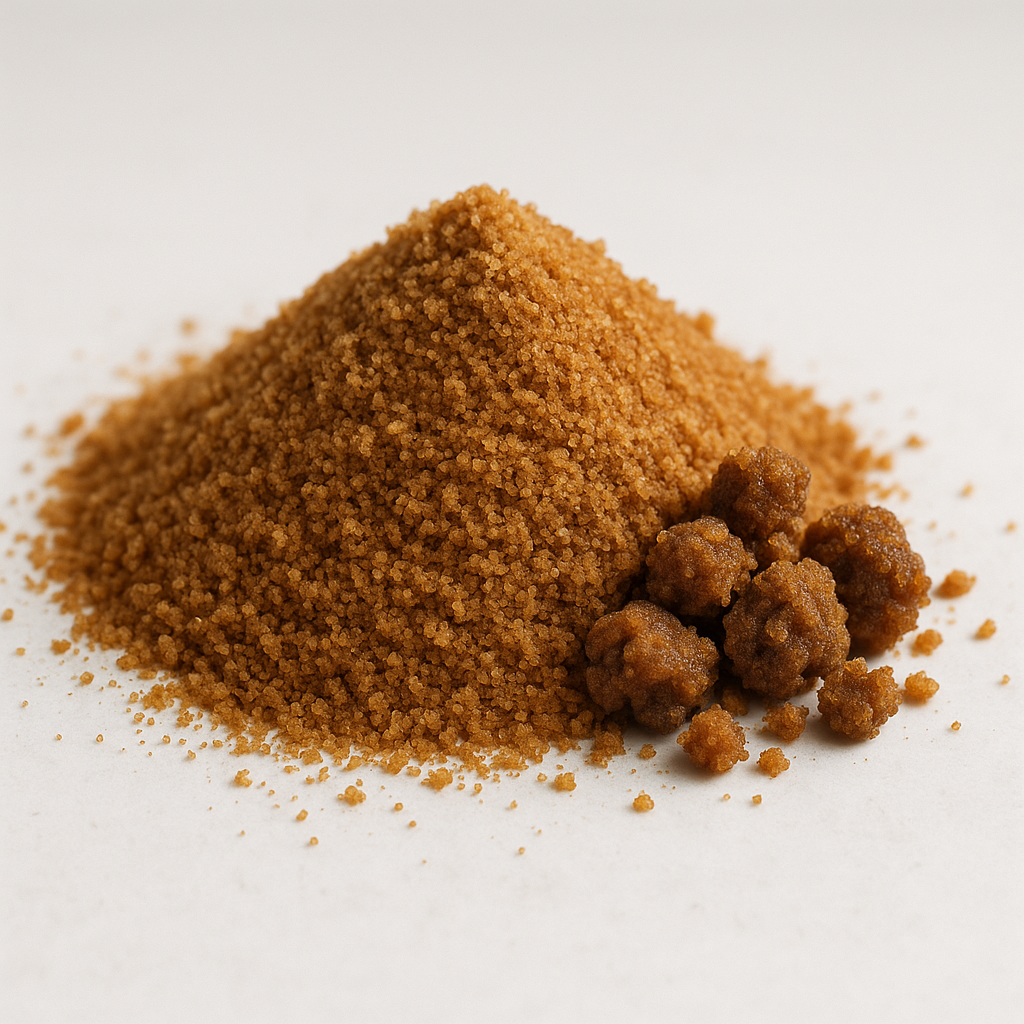
Coconut sugar pulls moisture like a magnet, and that’s the core issue with Using Coconut Sugar in Dry Rubs and Curing. Clumps form fast, especially in humid kitchens – that’s not spoilage, just hygroscopic behavior in action. Since clumping disrupts how evenly salt and sugar coat the meat, mixing small batches and applying them immediately tends to work better.
Seriously, don’t let it sit out too long
Humidity hits coconut sugar hard – within 20 minutes, it can go from free-flowing to sticky clumps. Timing matters here: leaving the mix exposed sabotages both texture and distribution, so keeping it covered until the moment it’s needed makes a real difference.
Dealing with the sticky mess on your pork belly
A tacky film on pork belly is a classic sign of coconut sugar doing its thing – some stickiness upfront is chemistry, not a mistake. Pressing the rub on firmly and letting it set works fine; the surface dries in time even if it feels gummy at first.
Because coconut sugar dissolves and re-crystallizes with moisture, that sticky layer is temporary and actually forms a barrier that helps seal in flavor during the early cure phase. Too much moisture with poor airflow can invite spoilage, though, so using a wire rack and allowing space around the meat keeps the curing environment stable. This is as much about safety and consistency as it is about texture – the extra attention is worth it for the flavor it adds, as long as airflow isn’t skipped.
Mixing it up the right way
Using Coconut Sugar in Dry Rubs and Curing is less about tossing ingredients together and more about engineering flavor and texture. Mixing dry components thoroughly before introducing anything even slightly moist matters, because coconut sugar’s hygroscopicity means it starts pulling water from other ingredients the moment it gets the chance. Blending it with salt, pepper, and spices first – while everything’s still powdery and free-flowing – gets it evenly distributed before that happens.
Here’s my trick for keeping things dry
A small food-safe desiccant packet – the kind that comes in supplement bottles – tucked into the spice jar helps absorb ambient humidity inside the container. It sounds unconventional, but it works, as long as it’s sealed well enough not to mix into the rub itself. Simple, low-tech, and surprisingly effective.
Why you might need a little cornstarch
Coconut sugar can clump quickly, especially in humid kitchens, and a small amount of cornstarch helps break up those sticky clusters. It acts as a buffer – it doesn’t change the flavor, but it keeps the rub pourable and even over time.
Even half a teaspoon of cornstarch per cup of rub makes a noticeable difference. It’s not about absorbing water like a sponge – it’s about creating tiny physical barriers between sugar particles. Without it, a rub can start looking like wet sand by day three; with it, the mix stays fluffy and ready to stick to meat. Overdoing it dulls the spices, but the right amount buys days of shelf-stable flavor – managing this chemistry is as much a part of the process as the seasoning itself. Granulation and mesh size in coconut sugar also affect flowability and dissolution rates worth considering.
Keeping your stash fresh
How long a homemade blend lasts comes down to storage, and when Using Coconut Sugar in Dry Rubs and Curing, moisture is enemy number one. Airtight containers in a cool, dark place are non-negotiable given its hygroscopic nature.
The best way to store your custom rubs
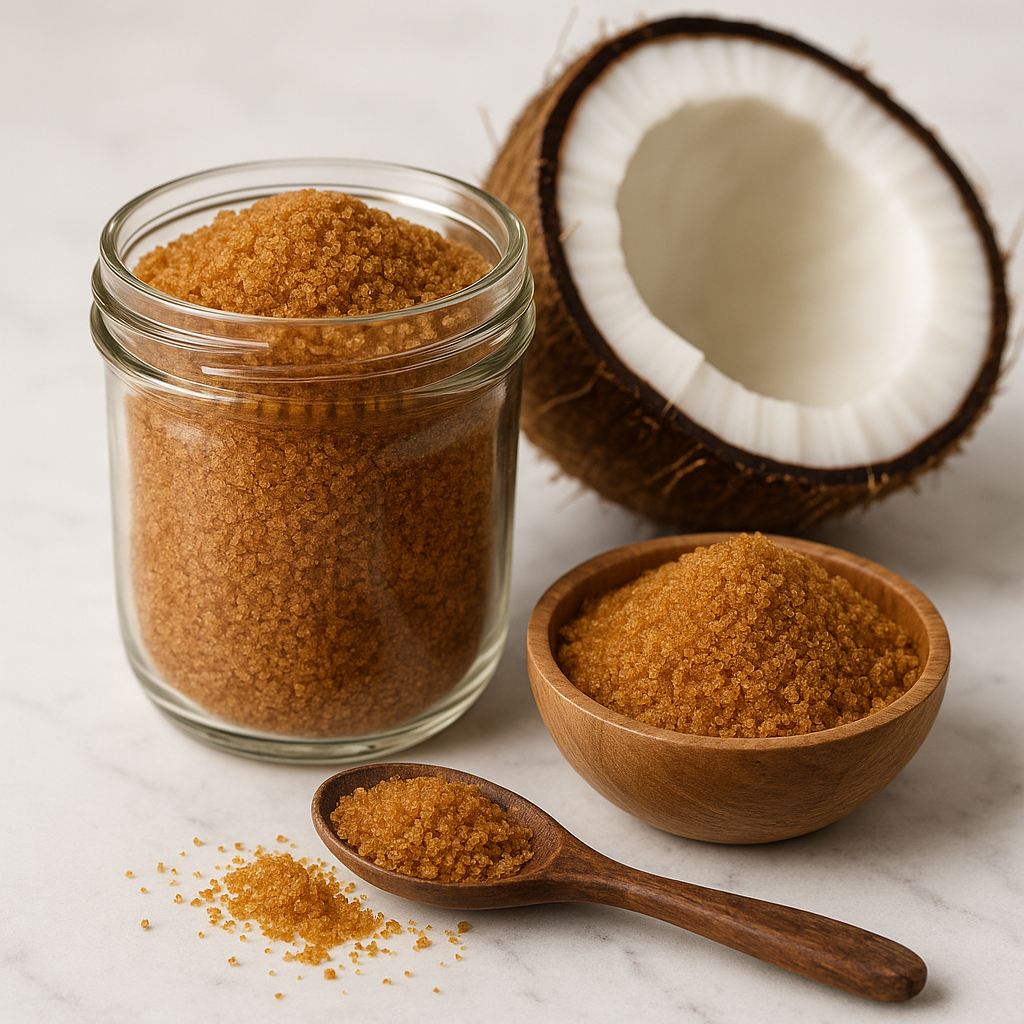
Glass jars with tight-sealing lids beat plastic, which can absorb odors and doesn’t hold up as well against humidity. Keeping jars away from the stove or sink, where steam builds up, matters too – a pantry shelf away from windows is the better spot. Simple, dry, and dark wins.
The way moisture pickup and oxygen exposure change aroma chemistry means that even small lapses in storage can alter the flavor profile over time.
What to do when things get sticky
A jar that’s turned gummy isn’t a loss – coconut sugar pulled in moisture, but it’s fixable. Breaking up clumps with a fork and adding a pinch of rice or a silica packet to absorb excess dampness usually solves it.
That stickiness is just proof that coconut sugar does what it does best: grabs onto water. If the texture is bothersome, pulsing the rub in a spice grinder refreshes it, and next time, reducing the coconut sugar slightly or balancing it with drier spices like smoked paprika or mustard powder helps. None of this is about avoiding the challenges – it’s about getting comfortable working around them.
Is it worth the extra work?
The flavor payoff from Using Coconut Sugar in Dry Rubs and Curing can be real – earthy, complex, with a hint of caramel. But the hygroscopic nature does mean more monitoring and more adjustments along the way. For anyone after that depth without refined sugar, it’s likely worth the extra attention.
The volatile aroma compounds that create caramel and toffee notes in coconut sugar are part of what makes it attractive, though heat shifts the profile during cooking.
Comparing it to brown sugar honestly
Side by side with brown sugar, the differences in both behavior and taste are clear – neither is inherently better, but each has its place depending on the goal.
| Factor | Comparison |
|---|---|
| Moisture retention | Coconut sugar pulls in more water, risking texture issues |
| Flavor profile | Brown sugar is milder; coconut sugar brings a deeper, almost smoky note |
| Processing | Brown sugar is refined; coconut sugar is less processed |
| Cost & availability | Brown sugar wins on price and shelf presence |
For a fuller breakdown, see our detailed comparison of coconut sugar vs brown sugar vs muscovado, including flavor wheels and use-case matrices.
When I’d choose coconut sugar vs. when I wouldn’t
Coconut sugar makes sense when richer, more nuanced sweetness is the priority and a bit of babysitting during the cure isn’t a dealbreaker. When time is short or humidity is high, brown sugar’s predictability wins out – it’s not about one being superior, just about fit.
The extra effort pays off in flavor sometimes, and other times the priority is just getting the meat to behave. Using Coconut Sugar in Dry Rubs and Curing shines in small-batch, low-humidity setups where moisture can be controlled, but for a large piece cured over weeks in a damp climate, a tacky surface might become a real regret. It’s a bit like choosing between sourdough and store-bought bread – both work, but only one demands ongoing attention.
The Bottom Line
Using Coconut Sugar in Dry Rubs and Curing can add real depth to a dry rub or cure, but its high hygroscopicity means it pulls moisture in ways that affect both texture and shelf life. Getting the balance right means careful portioning, pairing with drying agents where needed, and anticipating how humidity will shift things along the way. With a bit of attention, it’s a tradeoff that’s well worth making for the flavor. Success hinges on understanding moisture dynamics, selecting the right coconut sugar grade for your application, and building systems that work with the sugar’s chemistry rather than against it.