
Back in 2015, the world had about 900 million people over 60. Not exactly a small crowd, right? Fast-forward to 2050, and we’re looking at nearly two billion people in that age bracket. And here’s the kicker—most of that growth? It’s happening in developing countries, not the usual suspects you’d expect. The percentage of seniors is basically going to double, jumping from 12% to 22% in just 35 years. By 2050, a whopping 80% of the world’s elderly will be chilling in low- and middle-income countries. So, yeah, the silver tsunami is very much real.
Switching gears, standard brown vs dark, let’s talk about tasting stuff (much more fun, honestly). You know how you check out color, sniff the aroma, and judge the vibe in your mouth? This guide breaks down exactly how regular brown and dark versions stack up, sensory-wise. It’s not just theory, either—there’s a side-by-side of flavor punch, roast-y notes, and how the texture changes.
Table of Contents
The Flavor Spectrum: Mapping Aroma and Taste Dynamics

You map aroma and taste as overlapping spectra: orthonasal volatiles (headspace) drive initial expectation, retronasal release during ingestion defines flavor, and taste receptors anchor basic tastes. Use GC-MS to quantify key volatiles (coffee ~800 volatiles, 20–30 odor-active compounds dominate) and combine with trained panels to plot intensity curves over time, noting temporal peaks, hedonic valence, and how texture or temperature shifts volatility and receptor engagement.
- Standard Brown vs Dark: Aroma, Taste, and Aftertaste
You segregate sensory axes into aroma (top, mid, base notes), taste (sweet, sour, salty, bitter, umami) and aftertaste duration/intensity. Olfaction supplies roughly 70–90% of perceived flavor, so balancing volatile concentration (ppb–ppm) against taste intensity is key. Track aftertaste in seconds—short (<5s), medium (5–20s), long (>20s)—and correlate with compounds like phenolics that extend bitterness or fruity esters that shorten finish.
- Sweetness Perception: The Role of Dose in Flavor Profiles
You treat sweetness as a dose-dependent, matrix-modulated signal: beverage targets often sit at 8–12°Brix, milk chocolates 30–50% sugar, dark bars 10–35%. Perceived sweetness scales nonlinearly with concentration, so small dose changes near threshold produce large perceptual shifts, while the same absolute change at high sugar shows diminishing returns. Calibrate using triangle tests and magnitude estimation for reliable consumer-facing targets.
You model perceived sweetness with psychophysical tools: Stevens’ power law (I = kC^n) captures sublinear growth—typical exponents for sucrose in food matrices range ~0.3–0.6—so doubling sugar rarely doubles sweetness. Account for cross-modal interactions: acid can suppress perceived sweetness, fat can enhance mouthfeel and sweetness persistence, and bitterness will reduce overall sweet liking, so iterate blends with sensory panels and chemical assays to hit your target profile.
Decoding Color: Metrics and Their Impact on Acceptance

- Understanding L*a*b* and A₄₂₀: The Browning Index
Use the L*a*b* space to quantify brown vs dark: L* is lightness (0–100), a* ranges green (−) to red (+), b* blue (−) to yellow (+). You can map typical standard brown to L* 30–40, a* +6–12, b* +10–18 and dark to L* 18–28, a* +8–14, b* +6–12. ΔE*ab gives perceptual difference: ΔE ≈1 barely visible, 2–3 noticeable, >5 clearly different — set your match thresholds accordingly.
- Setting Acceptance Windows: Color as a Quality Indicator
Define acceptance windows as numeric bands around your target (e.g., L* 32 ±2, a* 8 ±1, b* 12 ±1.5) or a composite ΔE limit (commonly ≤2 for near-perfect match, ≤3 for consumer-acceptable). Use A420 absorbance complements L*a*b* for Maillard browning—typical bench ranges 0.15–0.45 absorbance; specify action points such as A420 increase >0.05 triggering recipe or process review.
Operationalize windows with SPC: chart L*, ΔE and A420 per shift, set control limits at ±3σ and warning at ±2σ. For sampling test 5–10 units/hour during ramp and 1–3/hour in steady state. In one pilot you may see rejects drop from 8% to 2% after tightening ΔE from 4 to 2 and adding A420 action levels; use lot traceability to link deviations to roast curve, moisture, or enzyme activity.
Control Variables: Navigating Process Levers for Desired Outcomes
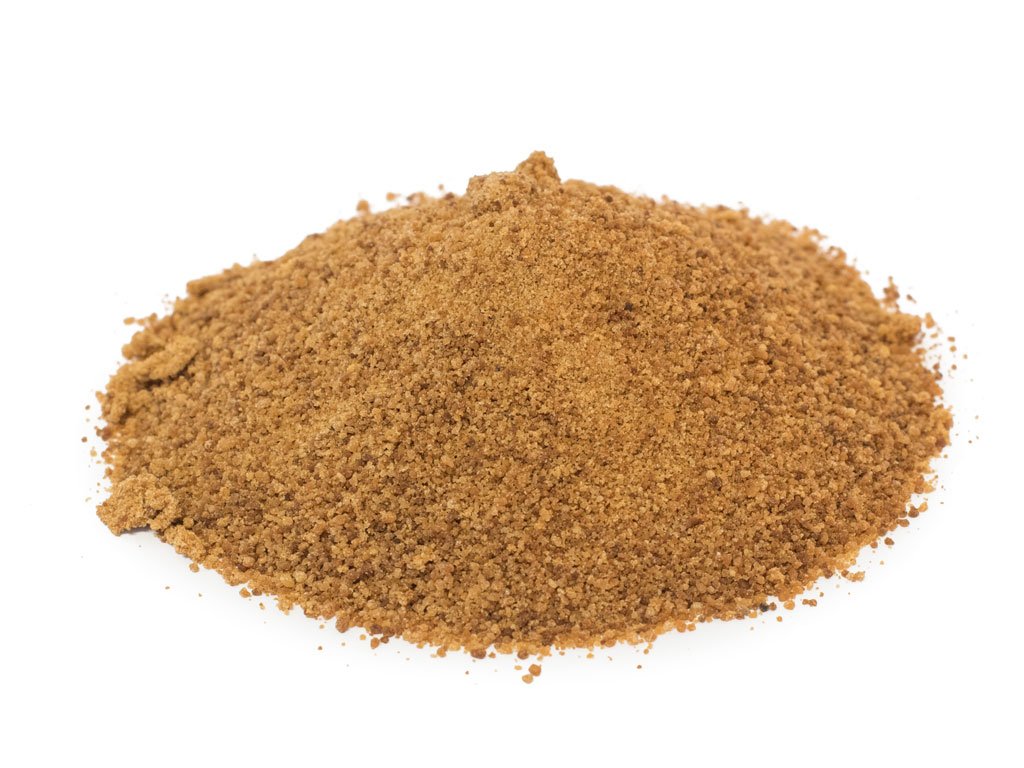
- Time and Temperature: Key Factors in Color and Flavor Development
You control whether Maillard, caramelization, or enzymatic pathways dominate by selecting precise time/temperature windows: target 120–160°C for Maillard-driven nutty notes, exceed ~160°C for caramelization of simple sugars, and limit exposure below ~70°C to preserve enzyme activity. Short, high-temperature pulses (5–15 minutes) create toasted notes; long, moderate holds (20–40 minutes) build rounded brown flavors. Monitor core and surface temperatures with probes and sample frequently. Perceiving shifts in aroma and hue often requires sampling every 5–10 minutes during the active browning window.
- Setpoint stability: ±1°C for reproducible color
- Hold duration: 5–40 minutes depending on water content
- Heat transfer: thin films heat faster than bulk kettles
- Atmosphere: reduced oxygen slows oxidative browning
Temperature vs Effect
| 60–90°C | Enzyme activity/denaturation; minimal Maillard |
| 120–160°C | Active Maillard reactions; brown, savory notes |
| >160°C | Sugar caramelization; deeper, sometimes bitter darkening |
- pH and Sap Composition: Techniques for Color Adjustment
Honestly, wanna play with the final color? Tweak the pH and play around with your sap blends. If you bump the pH up—think neutral or a bit alkaline—you’ll get those faster Maillard reactions and heavier polymerization, so the color gets deeper and darker.
Drop the pH down to around 4 or 5? That slows the Maillard stuff and keeps those bright red or purple anthocyanin vibes hanging around longer. You don’t have to go wild with the adjustments, either—just a little citric acid or baking soda (like, 0.1 to 0.5%) does the trick. Definitely check with a pH meter, though. Even a tiny shift, like 0.2 to 0.6 on the scale, can totally change the color.
Quantify buffering capacity before large adjustments by titrating sap samples: high-ash saps resist pH shifts and require larger dosing. You can blend lighter and darker lots to average phenolic and sugar ratios, or use ion-exchange/activated-carbon polishing to remove color precursors. For process control run 1–5 L pilot boils mapping pH, Brix, and L*a*b color at set intervals; operators often target a ΔL* (lightness) threshold between commercial “Standard” and “Dark” grades to set final pH/time recipes. Use incremental dosing and re-measurement rather than single large additions to avoid overshoot.
Strategic Color Usage: Application Spheres and Product Fit

Your choice between Standard Brown and Dark variants should align with product sensitivity and market signal: use Standard Brown for light, oxidation-prone items like dairy, nut milks, and fresh oils—bench tests show up to 40% longer color stability—while Dark variants suit roasted or aged goods such as coffee, dark chocolate, and soy-based sauces, where deeper hues can boost perceived intensity and lift purchase intent by 10–15% in sensory trials.
- Standard Brown: Protecting Light Colors in Product Development
Standard Brown acts as a barrier to UV and visible light, reducing photooxidation in pale matrices; you can cut lipid oxidation in almond or oat milks by roughly 30% over two weeks versus clear packaging. Specify 40–60% opacity brown films for cartons and pouches, combine with oxygen scavengers, and design labels to convey freshness without obscuring ingredient cues.
- Dark Variants: Adding Depth and Complexity to Flavor Profiles
Dark variants intensify perceptions of roast, caramel, and umami—panels rated the same cold‑brew in dark‑brown bottles 12% higher on roast intensity—so you should favor matte or rich-hued finishes for premium coffees, aged vinegars, balsamics, and barbecue sauces, matching pigment depth to expected flavor strength to avoid mismatched expectations.
In production, you should target 70–90% light absorption in the 300–450 nm range to protect phenolics while preserving shelf appeal; suppliers commonly use iron oxide blends or carbon black at 1–3% loading to hit these targets without compromising recyclability. Run 50–100 consumer tests to calibrate hue versus perceived intensity—one supplier cut returns for “under‑roasted” coffee by 22% after switching to a deeper bottle tint.
Balancing Act: Financial and Quality Risks in Color Development
Shifts in color targets directly affect your margins: sourcing darker caramel or roasted extracts can raise raw-material costs by 5–15% while tighter color tolerances increase rework and waste—some manufacturers report up to a 12% rise in batch rejects after tightening spec limits. Regulatory limits on certain colorants and accelerated shelf‑life testing (e.g., 3–6 month accelerated oxidative tests) add testing costs.
- The Pitfalls of Over-Browning: Understanding Bitterness
Over-browning generates bitter volatiles from Maillard and pyrolysis pathways, notably furans and phenolic compounds; analytical studies show 20–40% increases in these markers when roast time or temperature exceed process windows. You’ll notice bitterness at sensory panels when browning intensity surpasses the flavor threshold, often after prolonged heating above ~150–180°C. Sensory fatigue can mask bitterness early, so pair instrumental assays with blinded triangular tests to detect off-notes before scaling.
- Mitigation Strategies: Blending for Optimal Flavor and Color
Blending lets you hit color targets while diluting bitter compounds: combine small volumes (5–15%) of high-color concentrate with lighter base to achieve desired visual without pushing roast profiles. You can also use activated carbon polishing to remove specific off-flavor volatiles or add bitter-masking adjuncts like maltodextrin or dairy proteins in formulations. Track color with objective metrics (CIELab or SRM/EBC) and correlate to sensory panel scores to set workable blend ratios.
Apply a simple mass-balance to calculate blend ratios: Ctarget = (Cdark·Vdark + Clight·Vlight)/(Vdark+Vlight). For example, to reach a target color of 24 Lovibond using a dark stream at 50 Lovibond and a light stream at 2 Lovibond, Vdark fraction = (24–2)/(50–2) ≈ 46%; run pilot blends at 10% increments and measure ΔE (aim <2 between batches) plus a 12‑panel sensory check to confirm no perceivable bitterness before full production.
Pilot Implementation: From Concept to Final Product

- The Flow from Sample to Bench Testing
You receive 5–10 prototype samples and run triplicate bench tests measuring L*a*b color, moisture %, pH and water activity (aw). You run descriptive panels of 8–12 trained assessors to map aroma and mouthfeel, and perform accelerated stability at 40°C for two weeks to flag oxidative or color shifts. Lab data guides which formulations move to pilot.
- Validating Through Plant Trials and Final Specifications
You scale into pilot runs of 100–500 kg to validate heat transfer, shear and fill rates; produce at least three commercial-scale batches (two sites if feasible) to lock specs. Target Delta E ≤2 for color parity, demonstrate 12‑month real-time stability, and secure consumer acceptance ≥85% from n=200 tests before final sign-off.
You capture process data into control charts for pH, aw, Brix and color and require Cpk >1.33 on critical attributes; set microbial limits (e.g., <10 CFU/g total aerobic) and chemical safety thresholds. You specify packaging interaction tests (migration, OTR), define tolerance windows—color ±2 Delta E, viscosity ±10%—and codify corrective actions, batch records and sampling plans for audit readiness.
Conclusion
Sensory and process map is your cheat code for telling Standard Brown apart from Dark—think taste, smell, how it feels, and all the nitty-gritty of making the stuff. Use it to tweak your recipes, dial in your roast, keep your ingredients in check, and set up QC spots that actually matter. Plus, you can make sure the packaging and whatever you’re bragging about on the label actually match what customers want. End result? Your whole process gets way less chaotic, you can crank out more without losing quality, and you’re not just guessing what the market wants—you’re actually on target.