Table of Contents
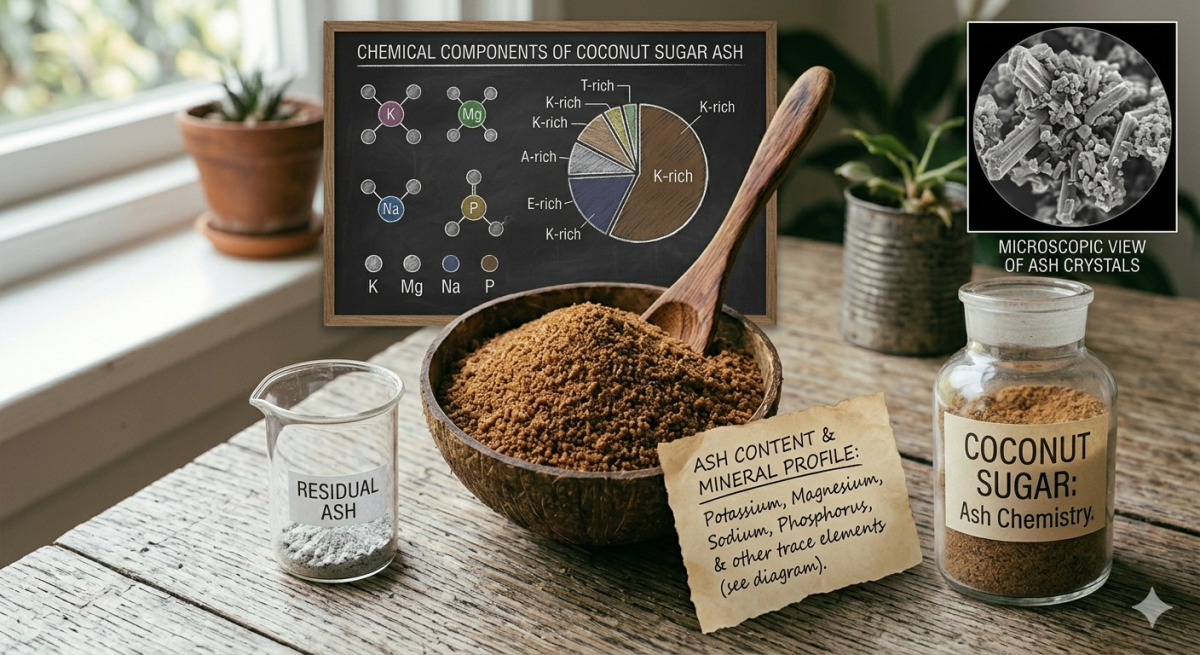
Minerals profoundly impact the quality of your chocolate and beverages. You can understand the unique properties of coconut sugar by exploring its ash chemistry. Ash chemistry of coconut sugar, including mineral speciation and conductivity, directly influences flavor and processing. The ash chemistry of coconut sugar reveals how these elements contribute to the final product. Understanding the ash chemistry of coconut sugar is crucial for optimizing your formulations.
Ash Content as a Mineral Residue Index in Coconut Sugar
You find ash content a direct measure of the inorganic mineral residue remaining after combustion. This value directly reflects the total mineral load in your coconut sugar, a key aspect of its unique ash chemistry of coconut sugar profile.
Inorganic Mineral Fraction vs. Organic Matter Combustion
This process completely burns off all organic matter, leaving only the non-volatile inorganic minerals. The residual ash provides you with a precise snapshot of the inherent mineral composition, distinguishing it from organic compounds.
Comparative Analysis: Coconut Sugar (1.5-2.5%) vs. Refined White Sugar (0.1-0.5%)
| Sugar Type | Typical Ash Content Range |
|---|---|
| Coconut Sugar | 1.5% – 2.5% |
| Refined White Sugar | 0.1% – 0.5% |
You observe a significant difference in ash content between these two sugar types. Coconut sugar consistently exhibits a much higher ash content, typically ranging from 1.5% to 2.5%. This contrasts sharply with refined white sugar, which usually falls between 0.1% and 0.5%. This disparity highlights the rich mineral profile inherent in coconut sugar, directly influencing the ash chemistry of coconut sugar. The higher mineral content contributes to its distinct flavor and nutritional attributes, making the ash chemistry of coconut sugar a significant factor.
The Phloem Transport System: Origin of Potassium, Magnesium, and Phosphorus
| Mineral | Primary Source in Coconut Sap |
|---|---|
| Potassium | Phloem sap transport |
| Magnesium | Phloem sap transport |
| Phosphorus | Phloem sap transport |
You understand that the phloem transport system within the coconut palm is the primary conduit for these vital minerals. The sap, collected and processed into coconut sugar, naturally carries significant amounts of potassium, magnesium, and phosphorus. These minerals are crucial for the plant’s metabolic functions and become integral components of the final sugar product, directly impacting the ash chemistry of coconut sugar. Their presence contributes to the unique mineral speciation and conductivity observed in the ash chemistry of coconut sugar.
Mineral Speciation and Bioavailability in Coconut Sugar Ash
Understanding the ash chemistry of coconut sugar reveals how minerals exist and how readily your body can absorb them. This speciation directly impacts the nutritional contribution of coconut sugar in your diet and its functional properties in food systems. You can gain valuable insights into product quality.
Organic Salts: The Role of Lactates, Acetates, and Citrates
Organic acids within coconut sugar form salts with minerals. These lactates, acetates, and citrates influence mineral solubility and taste. You will find these organic forms impact the overall ash chemistry of coconut sugar significantly.
Chelated Forms and Bioavailability of Potassium and Magnesium
Many minerals in coconut sugar, especially potassium and magnesium, exist in chelated forms. This chelation enhances their bioavailability, making them more readily absorbed by your body. You will appreciate this natural advantage.
You might wonder how these chelated forms influence nutrient uptake. The organic ligands, such as amino acids or small organic acids, bind to the metal ions, protecting them from interactions that could reduce their absorption in the digestive tract. This means the potassium and magnesium from the ash chemistry of coconut sugar are delivered more efficiently to your cells, offering a superior nutritional profile compared to inorganic mineral sources.
Solubility Dynamics and Precipitation in Aqueous Beverage Systems
Mineral solubility in coconut sugar ash dictates its behavior in beverages. Precipitation can occur, affecting clarity and mouthfeel. You will observe these dynamics directly influencing product stability.
Consider the impact on your beverage formulations. When minerals from the ash chemistry of coconut sugar exceed their solubility limits, they can form insoluble precipitates, leading to cloudiness or sediment. This phenomenon is often pH-dependent and can be influenced by other ingredients present in the beverage. You must carefully manage these solubility dynamics to maintain the desired aesthetic and textural qualities of your final product, ensuring consumer satisfaction.
Electrical Conductivity and Ionic Strength in Beverage Formulations
You can directly link the ash chemistry of coconut sugar to the electrical conductivity of your beverage. The dissolved minerals, originating from the ash chemistry of coconut sugar, dictate the ionic strength, impacting taste, stability, and processing parameters. Understanding this relationship is key to consistent product quality.
Conductivity Measurements (800-1200 μS/cm) as a Quality Control Parameter
Routine conductivity checks, falling within an 800-1200 μS/cm range, offer a rapid quality control metric. This range helps you monitor the consistent mineral content from the ash chemistry of coconut sugar, ensuring batch-to-batch uniformity in your product.
Electrostatic Interactions and Protein Charge Distribution in Milk-Based Drinks
Ionic species, derived from the ash chemistry of coconut sugar, influence protein charge. These charges dictate electrostatic interactions, affecting protein aggregation and overall drink stability in milk-based formulations.
The charge distribution on proteins, particularly in milk-based beverages, is significantly impacted by the ionic environment. When you introduce minerals from the ash chemistry of coconut sugar, these ions interact with charged amino acid residues on proteins. This interaction can alter the net charge of the protein, influencing how proteins interact with each other and with other components in the beverage. Understanding these electrostatic forces helps you predict and control protein stability, preventing unwanted aggregation or precipitation in your product.
Casein Micelle Stability and the Prevention of Phase Separation
Mineral ions, stemming from the ash chemistry of coconut sugar, are critical for casein micelle stability. Proper ionic balance prevents micelle aggregation, thereby stopping phase separation in dairy-containing beverages.
Controlling the stability of casein micelles is paramount in many milk-based beverages to prevent undesirable phase separation. The presence and concentration of various mineral ions, particularly calcium and phosphate, play a direct role in maintaining the structural integrity of these micelles. When you incorporate coconut sugar, its unique ash chemistry introduces a specific mineral profile that can either stabilize or destabilize these delicate structures. Maintaining an optimal ionic environment ensures that casein micelles remain dispersed, contributing to a smooth, homogenous product without curdling or sedimentation.
Maillard Reaction Catalysis and Browning Acceleration
You can see how the ash chemistry of coconut sugar, particularly its mineral composition, significantly influences Maillard reactions. These minerals act as catalysts, accelerating the browning and flavor development in your chocolate and beverages, impacting their final sensory attributes.
Alkaline Minerals: Potassium Carbonate and Magnesium Hydroxide pH Effects
Your product’s pH directly affects Maillard reaction rates. Alkaline minerals like potassium carbonate and magnesium hydroxide, present in the ash chemistry of coconut sugar, elevate pH, providing optimal conditions for faster browning and flavor formation in your recipes.
Kinetics of Carbonyl-Amine Condensation in Chocolate Processing
Consider the speed of carbonyl-amine condensation during chocolate processing. The ash chemistry of coconut sugar provides metal ions that accelerate these reactions, directly influencing the rate at which desirable flavors and colors form in your final product.
The presence of specific mineral ions within the ash chemistry of coconut sugar directly impacts the activation energy of the carbonyl-amine condensation step. These ions facilitate the formation of the Schiff base intermediate, a critical step in the Maillard cascade. Your understanding of these kinetics allows for precise control over processing parameters, ensuring consistent flavor development and browning in your chocolate and beverage formulations.
Flavor Profile Development: Roasted Notes and Mineral-Catalyzed Caramelization
You will discover that the ash chemistry of coconut sugar contributes uniquely to flavor. Minerals catalyze caramelization and Maillard reactions, producing those sought-after roasted notes and complex flavors in your chocolate and beverages.
The intricate interplay between sugars, amino acids, and the mineral components from the ash chemistry of coconut sugar drives the formation of pyrazines, furans, and other volatile compounds responsible for roasted and toasted notes. These mineral catalysts lower the energy barrier for various flavor-forming reactions, allowing for a broader spectrum of aromatic compounds to develop. Your product’s unique flavor profile, therefore, is intrinsically linked to the specific mineral speciation derived from the ash chemistry of coconut sugar.
Buffering Capacity and pH Stabilization in Acidic Beverage Systems
You understand the importance of ash chemistry of coconut sugar in contributing to a beverage’s stability. These mineral compounds act as natural buffers, resisting pH shifts in acidic drinks. This buffering capacity is imperative for maintaining consistent flavor profiles and extending shelf life.
Resistance to pH Change via Carbonate and Phosphate Species
Coconut sugar’s ash chemistry, rich in carbonates and phosphates, directly counteracts acid additions. These species neutralize protons, effectively preventing drastic pH drops in beverages. You will find this resistance crucial for product consistency.
Interactions with Citrus, Coffee, and Fermented Dairy Ingredients
Consider the ash chemistry of coconut sugar when formulating with acidic components. Its buffering minerals mitigate the tartness of citrus, balance coffee acidity, and prevent protein coagulation in fermented dairy, ensuring smoother textures.
You can truly appreciate how the ash chemistry of coconut sugar provides a critical buffer against the inherent acidity of common beverage ingredients. Imagine a citrus-based drink; the minerals from coconut sugar help to temper the sharp, sour notes, creating a more balanced and palatable experience. When used in coffee, these same buffering agents can smooth out the often bitter or acidic edges, resulting in a milder, more approachable brew. For fermented dairy products, such as yogurt drinks or kefir, the presence of these mineral species from the ash chemistry of coconut sugar actively works to prevent the undesirable curdling or separation of milk proteins that can occur at low pH, preserving a creamy, uniform texture.
Stabilizing Anthocyanin Pigments and Balancing Sweetness Perception
The ash chemistry of coconut sugar plays a dual role in beverages. Its buffering action stabilizes vibrant anthocyanin pigments, preserving color intensity. This mineral content also subtly influences sweetness perception, creating a balanced flavor.
You will discover that the ash chemistry of coconut sugar provides significant advantages for beverages containing anthocyanin pigments, such as those found in berries or certain flowers. These natural colors are notoriously sensitive to pH changes, often degrading or shifting hue in highly acidic environments. The buffering capacity of coconut sugar’s ash helps to maintain a more stable pH, thereby protecting these delicate pigments and ensuring the beverage retains its appealing, vibrant color throughout its shelf life. Beyond color, you also experience a more nuanced sweetness. The mineral profile subtly interacts with taste receptors, preventing an overly cloying sweetness and instead contributing to a more complex and harmonious flavor profile, enhancing the overall drinking experience.
Interaction with Cocoa Polyphenols and Astringency Reduction
Considering the mineral profile from the ash chemistry of coconut sugar, you can understand how these elements interact with cocoa’s complex polyphenols. These interactions are not merely chemical curiosities; they directly influence the sensory experience of chocolate and beverages, particularly by mitigating the perceived astringency. The ash chemistry of coconut sugar plays a pivotal role in this delicate balance.
Divalent Cation Chelation: Calcium and Magnesium Binding with Tannins
Your coconut sugar’s ash chemistry provides vital divalent cations. These cations, like calcium and magnesium, directly bind with cocoa tannins. This binding effectively reduces the free tannin concentration, lessening their ability to interact with salivary proteins and thus diminishing astringency.
Mechanisms of Lowering Perceived Astringency in Salivary Proteins
The minerals present in the ash chemistry of coconut sugar directly impact how your mouth perceives astringency. These ions interact with salivary proteins, creating a smoother, less drying sensation.
You will find that the mineral components of the ash chemistry of coconut sugar, particularly calcium and magnesium, play a significant role in moderating astringency. These divalent cations can bind to proline-rich proteins (PRPs) in saliva. This binding effectively blocks the interaction of tannins with these same proteins, which are responsible for the characteristic drying and puckering sensation associated with high astringency. The result is a more pleasant and less astringent mouthfeel in your chocolate or beverage.
Oxidative Degradation: Iron and Copper Catalysis of Cocoa Flavanols
The ash chemistry of coconut sugar also introduces trace metals like iron and copper. These metals can catalyze the oxidative degradation of cocoa flavanols, impacting both flavor and color stability in your products.
Understanding the ash chemistry of coconut sugar is vital because iron and copper, even in trace amounts, can accelerate the oxidation of delicate cocoa flavanols. This process leads to the formation of quinones, which polymerize into larger, more complex compounds. This oxidative degradation not only diminishes the beneficial antioxidant capacity of cocoa but also alters the flavor profile, often leading to undesirable bitter notes and browning, affecting the overall quality of your final product.
Regulatory Implications and Ash Specifications in Quality Standards
You find ash content isn’t just a scientific curiosity; it’s a critical parameter in regulatory frameworks. These specifications, often tied to the ash chemistry of coconut sugar, safeguard product integrity and consumer trust. Meeting these standards ensures your coconut sugar products comply with global food regulations.
Ash Thresholds (2.0-3.0%) as a Metric for Unrefined Authenticity
You understand higher ash content (2.0-3.0%) often signifies unrefined coconut sugar. This range, reflecting the ash chemistry of coconut sugar, acts as a benchmark for authenticity, distinguishing minimally processed products from their refined counterparts.
Detection of Adulteration, Soil Contamination, and Filtration Inconsistency
You can identify adulteration and contamination through ash analysis. Deviations from expected ash chemistry of coconut sugar indicate potential issues, including soil contamination or inconsistent filtration.
Investigating the ash profile reveals much about processing and purity. You might find elevated levels of specific minerals, pointing to soil particles introduced during harvesting or inadequate filtration during production. Anomalous ash chemistry of coconut sugar, therefore, serves as an early warning system for quality control breaches, protecting both your brand and consumers from substandard products.
Standardized Gravimetric Analysis and Multi-element Fingerprinting
You rely on standardized gravimetric analysis to determine total ash content. Multi-element fingerprinting, detailing the ash chemistry of coconut sugar, offers a more granular understanding, identifying specific mineral compositions.
Performing a complete gravimetric analysis provides the foundational percentage of ash, but the real insights come from multi-element fingerprinting. You can utilize techniques like ICP-OES or ICP-MS to quantify individual mineral concentrations, creating a unique elemental signature for your coconut sugar. This detailed ash chemistry of coconut sugar helps you trace origin, confirm processing methods, and even differentiate between sugar varieties, offering unparalleled quality assurance.
Analytical Techniques for Determining Mineral Profiles
Understanding the ash chemistry of coconut sugar requires precise analytical methods. You gain insight into the mineral speciation and conductivity by employing a suite of techniques, each revealing different facets of the sugar’s inorganic composition. These methods are necessary for quality control and origin verification.
Atomic Absorption Spectroscopy (AAS) for Trace Element Quantification
This technique allows you to precisely quantify individual trace elements. AAS measures the absorption of light by free atoms in a flame, providing accurate concentrations of metals like iron, zinc, and copper, which contribute to the ash chemistry of coconut sugar.
Ion Chromatography for Mapping Anion and Cation Distribution
Ion chromatography separates and quantifies ions, giving you a detailed map of anions and cations. You can identify chloride, sulfate, potassium, and sodium, which directly influence the conductivity and overall ash chemistry of coconut sugar.
You use ion chromatography to separate and identify individual ionic species present in the dissolved ash sample. The technique involves passing the sample through a specialized column where ions are separated based on their affinity for the column material. A detector then quantifies each separated ion, providing you with a complete profile of the major anions (like chloride, sulfate, and phosphate) and cations (such as potassium, sodium, magnesium, and calcium) that contribute to the unique ash chemistry of coconut sugar. This detailed mapping is invaluable for understanding the sugar’s electrical properties and potential for mineral-derived off-notes.
Inductively Coupled Plasma Mass Spectrometry (ICP-MS) in Origin Verification
ICP-MS offers superior sensitivity for multi-element analysis, providing a comprehensive elemental fingerprint. You can use this powerful tool to verify the geographic origin of coconut sugar by comparing its unique mineral profile to known regional standards.
This sophisticated technique atomizes and ionizes the sample in a high-temperature plasma. The resulting ions are then directed into a mass spectrometer, which separates and quantifies them based on their mass-to-charge ratio. ICP-MS provides you with extremely low detection limits and the ability to analyze a wide range of elements simultaneously, including rare earth elements and isotopes. This comprehensive elemental fingerprint becomes a powerful tool for distinguishing coconut sugar from different geographical regions, as soil composition and agricultural practices leave distinct elemental signatures in the final product’s ash chemistry. You can confidently use this data for authentication and combating adulteration.
Impact of Soil Chemistry and Coastal Cultivation on Ash Composition
You recognize that the ash chemistry of coconut sugar is not static; it reflects its origin. The unique mineral profile of coconut sugar, influencing its conductivity and flavor, is profoundly shaped by the soil where the palm trees grow and their proximity to the coast.
Influence of Soil Salinity on Sodium and Chloride Levels in Sap
Proximity to coastal areas significantly elevates sodium and chloride in sap. These elements directly impact the ash chemistry of coconut sugar, affecting its taste and electrical conductivity. You will notice higher levels in sugar from saline-influenced regions.
Geographic Variations in Trace Mineral Accumulation (Zinc, Copper, Manganese)
Regional geology dictates the availability of trace minerals like zinc, copper, and manganese. These variations in soil composition directly influence the ash chemistry of coconut sugar, contributing to distinct mineral fingerprints.
Different geographical locations offer unique soil matrices, directly impacting the trace mineral content in coconut sap. For example, volcanic soils might provide higher manganese levels, while other regions could be richer in zinc or copper. You will find these subtle yet significant differences reflected in the final ash chemistry of coconut sugar, giving each batch a unique mineral signature that can be traced back to its origin. This mineral fingerprint is not just academic; it contributes to the subtle flavor nuances and nutritional profile of the coconut sugar you consume.
Seasonal Fluctuations in Mineral Concentration during Sap Collection
Seasonal changes, including rainfall and temperature, influence sap mineral content. You will observe variations in the ash chemistry of coconut sugar throughout the year, with specific minerals peaking during certain seasons.
The coconut palm’s physiological processes are highly responsive to environmental cues, particularly seasonal shifts. During periods of heavy rainfall, you might find a dilution effect on certain minerals in the sap, leading to lower concentrations in the resulting coconut sugar. Conversely, during drier seasons, the sap can become more concentrated, reflecting higher levels of specific minerals. This dynamic interplay means the ash chemistry of coconut sugar is not static across the calendar year. You can expect to see these fluctuations, which contribute to the nuanced characteristics of coconut sugar produced at different times.
Processing Effects: From Raw Sap to Granulated Coconut Sugar
The journey from coconut sap to granulated sugar significantly influences the final ash chemistry of coconut sugar. You’ll discover how each step contributes to the unique mineral profile that makes it a preferred sweetener for many, as detailed in 7 Reasons We Make Chocolate Sweetened with Coconut ….
Thermal Evaporation and the Concentration of Inorganic Solutes
Evaporation concentrates the sap, directly increasing the mineral content within the developing coconut sugar. This process, fundamental to sugar production, magnifies the initial ash chemistry of coconut sugar.
Impact of Liming and Clarification on Final Ash Alkalinity
Liming and clarification steps can alter the ash chemistry of coconut sugar, influencing its pH and mineral composition. These processing choices directly affect the final product’s alkalinity.
Producers sometimes add calcium hydroxide (lime) during processing to adjust pH and aid in clarification, removing impurities. This addition can subtly shift the balance of mineral speciation and the overall ash chemistry of coconut sugar, impacting its final taste and interaction in formulations. You’ll find these adjustments contribute to the nuanced characteristics of different coconut sugar batches.
Retention of Natural Mineral Complexes vs. Refined Sugar Stripping
Coconut sugar processing aims to retain natural mineral complexes, unlike refined sugars which strip away these valuable components. This preserves the rich ash chemistry of coconut sugar.
You’ll appreciate that the minimal processing of coconut sugar is key to its distinctive character. While refined sugars undergo extensive purification that removes almost all inorganic matter, coconut sugar’s gentle handling preserves the full spectrum of minerals present in the original sap. This deliberate retention is central to understanding the unique ash chemistry of coconut sugar and its functional benefits.
Storage Stability and the Role of Deliquescent Salts
You understand the impact of ash chemistry of coconut sugar on product quality. High mineral content, particularly deliquescent salts, significantly affects storage stability. These salts readily absorb atmospheric moisture, leading to unwanted changes in texture and functionality in your chocolate and beverages.
Equilibrium Moisture Content (EMC) and Atmospheric Moisture Absorption
Your product’s EMC dictates how much moisture it will absorb or release at specific humidity levels. High ash chemistry of coconut sugar with deliquescent minerals will possess a lower EMC, making it a powerful moisture magnet from the surrounding atmosphere.
Managing Stickiness and Caking in High-Ash Sugar Environments
Mineral-rich sweeteners, like coconut sugar, present unique challenges. You will notice increased stickiness and caking due to moisture absorption by deliquescent ash components, impacting flowability and processing in your applications.
Producers often encounter difficulties with ingredient handling and dosage when high-ash coconut sugar becomes sticky or cakes. This directly affects manufacturing efficiency and can lead to product wastage. Preventing these issues requires careful consideration of the ash chemistry of coconut sugar and its interaction with environmental humidity.
Moisture Barrier Packaging Strategies for Mineral-Rich Sweeteners
Effective packaging is necessary for maintaining product integrity. You must employ superior moisture barrier packaging to protect the ash chemistry of coconut sugar from humidity, preventing moisture absorption and preserving its free-flowing nature.
Selecting appropriate packaging materials, such as multi-layer films with excellent water vapor transmission rates (WVTR), is critical. This proactive approach safeguards the ash chemistry of coconut sugar, ensuring it remains stable and functional for its intended use in your premium chocolate and beverage formulations.
Nutritional Contribution of the Ash Fraction in Functional Foods
The ash chemistry of coconut sugar offers a unique insight into its nutritional profile. You find the mineral content, often overlooked, directly contributes to its functional food status, enriching products beyond simple sweetness. Explore how Coconut (Cocos nucifera L.) sap as a potential source of sugar provides these benefits.
Electrolyte Balance: Potassium-to-Sodium Ratios in Natural Sweeteners
Understanding the ash chemistry of coconut sugar reveals its favorable electrolyte balance. This balance, particularly the high potassium-to-sodium ratio, supports crucial bodily functions. Such a profile makes it a more beneficial sweetener choice for maintaining hydration and nerve function.
Bioavailable Trace Elements and Their Role in Metabolic Cofactors
The ash chemistry of coconut sugar also provides necessary trace elements. These elements, like zinc and iron, act as metabolic cofactors, facilitating countless biochemical reactions in your body. Their presence enhances the nutritional value significantly.
Trace elements found in coconut sugar, while in smaller quantities, play fundamental roles in your metabolic health. Zinc, for instance, is involved in immune function and wound healing. Iron is critical for oxygen transport and energy production. Manganese contributes to bone formation and carbohydrate metabolism. Copper supports nerve function and iron absorption. Selenium acts as an antioxidant, protecting cells from damage. Perceiving these elements as integral to your well-being highlights the broader impact of the ash chemistry of coconut sugar.
Comparing the Nutrient Density of Coconut Sugar to Alternative Syrups
Comparing the ash chemistry of coconut sugar to other sweeteners highlights its superior nutrient density. You gain more than just calories; you receive a spectrum of beneficial minerals. This comparison positions coconut sugar as a more holistic ingredient.
| Nutrient Density Comparison: Coconut Sugar vs. Other Syrups | |
|---|---|
| Coconut Sugar | Alternative Syrups (e.g., Agave, Corn Syrup) |
| Higher mineral content (Potassium, Magnesium, Zinc, Iron) | Typically lower or negligible mineral content |
| Favorable potassium-to-sodium ratio | Often high in sodium or lacking significant electrolytes |
| Contains trace elements acting as metabolic cofactors | Primarily provides simple sugars with minimal cofactors |
Consider the profound difference the ash chemistry of coconut sugar makes when evaluating sweeteners for functional foods. While many syrups offer empty calories, coconut sugar delivers a measurable nutritional contribution. This includes not only the electrolytes you need for daily function but also the trace elements that support intricate metabolic pathways. Your choices in sweeteners directly impact the overall nutritional profile of your chocolate and beverages, making the ash chemistry of coconut sugar a critical consideration for health-conscious formulations.
Final Words
To wrap up, you now understand the ash chemistry of coconut sugar is not merely an academic exercise. You recognize how the ash chemistry of coconut sugar dictates mineral content and conductivity, impacting the flavor profiles and processing characteristics of your chocolates and beverages. Your appreciation for the ash chemistry of coconut sugar helps you make informed decisions, ensuring the quality and desired properties of your products. The ash chemistry of coconut sugar truly matters for you in the food industry.