Table of Contents
Moisture and oxygen are key factors impacting your coconut sugar’s aroma. You may notice changes in its distinct caramel notes as it ages. We explore how flavor stability over shelf life of coconut sugar affecting its delicate flavor profile over time. Understanding these processes helps you preserve its optimal taste.
Global demand for coconut sugar continues to expand rapidly, with the coconut sugar industry projected to reach USD 2.15 billion by 2030, driven by increasing consumer preference for minimally processed sweeteners and clean-label ingredients. This growth places heightened emphasis on maintaining consistent flavor profiles throughout extended distribution channels, as B2B buyers in North America and Europe expect shelf-stable products that retain their characteristic caramel and toffee notes over 18-24 month storage periods.
Quality assurance protocols for coconut sugar export increasingly reference ICUMSA standardized methods for sugar analysis, which provide internationally recognized procedures for moisture content determination, color measurement, and reducing sugar quantification. These analytical frameworks enable exporters to establish baseline volatile profiles and track degradation markers that correlate with moisture pickup and oxygen ingress, ensuring compliance with buyer specifications across different regulatory environments.
According to the Centre for the Promotion of Imports from developing countries analysis of European coconut sugar markets, moisture content exceeding 3% and improper oxygen barrier packaging are the primary causes of quality complaints and rejected shipments. European importers specifically monitor volatile ester retention and absence of oxidative off-notes as critical quality parameters, making flavor stability documentation an essential component of competitive B2B offerings.
Physicochemical Composition of Raw Coconut Sap and Granulated Sugar
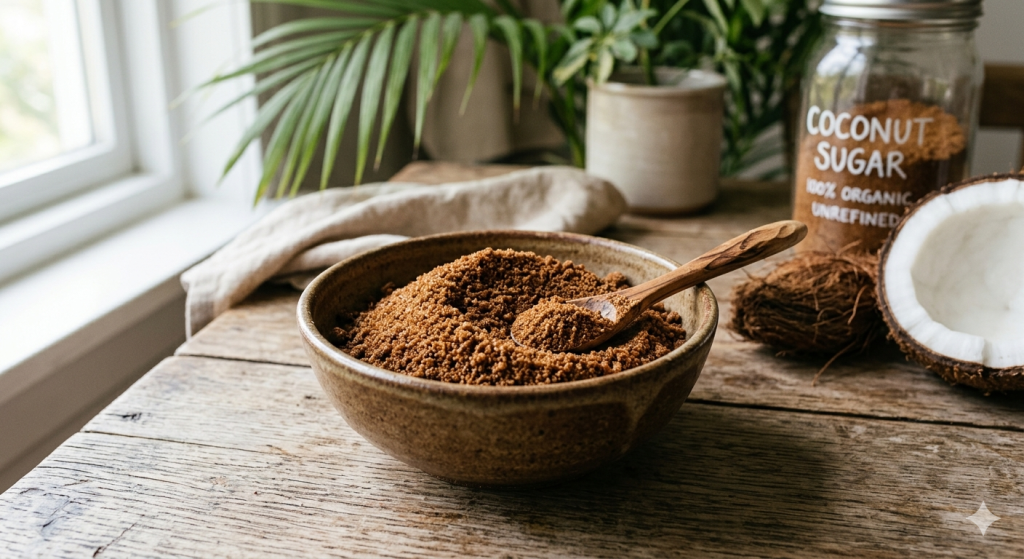
The transition from liquid coconut sap to granulated coconut sugar is a complex chemical process that transforms a nutrient-rich, perishable liquid into a stable, crystalline sweetener. Understanding the physicochemical changes during this process is essential for maintaining nutritional quality and shelf stability.
Raw coconut sap is a translucent, oyster-white liquid with a neutral pH, typically collected from the inflorescence of the coconut palm (Cocos nucifera). Its composition is highly dynamic due to its susceptibility to natural fermentation.
- Sucrose Dominance: In its freshest state, the sap’s dry matter is roughly 80% to 90% sucrose.
- Inverting Sugars: Small amounts of glucose and fructose are present, often increasing if fermentation begins before processing.
- pH Stability: Fresh sap has a pH near 7.0, but it drops rapidly toward acidity as lactic acid bacteria convert sugars into organic acids.
- Amino Acid Profile: It contains 17 amino acids, with glutamic acid and aspartic acid being particularly prominent.
- Mineral Density: Raw sap is a significant source of potassium, magnesium, and sodium, which remain largely intact through evaporation.
- Enzymatic Activity: Enzymes like invertase and peroxidase are naturally present and influence the rate of browning and sugar inversion.
- Water Content: The initial moisture content is high, usually ranging between 80% and 85%.
Distribution of Sucrose, Glucose, and Fructose Ratios
You find the raw coconut sap comprises primarily sucrose, with smaller fractions of glucose and fructose. Granulation processes can subtly shift these ratios, impacting the final product’s sweetness profile and crystallization behavior.
Profile of Endogenous Minerals and Trace Elements
Observing coconut sugar, you discover a rich array of endogenous minerals and trace elements. These naturally occurring compounds contribute significantly to its unique flavor and nutritional benefits.
Your analysis of coconut sugar reveals a fascinating mineral fingerprint. You will identify potassium as the most abundant mineral, along with appreciable amounts of magnesium, zinc, and iron. These naturally occurring elements are not merely nutritional bonuses; their presence can subtly influence the sugar’s pH, water activity, and even its reactivity during processing, potentially altering the formation of desirable flavor compounds.
Identification of Primary Volatile Esters and Pyrazines Post-Processing
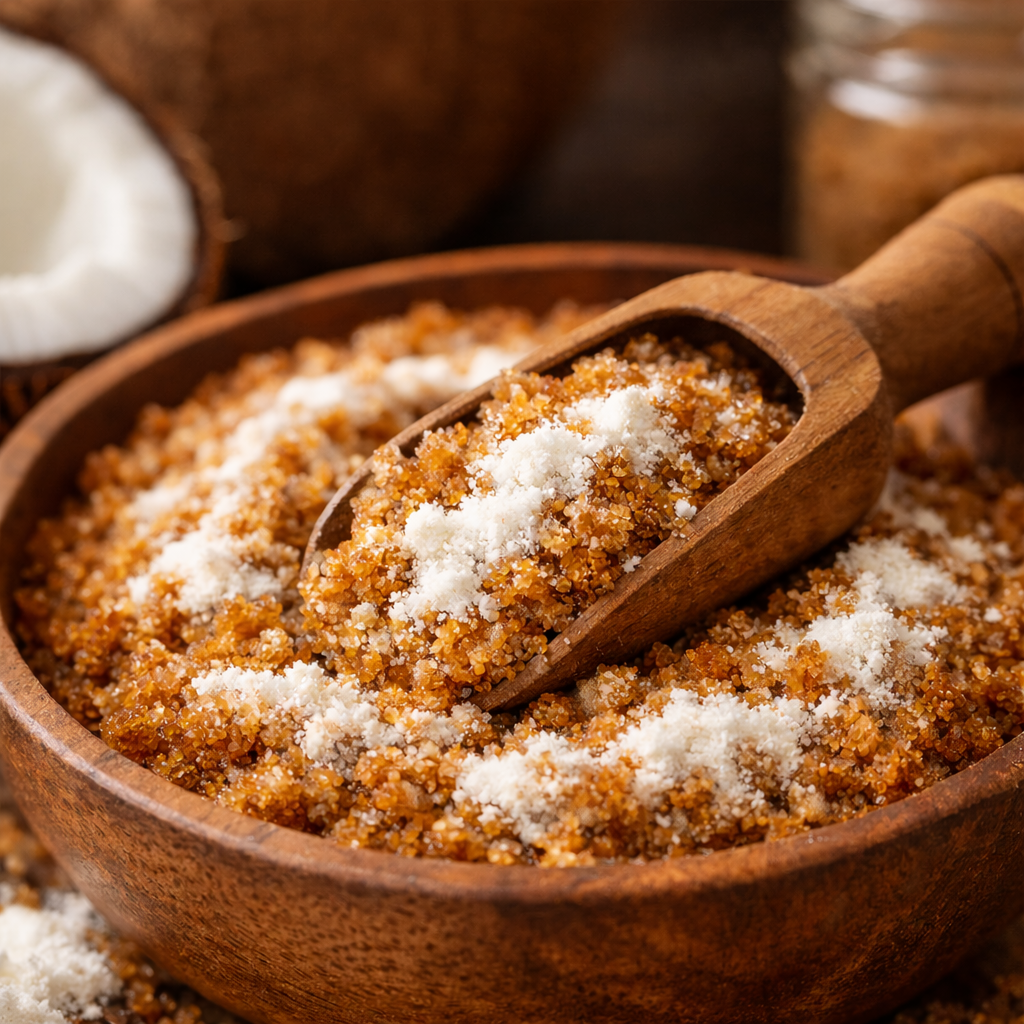
You will detect various volatile esters and pyrazines emerging during the post-processing stages. These compounds are key to the distinctive caramel and toasted notes characteristic of high-quality coconut sugar.
Unpacking the aroma of coconut sugar, you encounter a complex symphony of volatile compounds. You will find that esters, such as ethyl acetate and ethyl lactate, contribute fruity and sweet undertones, while pyrazines, like 2,5-dimethylpyrazine, are responsible for the warm, roasted, and nutty notes. These compounds are formed through Maillard reactions and caramelization during the heating and drying of the sap, and their precise balance defines the sugar’s appealing flavor depth.
Hygroscopic Nature of Coconut Sugar and Moisture-Induced Textural Collapse
Coconut sugar readily absorbs moisture from the environment, leading to a sticky, clumpy texture. This hygroscopic behavior can compromise its free-flowing nature, impacting your user experience and the product’s overall quality. For information on Shelf-Stable Food Safety, consult USDA guidelines.
Glass Transition Temperature (Tg) and Plasticization of the Sugar Matrix
You may observe that coconut sugar transitions from a glassy, brittle state to a rubbery, plasticized one with increasing moisture. This change directly impacts its physical stability.
Impact of Moisture on Coconut Sugar Texture
| Condition | Resulting Texture |
| :—————— | :———————————————- |
| Low Moisture | Hard, brittle, crystalline |
| Increased Moisture | Soft, sticky, amorphous |
Particle Agglomeration and the Dissolution of Crystalline Structures
High humidity causes individual sugar particles to stick together, forming larger clumps. This agglomeration dissolves the distinct crystalline structures you expect from granular sugar.
Moisture acts as a plasticizer, reducing the glass transition temperature of the sugar matrix. This allows the sugar molecules to move more freely, promoting their interaction and subsequent clumping. The crystalline integrity of the sugar is compromised, leading to a less desirable, often sticky, consistency. You will find the sugar less free-flowing and potentially harder to use in recipes.
Molecular Mobility and the Acceleration of Non-Enzymatic Reactions
Increased moisture enhances molecular movement within the sugar, accelerating non-enzymatic browning reactions. This directly impacts the sugar’s flavor and color over time.
The greater molecular mobility in the presence of moisture provides the necessary conditions for Maillard reactions and caramelization to proceed more rapidly. These reactions, while desirable in controlled cooking, can lead to off-flavors and undesirable color changes during storage. You might notice a darker hue and a less fresh taste in your coconut sugar if it has been exposed to high humidity for extended periods.
Volatile Ester Hydrolysis and Loss of Fruity Top Notes
You may notice a decline in the pleasant fruity notes of coconut sugar over time. Moisture and heat accelerate the hydrolysis of volatile esters, particularly ethyl acetate and isoamyl acetate. This chemical breakdown diminishes the characteristic tropical, sweet aromas, leaving a less vibrant flavor profile.
Acid-Catalyzed Cleavage of Ethyl Acetate and Isoamyl Acetate
Increased moisture in coconut sugar provides an aqueous medium, facilitating acid-catalyzed ester hydrolysis. This reaction cleaves ethyl acetate and isoamyl acetate, reducing their concentrations and contributing to the loss of your product’s desirable fruity essence.
Impact of Endogenous pH (5.5-6.5) on Lactone Stability
The inherent pH of coconut sugar, typically between 5.5 and 6.5, significantly influences lactone stability. This pH range can promote the hydrolysis of certain lactones, which are key contributors to the sugar’s creamy, caramel-like notes.
Considering the inherent pH of coconut sugar, you can anticipate how it influences the degradation kinetics of lactones. This slight acidity, while not extreme, provides a suitable environment for the ring-opening hydrolysis of these cyclic esters. Such a process gradually converts stable lactones into their open-chain hydroxy acids, effectively diminishing their characteristic aroma contributions and altering the overall flavor balance of your product.
Vapor Pressure Dynamics and Surface Volatilization in Compromised Packaging
Compromised packaging allows volatile compounds to escape through diffusion and convection. Higher vapor pressures of esters and lactones drive their volatilization from the sugar’s surface, leading to aroma loss and a muted flavor experience.
Observing the effects of compromised packaging reveals a direct consequence of vapor pressure dynamics. When the protective barrier is breached, the partial pressure of volatile aroma compounds above the coconut sugar’s surface becomes lower than their internal concentration. This pressure differential drives the molecules from the sugar into the surrounding atmosphere. Over time, this continuous efflux of aroma components, particularly those with higher vapor pressures, results in a significant depletion of the very compounds responsible for your product’s desired fragrance and taste.
Oxidative Rancidity of Residual Lipid Fractions
You may wonder how residual lipids, even in small amounts, contribute to off-flavors. These trace fats, inherent to coconut sap, are susceptible to oxidation. Oxygen exposure initiates a chain reaction, generating undesirable compounds that compromise your coconut sugar’s delicate aroma profile over time.
Autoxidation Mechanisms of Unsaturated Fatty Acids in Coconut Sap
Oxygen readily reacts with unsaturated fatty acids present in the coconut sap. This process, autoxidation, involves free radical formation, leading to hydroperoxides. The presence of double bonds in these lipids makes them particularly vulnerable to this initial attack.
Decomposition of Hydroperoxides into Hexanal and Nonanal Off-Flavors
Hydroperoxides, once formed, are unstable intermediates. They readily break down into a range of volatile aldehydes and ketones. These breakdown products include hexanal and nonanal, compounds directly linked to “grassy” or “stale” notes in your coconut sugar.
Hydroperoxides, inherently unstable, undergo scission reactions, cleaving into smaller, more volatile molecules. This fragmentation yields aldehydes like hexanal, associated with green, fatty notes, and nonanal, contributing a waxy, tallowy aroma. Your coconut sugar’s fresh, caramel-like scent diminishes as these off-flavor compounds accumulate, signaling the onset of oxidative rancidity.
Catalytic Role of Naturally Occurring Iron and Copper Traces
Trace metals, such as iron and copper, naturally present in coconut sap, accelerate oxidation. These metal ions act as catalysts, promoting free radical formation. You will find they significantly increase the rate at which off-flavors develop.
Metal ions, even in minuscule concentrations, facilitate the decomposition of hydroperoxides and initiate further free radical reactions. Iron and copper, acting as pro-oxidants, donate or accept electrons, accelerating the formation of reactive oxygen species. Your coconut sugar’s shelf life is directly impacted by these naturally occurring catalysts, making careful processing and storage paramount.
Furan and Aldehyde Oxidation Pathways
You may wonder how coconut sugar’s unique caramel notes transform. Moisture and oxygen initiate complex furan and aldehyde oxidation, creating new aromatic compounds. These pathways directly impact the delicate balance of your coconut sugar’s flavor profile over time.
Oxidative Conversion of Furfural and HMF into Carboxylic Acids
Oxidation pathways convert furfural and HMF, key flavor compounds, into carboxylic acids. This process shifts your coconut sugar’s aroma from warm and sweet to more acidic and less desirable notes, diminishing its original character.
Formation of Formic and Levulinic Acids in Oxygen-Permeable Environments
Oxygen exposure encourages the formation of formic and levulinic acids. These acids contribute significantly to off-flavors, signaling a decline in your coconut sugar’s quality and shelf stability.
You will notice these acids developing more readily in packaging that permits oxygen ingress. Formic acid, a simpler carboxylic acid, often imparts a sharp, pungent note, while levulinic acid brings a more sour and slightly bitter undertone. These compounds are byproducts of sugar degradation and indicate that the desirable caramelization products are breaking down, leading to a less appealing taste experience for your customers. Controlling oxygen is paramount to mitigate their formation.
Degradation of Warm, Bready Notes into Bitter-Sharp Secondary Products
Your coconut sugar’s comforting warm and bready notes degrade through oxidation. This transformation yields bitter-sharp secondary products, drastically altering the pleasant aroma you initially sought in the product.
This degradation is a direct consequence of the breakdown of beneficial Maillard reaction products and caramelization compounds. The complex molecules responsible for the appealing bready and slightly toasted aromas are susceptible to oxidative cleavage. As these larger, more stable flavor molecules break apart, they form smaller, often more volatile compounds that can register as harsh or bitter on the palate. You will find that this shift dramatically impacts the overall sensory perception, moving away from the desired sweetness and warmth towards an uninviting bitterness.
Amino Acid and Protein-Derived Off-Flavor Development
You might wonder how amino acids contribute to off-flavors. These compounds, present in trace amounts, react through various pathways, particularly under conditions of increased moisture and oxygen. Their degradation products can introduce undesirable aromas, shifting your coconut sugar’s delicate profile.
Advanced Glycation End Products (AGEs) and Acrid Strecker Aldehydes
Exposure to heat and moisture accelerates reactions between reducing sugars and amino acids. These form AGEs and Strecker aldehydes, which impart acrid, burnt, or malty notes, drastically altering your product’s intended taste.
- Off-Flavor Mechanisms
Mechanism Flavor Impact Maillard Reaction Burnt, acrid, malty notes Strecker Degradation Acrid, pungent aldehydes
Oxidative Deamination and the Release of Ammonia and Amines
Oxygen initiates the deamination of amino acids. This process releases ammonia and various amines, contributing to a sharp, pungent, or fishy off-flavor that you want to avoid in your coconut sugar.
The presence of oxygen directly triggers the oxidative deamination of amino acids. This chemical transformation removes the amino group, generating ammonia and a variety of volatile amines. These compounds possess distinct, often unpleasant, odors described as pungent, fishy, or even ammoniacal, significantly detracting from the natural sweetness and caramel notes of coconut sugar. You will notice these off-notes as the product ages and is exposed to air.
Generation of Sulfur-Containing Volatiles and Cabbage-like Taints
Certain sulfur-containing amino acids, under oxidative conditions, degrade into volatile sulfur compounds. These can produce distinct cabbage-like, rotten egg, or even oniony taints in your product.
Sulfur-containing amino acids, such as methionine and cysteine, are particularly susceptible to oxidative degradation. When exposed to oxygen, these amino acids break down, forming a range of volatile sulfur compounds. These compounds are notorious for their strong, often unpleasant, odors, including notes reminiscent of cooked cabbage, rotten eggs, or even pungent onions. You will find these taints can quickly overwhelm the subtle, natural sweetness of coconut sugar, making it unappealing.
Impact of Water Activity (aw) on Reaction Kinetics
You’ll discover water activity (aw) directly influences reaction rates in coconut sugar, accelerating flavor degradation. Higher aw allows greater molecular mobility, increasing chemical reaction speed. For more RESOURCES, you can explore the sugar industry toolkit.
Critical aw Thresholds for Accelerating Flavor Degradation
Coconut sugar exhibits specific aw thresholds where flavor degradation significantly accelerates. Exceeding these points, even slightly, can rapidly diminish desirable aromatic compounds. Maintaining low aw is key for stability.
Diffusion-Limited vs. Reaction-Limited Volatile Loss
Flavor loss in coconut sugar can be either diffusion-limited or reaction-limited. Diffusion-limited loss occurs when volatile compounds escape through the matrix. Reaction-limited loss happens when chemical reactions destroy flavor molecules.
Considering these two mechanisms helps you understand how flavor changes. In diffusion-limited scenarios, the physical structure of the sugar and its moisture content dictate how quickly aroma compounds can migrate out. Conversely, reaction-limited loss focuses on the chemical stability of the flavor molecules themselves, where water activity and oxygen exposure drive degradation reactions within the sugar matrix. Understanding this distinction guides effective storage strategies.
Influence of Storage Temperature on Moisture-Oxygen Synergies
Storage temperature dramatically impacts how moisture and oxygen synergistically degrade coconut sugar flavor. Elevated temperatures amplify the destructive effects of both, accelerating off-flavor development.
You can observe a complex interplay between temperature, moisture, and oxygen. Higher temperatures not only increase the rate of chemical reactions involving oxygen but also enhance the mobility of water molecules within the sugar. This increased mobility allows for more efficient interaction between reactants, thus accelerating the formation of undesirable compounds and the loss of pleasant aromas. Managing temperature is therefore paramount for maintaining product quality.
Temperature and Flavor Stability
| Low Temperature | Slows down molecular movement, inhibiting degradation reactions and volatile loss. |
| High Temperature | Accelerates chemical reactions, increasing the rate of oxidation and moisture-driven degradation. |
Moisture-Oxygen Synergies at Varying Temperatures
| Cool, Dry Conditions | Minimizes both oxidative and hydrolytic reactions, preserving flavor compounds for longer. |
| Warm, Humid Conditions | Significantly boosts the combined destructive power of oxygen and water, leading to rapid flavor deterioration. |
Synergistic Effects of Oxygen and Moisture on Volatile Migration
You may wonder how oxygen and moisture interact to accelerate flavor degradation. Their combined presence creates a more aggressive environment than either alone, significantly impacting the stability and migration of volatile aroma compounds within coconut sugar. This synergy drastically alters the sugar’s physical and chemical properties.
Disruption of Encapsulation Matrices via Structural Plasticization
Moisture uptake plasticizes the sugar matrix, weakening its protective structure. This allows encapsulated volatile compounds to escape more easily. Oxygen then readily reacts with these newly exposed aroma molecules, initiating their degradation.
Enhanced Oxygen Diffusion Rates in High-Moisture Sugar Granules
Water absorption increases the free volume within sugar granules. This structural change facilitates faster oxygen permeation. Oxygen can then more rapidly access and react with volatile compounds, accelerating their oxidation and loss.
High moisture levels within the coconut sugar create a more permeable environment for oxygen. As water molecules are absorbed, they disrupt the tightly packed crystalline structure of the sugar, creating microscopic channels and increasing the overall porosity. This increased free volume acts as a superhighway for oxygen, allowing it to diffuse more quickly throughout the granule and reach previously protected aroma compounds. The enhanced transport directly translates to a faster rate of oxidative degradation for these delicate flavor molecules.
Combined Hydrolytic-Oxidative Degradation of Complex Aroma Profiles
Water can hydrolyze certain aroma precursors, forming new compounds that are highly susceptible to oxidation. Oxygen then rapidly degrades these newly formed, unstable molecules. This dual attack significantly alters the sugar’s complex flavor profile.
The simultaneous action of hydrolysis and oxidation presents a formidable challenge to flavor stability. Moisture initiates hydrolytic reactions, breaking down larger, more stable aroma precursors into smaller, often more reactive fragments. These newly exposed chemical bonds become prime targets for oxygen. The subsequent oxidative reactions then further degrade these hydrolyzed products, leading to a cascade of chemical changes. This combined assault can rapidly diminish desirable flavor notes and introduce off-flavors, fundamentally altering the coconut sugar’s aromatic complexity.
Packaging Barrier Performance and Permeation-Driven Aroma Loss
You now understand how moisture and oxygen degrade coconut sugar’s aroma. Packaging plays a critical role in preserving this delicate flavor. Effective barriers prevent these environmental factors from reaching your product, directly impacting its shelf life and sensory quality. Selecting the right packaging material minimizes aroma loss.
Evaluation of Oxygen Transmission Rate (OTR) and Moisture Vapor Transmission Rate (MVTR)
Measuring OTR and MVTR quantifies a packaging material’s protective ability. Low rates indicate superior barrier performance, directly translating to better flavor stability. These metrics guide your material selection for optimal coconut sugar preservation.
Comparative Efficacy of Metallized Films vs. Standard Polyethylene
Metallized Films vs. Standard Polyethylene Comparison
| Metallized Films | Standard Polyethylene |
| Offer superior oxygen and moisture barrier properties. | Provides limited protection against gas and vapor permeation. |
| Extend shelf life by minimizing aroma degradation. | Leads to faster flavor deterioration over time. |
You can see metallized films significantly outperform standard polyethylene in protecting coconut sugar. Their enhanced barrier properties against oxygen and moisture drastically slow down the aroma degradation process. Choosing these films means a longer-lasting, more aromatic product for your consumers.
Implementation of Active Packaging with Oxygen Scavengers and Desiccants
Consider active packaging components to further enhance protection. Oxygen scavengers and desiccants actively remove residual oxygen and moisture from the package. This proactive approach ensures maximum flavor stability for your coconut sugar.
You can integrate active packaging solutions to address remaining environmental threats. Oxygen scavengers absorb any oxygen that permeates the packaging, preventing oxidative reactions that diminish aroma. Desiccants, similarly, control internal humidity, stopping moisture-induced flavor changes. These additions provide an extra layer of defense, ensuring your coconut sugar retains its unique character for longer.
Analytical Methodologies for Monitoring Flavor Decay
Monitoring flavor stability requires precise analytical tools. You will understand how we identify and quantify the chemical changes driving coconut sugar’s aroma decay, providing insights into its shelf-life limitations.
HS-SPME-GC-MS Quantification of Volatile Degradation Markers
You can quantify specific volatile compounds. This technique isolates and identifies key aroma markers, showing their concentration changes over time, directly linking to flavor degradation.
Electronic Nose (E-Nose) Profiling of Oxidative Stale Notes
You can detect complex aroma profiles. The E-Nose offers a rapid, non-destructive method for fingerprinting stale notes, revealing shifts in overall aroma character.
This advanced sensory technology employs an array of specialized gas sensors, each tuned to react differently to various volatile compounds. As the coconut sugar ages, the E-Nose captures a distinct “smell print” that reflects the evolving oxidative degradation. You can then analyze this data to identify patterns associated with specific undesirable aromas, offering a comprehensive overview of the product’s freshness.
Correlation of Chemical Markers with Quantitative Descriptive Analysis (QDA)
You can connect chemical data with human perception. This process links objective analytical results with subjective sensory evaluations, validating chemical markers as predictors of flavor changes.
This critical step bridges the gap between scientific measurements and the actual consumer experience. Trained sensory panels use QDA to meticulously describe and quantify specific aroma attributes, such as “caramel,” “toasted,” or “oxidized.” You can then statistically correlate these human perceptions with the concentrations of volatile compounds identified by GC-MS and the E-Nose profiles. This allows you to pinpoint precisely which chemical changes are responsible for the perceived flavor deterioration, providing actionable data for improving product stability.
Sensory Evaluation and Consumer Perception of Aged Coconut Sugar
You can understand how moisture and oxygen alter coconut sugar’s chemical profile by examining its sensory changes. Trained panels and consumer studies reveal shifts in aroma and taste over time, directly impacting your perception of quality and acceptability. These evaluations help pinpoint when off-flavors become noticeable.
Identification of Thresholds for Soapy, Cardboard, and Painty Off-Flavors
You can identify the precise concentrations at which undesirable soapy, cardboard, and painty notes become detectable. These thresholds are critical for determining the onset of spoilage and informing your quality control measures for aged coconut sugar products.
Impact of Aroma Flattening on Perceived Sweetness and Quality
You will notice that as desirable aroma compounds diminish, the overall perceived sweetness and quality of the coconut sugar decrease. This “aroma flattening” directly affects your sensory experience and product satisfaction.
The reduction in characteristic caramel and toasted notes, often associated with fresh coconut sugar, creates a less complex and appealing flavor profile. You might perceive the sugar as less sweet, even if the sugar content remains unchanged, because aroma plays a significant role in sweetness perception. This decline in aromatic richness therefore diminishes the overall quality and desirability of the product for you.
Flavor Stability Over Shelf Life of Coconut Sugar – Optimization Based on Sensory Drift
You can develop predictive models by correlating chemical changes with sensory data. These models allow you to forecast shelf life, ensuring your products maintain optimal flavor and consumer appeal for longer periods.
These models integrate data from gas chromatography-mass spectrometry (GC-MS) and other analytical techniques with the results from your sensory evaluations. By identifying key chemical markers that correspond to the emergence of off-flavors or the decline of desirable aromas, you can predict when your coconut sugar will no longer meet quality standards. This proactive approach helps you optimize packaging, storage conditions, and expiration dates, ultimately extending product viability and minimizing waste while satisfying your consumers.
Conclusion
Summing up, you understand that moisture pickup and oxygen exposure are critical factors influencing coconut sugar’s flavor stability. You’ve seen how these environmental elements directly alter the sugar’s aroma chemistry, leading to undesirable changes over shelf life. To preserve the distinct caramel and nutty notes consumers value, you must implement effective packaging and storage solutions that minimize both humidity and air contact. Maintaining these conditions ensures your product consistently delivers its intended sensory profile.