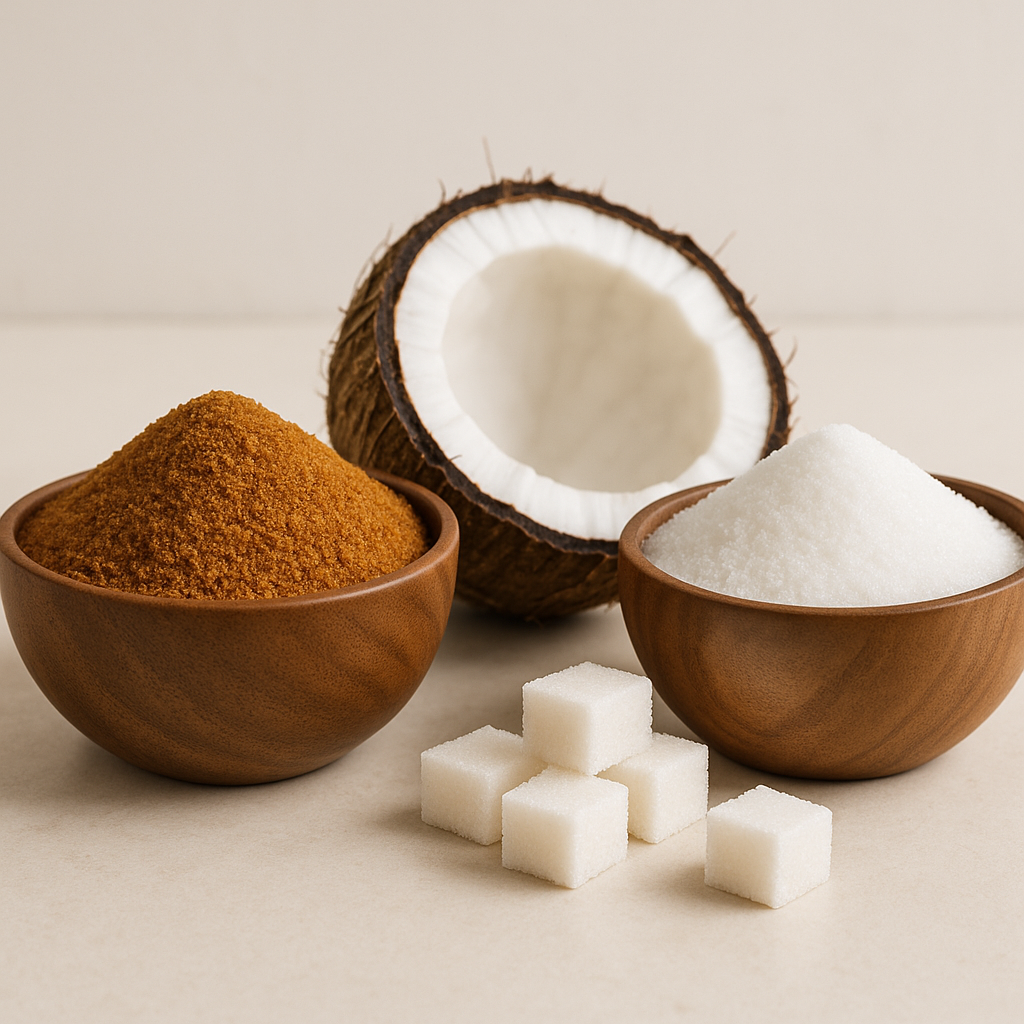
Candida overgrowth has a lot of people rethinking their sweeteners, and coconut sugar shows up constantly in health blogs, recipes, and coffee shop menus as the “better” choice. But the real question for anyone managing candida is: Does Coconut Sugar Feed Candida Differently Than White Sugar?
“Natural” doesn’t automatically mean safer when it comes to candida – both coconut sugar and white sugar contain fructose and glucose, which is exactly what candida feeds on. The honest answer comes down to glycemic impact, processing, and how the body metabolizes each one.
Coconut sugar does have a lower glycemic index, which means a slower blood sugar rise and potentially a bit less fuel for candida in the short term. But over the long run, the difference is marginal – the gut doesn’t distinguish between sugar from a palm tree and sugar from a cane field. If overgrowth is the concern, the real lever is cutting back on added sugars across the board, not finding a loophole sweetener.
Seriously, what’s the deal with sugar and yeast?
It’s well established that sugar feeds yeast – that’s not just a wellness myth. Candida, a type of yeast that lives in the gut, thrives when sugar is available. But not all sugars behave identically in the body, which is exactly why this comparison keeps coming up in gut health circles.
Why candida loves a good sugar rush
Candida feeds on simple carbohydrates, breaking them down into glucose – its preferred fuel. Eating sugary foods, especially refined ones, sends blood sugar up quickly and gives candida exactly what it needs to multiply.
Is all sugar really the same to your gut?
On paper, sugar is sugar, but the gut doesn’t read it that way. White sugar hits fast, spiking insulin and feeding microbes quickly. Coconut sugar, while still sugar, comes with a bit of fiber and minerals that slow absorption somewhat – so the two aren’t identical, even if the difference isn’t dramatic.
Coconut sugar still contains sucrose, which breaks down into glucose and fructose – the same fuel candida feasts on. Its lower glycemic index does mean a slower release into the bloodstream, which can translate to a somewhat less aggressive feeding window for yeast. That’s a real but modest difference, not a green light to use it freely. How any individual responds matters too – one person might feel fine with a spoonful in coffee, another might notice bloating or brain fog, which is why tracking personal reactions is more useful than blanket rules. Swapping white sugar for coconut sugar vs cane sugar might help a little, but it won’t fix a sugar-heavy diet on its own.
The real deal about coconut sugar
Coconut sugar gets called “healthier” often enough that people assume it doesn’t feed candida the way white sugar does. In reality, it still feeds candida – it has a slightly lower glycemic index, but it’s still mostly sucrose, and the body breaks it down the same way. Does Coconut Sugar Feed Candida Differently Than White Sugar? Not in any way that matters long-term.
What’s actually inside that brown bag?
That sandy brown sugar comes from the sap of coconut palm flowers, dried into granules. It contains small amounts of inulin, minerals, and polyphenols, but not enough to meaningfully change how the body processes it. At its core, it’s still sugar. The sap collection timing affects composition, but the nutritional profile remains largely consistent.
Why people think it’s a “healthy” swap
Plenty of blogs call coconut sugar a “natural” or “low-glycemic” alternative, and a lot of that comes down to marketing – it sounds earthy and wholesome in a way refined white sugar doesn’t. But “natural” doesn’t mean “safe for candida diets.”
Part of the appeal is coconut sugar’s glycemic index of roughly 35-54, compared to white sugar’s 60-65 – that gap makes it seem safer. Trace nutrients like zinc, iron, and antioxidants get cited too, but nobody is eating enough coconut sugar to get a meaningful dose of those. In the gut, both sugars end up as fuel for yeast – swapping one for the other doesn’t shift the needle much for candida management. The glycemic index varies across studies depending on processing and mineral content.
Why white sugar gets such a bad rap
White sugar gets called “toxic” or “addictive” for good reason – it’s stripped of nutrients, absorbed rapidly, and feeds harmful microbes in the gut efficiently. Does Coconut Sugar Feed Candida Differently Than White Sugar? Only in speed, not in outcome.
It’s basically rocket fuel for bad bacteria
Candida thrives on simple sugars, and white sugar is close to a direct pipeline to overgrowth – every spoonful hands harmful microbes the energy they need to multiply quickly.
The spike-and-crash cycle we all hate
That post-sugar crash isn’t just fatigue – it’s blood sugar spiking and then dropping hard. White sugar hits the system fast, spiking insulin and leaving behind that drained, hungry, craving-more feeling. That rollercoaster feeds inflammation and creates conditions where candida can flourish.
Because coconut sugar has a lower glycemic index, it doesn’t trigger that cycle quite as aggressively – the slower release means somewhat less stress on the system and potentially less fuel for candida to exploit. The overall pattern of sugar intake, not just which type is used, plays the bigger role here. Understanding sucrose inversion during processing can help explain why coconut sugar behaves slightly differently in the body.
Does your candida actually care which one you pick?
Standing in the grocery aisle deciding between coconut sugar and white sugar, it’s worth knowing that candida doesn’t keep score on brand loyalty. Both break down into glucose – fuel for yeast overgrowth either way. It thrives on sugar, period.
My take on the glycemic index myth
Coconut sugar’s lower glycemic index gets a lot of credit, but that number doesn’t tell the whole story. It still spikes blood sugar, just somewhat slower, and insulin still responds. The difference amounts to a few minutes – not enough to matter much to hungry yeast.
Honestly, it’s still sugar at the end of the day
Labels like “natural” or “mineral-rich” don’t change the fact that coconut sugar is still sugar, processed by the body in much the same way as any other. Candida feeds on glucose, and both sugars deliver it. Does Coconut Sugar Feed Candida Differently Than White Sugar? Both feed candida; the source doesn’t matter to yeast.
Coconut sugar does have trace nutrients like iron and zinc, but getting any real benefit would mean eating far more than anyone reasonably would – and by then, any nutritional edge is beside the point. The difference between the two sugars shows up mostly in marketing, not in metabolism. Cutting back on sugar generally – not swapping one type for another – is what actually moves the needle. The ash chemistry and mineral content can be verified through lab testing.
But wait, what about the “good stuff” in coconut sugar?
Coconut sugar often gets praised for its nutrients and fiber, as if that gives it some kind of health halo around candida. But a few extra minerals or a hint of inulin doesn’t change the fact that it still feeds candida much like other sugars – not in any way the yeast actually notices.
Does a little bit of inulin really change things?
Inulin is a fiber in coconut sugar that sounds like it should offer prebiotic benefits, but the amount present is tiny – nowhere near enough to make a real dent in gut balance or meaningfully slow sugar absorption. It won’t stop candida from thriving. While inulin content varies between batches, the levels remain too low to significantly impact candida.
Why the minerals won’t save your gut health
Coconut sugar does contain more iron, zinc, and potassium than white sugar, but getting a meaningful amount would require eating far more than makes sense. On paper the mineral content sounds promising; in practice it’s a drop in the bucket.
And even the minerals that are present aren’t absorbed efficiently when consumed alongside a load of sugar – high sugar intake itself impairs nutrient absorption and fuels inflammation, canceling out whatever small gain there might have been. Candida thrives in sugary, imbalanced environments regardless of where the sugar comes from. Does Coconut Sugar Feed Candida Differently Than White Sugar? The minerals don’t change the answer.
So, should you make the switch or just skip both?
Swapping white sugar for coconut sugar can feel like it should make a difference for candida, but both feed yeast – just at slightly different speeds. Coconut sugar’s modestly lower glycemic index doesn’t change the fact that it’s still sugar. For anyone serious about managing candida, the real answer isn’t substitution but reduction. Ensuring proper water activity levels in coconut sugar helps prevent mold and yeast growth during storage.
How to handle your sweet tooth without a flare-up
Sugar cravings hit hardest when stressed or tired, but giving in doesn’t have to mean feeding candida. Small swaps – a square of dark chocolate, a spoonful of cinnamon-spiced almond butter – can take the edge off without spiking blood sugar or handing yeast a feast. Restraint and smarter choices do more here than any specific sweetener swap.
Here’s my favorite way to sweeten things safely
Stevia sidesteps the whole debate – a few drops in tea or homemade granola provide sweetness without spiking insulin, since candida can’t ferment it the way it can sugar. Coconut sugar might be marginally different from white sugar, but stevia avoids the question entirely, with steady energy and none of the bloating or brain fog that can come with sugar. Using properly stored coconut sugar reduces the risk of contamination.
The Bottom Line
So Does Coconut Sugar Feed Candida Differently Than White Sugar? Not really. Both break down into glucose and fructose in the body, and candida doesn’t care which plant the sugar came from – it thrives on sugar, period. Swapping one for the other won’t stop an overgrowth on its own.
The lower glycemic index of coconut sugar offers a slightly slower blood sugar rise, which might reduce the immediate fuel available to candida. But that modest difference doesn’t translate to meaningful protection against overgrowth. Both sugars ultimately deliver the same fermentable fuel that yeast populations use to multiply.
The more useful move is reducing added sugar across the board, regardless of where it comes from. Cutting total sugar intake, managing stress, supporting gut diversity, and addressing underlying imbalances will do far more for candida management than switching sweeteners. If you do use coconut sugar occasionally, choose minimally processed versions and keep portions small – but don’t mistake it for a candida-safe food.