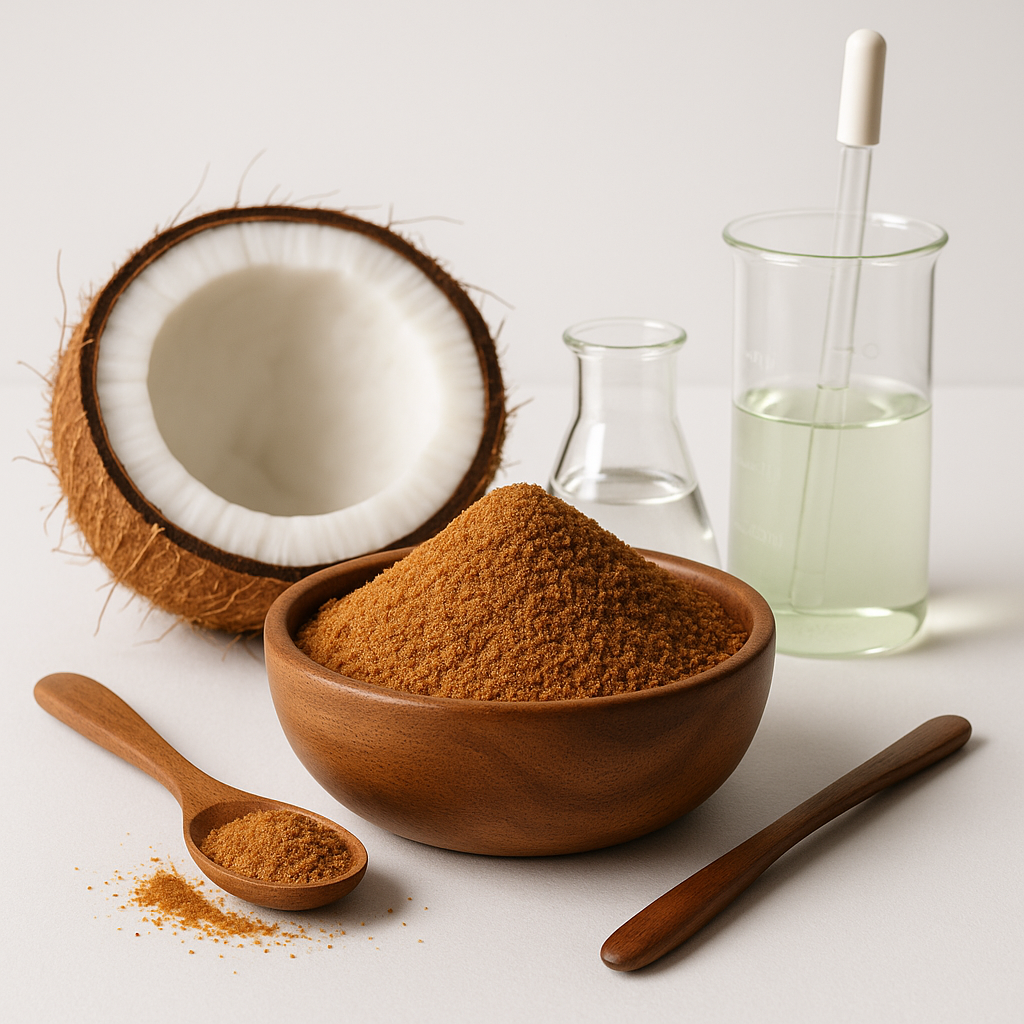
Reducing Excess Browning in Coconut Sugar starts with understanding that color isn’t random—it’s the predictable outcome of specific chemical pathways. Sap pH, mineral content, thermal load, and concentration all interact to drive melanoidin formation and caramelization. Control these variables, and you control final hue.
The Role of Sap pH and Buffering Capacity
Sap pH is one of the first variables that determines how much a batch of coconut sugar will brown. The sap’s natural buffering capacity—its resistance to pH change—also plays a role in how that plays out during processing.
Alkalinity as a Catalyst for Non-Enzymatic Browning
Higher pH accelerates both the Maillard reaction and caramelization. Alkalinity acts as a direct catalyst for non-enzymatic browning, which is why pH control is one of the first levers worth pulling when Reducing Excess Browning in Coconut Sugar.
pH Stabilization Techniques During Sap Collection
Two practical interventions happen right at collection: adding food-grade organic acids like citric acid directly to collection vessels or at the tapping point, and chilling the collected sap to below 10°C as quickly as possible. The acid keeps pH lower and inhibits enzymatic activity, while rapid chilling slows both microbial growth and the enzymatic reactions that would otherwise push pH upward. Both measures preserve the sap’s quality before it ever reaches the boiling stage. Proper sap handling from tapping to kettle remains essential for preventing unwanted color development.
Mineral Catalysis and Ash Content
The mineral content of coconut sugar—reflected in its ash content—is the other major catalytic factor. These inorganic components accelerate both caramelization and the Maillard reaction, making Reducing Excess Browning in Coconut Sugar a matter of managing mineral load as much as heat. For more on coconut sugar’s composition generally, see [source].
Impact of Potassium and Sodium Ions on Reaction Rates
Potassium and sodium ions, both naturally abundant in coconut sap, lower the activation energy needed for sugar degradation reactions—which means they speed up browning. Their concentration is one more thing worth keeping an eye on. Understanding the ash chemistry of coconut sugar helps clarify why mineral speciation matters so much.
Influence of Trace Elements on Pigment Polymerization
Even trace metals like iron and copper, present at parts-per-million levels, punch above their weight here. They participate in redox reactions that generate free radicals, which in turn promote polymerization of smaller colored compounds into larger, darker pigments. Keeping these trace elements low is a fairly precise science, but it has a real effect on final color.
Optimization of Thermal Processing Parameters
Thermal input is the most direct lever of all. The [source] relationship between end-point temperature and browning intensity makes the case for precise temperature management clearly.
Time-Temperature Integrals for Color Management
What matters isn’t just peak temperature but cumulative heat exposure—the time-temperature integral. Minimizing the overall thermal load throughout the process is what produces a lighter, more consistent color when Reducing Excess Browning in Coconut Sugar.
| Optimizing Time-Temperature Integrals | |
|---|---|
| Lower Temperatures | Longer processing times are acceptable if temperatures are kept lower. |
| Higher Temperatures | Shorter processing times become imperative at higher temperatures. |
Advanced Evaporation Techniques to Minimize Thermal Stress
Beyond managing time and temperature in a single pan, the choice of evaporation technology itself makes a difference. A few approaches stand out:
- Vacuum evaporation lowers the boiling point, allowing water removal at reduced temperatures.
- Thin-film evaporators minimize the product’s residence time, limiting thermal degradation.
- Multi-effect evaporators improve energy efficiency while keeping temperatures low.
- Mechanical vapor recompression (MVR) systems recycle heat to maintain gentler conditions throughout.
What all of these have in common is that they attack the root cause—prolonged high-heat exposure—rather than trying to correct for browning after the fact. The debate between vacuum evaporation vs open-pan cooking highlights the practical trade-offs processors face.
| What These Methods Improve | |
|---|---|
| Color Retention | Less browning occurs due to lower processing temperatures. |
| Nutrient Preservation | Heat-sensitive compounds are better retained. |
| Enhanced Aroma | Volatile aromatic compounds are better preserved. |
| Improved Solubility | The sugar’s physical properties remain optimal. |
Concentration Dynamics and Brix Management
Brix level—essentially how concentrated the sugar solution is—is another variable that feeds directly into browning intensity. Higher Brix during processing tends to push color development further. Reducing Excess Browning in Coconut Sugar means paying close attention to when and how concentration happens. For more background, see [source].
Managing Solute Density During the Granulation Phase
Uneven solute density during granulation can create localized “hot spots” where crystallization happens prematurely and overheating follows—both of which accelerate caramelization and the Maillard reaction in those specific areas. Keeping density consistent avoids this. Effective granulation and mesh size control directly influences product quality.
Viscosity Effects on Heat Transfer and Localized Overheating
Viscosity has a similar effect on heat distribution. A thick, viscous batch resists uniform heat penetration—even with active stirring—so some areas end up at higher temperatures for longer than others. Those localized hot zones accelerate caramelization and the Maillard reaction disproportionately, contributing more to overall browning than their size would suggest. The interplay between pH buffering and browning rate becomes especially pronounced in high-viscosity environments.
Integrated Strategies for Quality Standardization
None of these factors operate in isolation, which is why consistent color really comes down to combining precise process control with continuous monitoring when Reducing Excess Browning in Coconut Sugar.
Real-time Monitoring of Optical Properties and Melanoidins
Spectroscopic techniques can track color development in real time, which means adjustments can be made mid-process rather than discovered only after a batch is finished and already too dark. Standardized color control methods using CIE L*a*b* and A₄₂₀ provide objective benchmarks for quality.
Process Levers for Consistent Color Grading
In the end, it comes down to three interconnected levers: time, temperature, and Brix. Shorter processing times mean less browning; lower temperatures slow melanoidin formation; and the Brix level the sap is concentrated to affects both final hue and moisture content. Tuned together, these three variables turn color from something that happens to a batch into something a producer can actually target.
The Bottom Line
Reducing Excess Browning in Coconut Sugar isn’t one problem with one fix—it’s the cumulative result of pH, mineral content, thermal load, and concentration all interacting. Sap pH and buffering capacity set the stage for browning before heating even begins. Mineral ions catalyze both the Maillard reaction and caramelization, while time-temperature integrals and Brix control determine how far those reactions proceed. Address these factors together—through stabilization at collection, advanced evaporation technologies, real-time monitoring, and systematic process control—and a lighter, more consistent product follows naturally. Buyers seeking standard brown vs dark color profiles can now make informed decisions based on the underlying chemistry rather than guesswork.