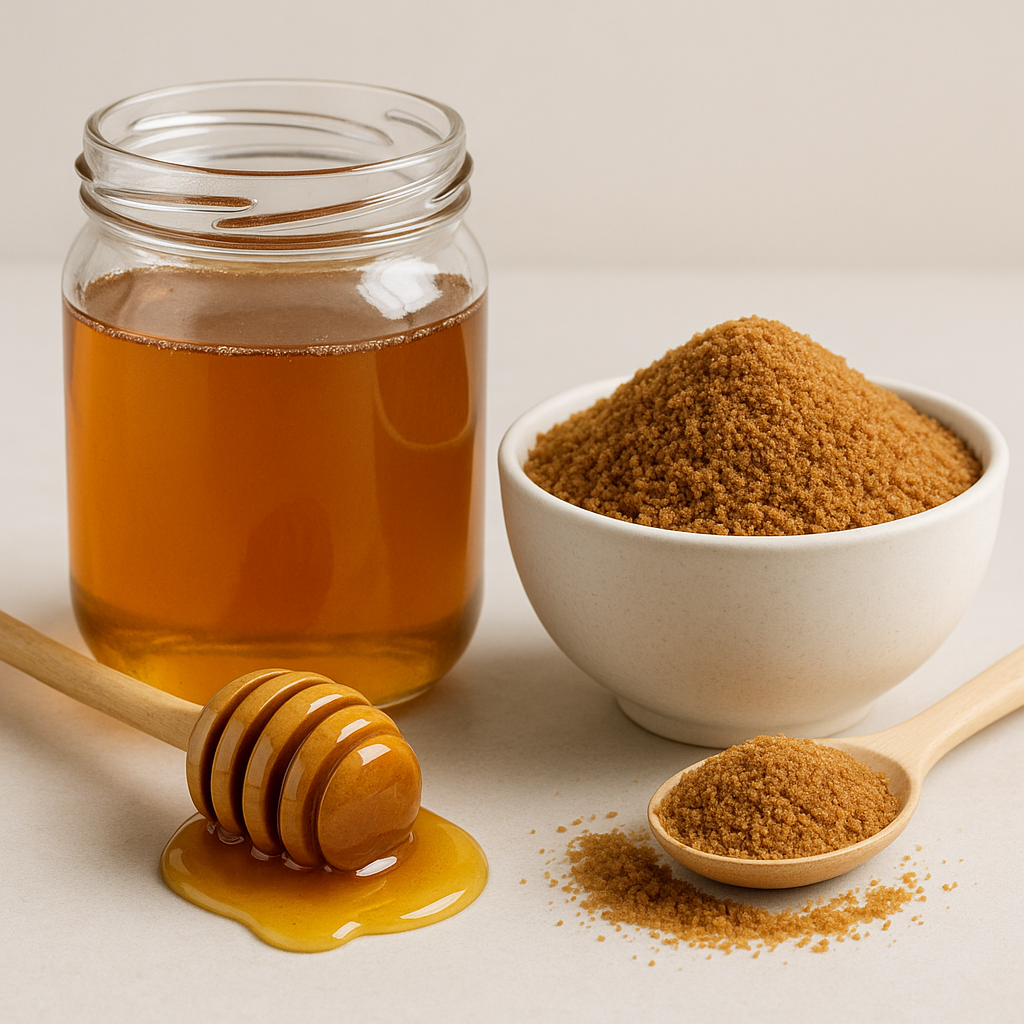
Anyone who loves baking but needs to swap honey for something less liquid and lower on the glycemic index has probably wondered how Substitution Ratios actually play out in real recipes. Getting the ratio wrong can turn cookies cakelike or bread dry – this isn’t just about replacing sweetness, it’s about adjusting moisture, texture, and browning too.
Coconut sugar isn’t just trendy – it’s functional. But because it doesn’t dissolve the same way honey does, the swap isn’t always 1:1. Liquids usually need tweaking, or a binder added, to go from sticky sweetener to dry granules.
Here’s the truth: getting this right isn’t just math – it’s chemistry in action.
Get the Substitution Ratios right, and the results come out perfectly balanced – no guesswork, no kitchen disasters.
So, what’s the actual ratio we’re looking at?
Swapping honey for coconut sugar isn’t quite as simple as it sounds. The ratio matters more than most realize – especially when shifting from a liquid sweetener to a dry one. A straightforward 1-to-1 volume replacement often works in a pinch, but identical results without tweaks shouldn’t be expected. That ratio depends on moisture content, sweetness intensity, and how the recipe reacts to structural changes.
Stick to the 1-to-1 rule for starters
Starting with a 1-to-1 volume swap works fine as a baseline – one cup of honey for one cup of coconut sugar. It won’t be perfect, but it keeps things simple while testing the waters. Other liquids will likely need adjusting, or a binder like flax or applesauce added. In baking, Substitution Ratios aren’t just numbers – they’re part of a bigger balancing act.
Why the liquid-to-dry swap is a big deal
Swapping a wet sweetener for a dry one changes everything – texture, spread, moisture, all of it. Honey adds liquid and acidity, which affects browning and rise. Coconut sugar brings caramel notes but zero moisture. That shift is where most substitutions fail.
Honey holds onto water, helps create chewiness, and even extends shelf life. Coconut sugar doesn’t do any of that. Ignore the liquid-to-dry reality, and the batter can end up too stiff or too dry, no matter how accurate the Substitution Ratios look on paper. That’s why smart bakers often add 1-2 tablespoons of liquid per cup of coconut sugar used. These numbers are starting points, not fixed rules – mastering the swap means understanding trade-offs, not just measurements.
Honestly, your texture is gonna change
Swapping honey for coconut sugar was always going to shift things, but the texture hits different – grittier, less chew. Unlike liquid honey, coconut sugar doesn’t caramelize the same way.
How to handle that extra dryness
A stiff batter is the cost of cutting honey’s moisture. The balance tips toward dryness since coconut sugar lacks natural liquids. Rebalancing helps – think applesauce, yogurt, or even a splash of milk. Getting Substitution Ratios right means adjusting more than just the sweetener.
My trick for adding a splash of liquid
Keeping a ¼ cup of warm water or plant-based milk on hand when mixing helps smooth things out without diluting flavor. It’s not magic – just smart tweaking based on how coconut sugar behaves in real bakes.
That little splash does more than hydrate – it helps dissolve the granules so gritty pockets don’t form. Because coconut sugar doesn’t melt like honey, the liquid jumpstarts integration. Get the ratio and this trick right, and the recipe won’t know what hit it. Perfect texture is totally doable with the right roadmap.
The real deal about the flavor shift
Swapping liquid gold for earthy crystals means honey’s delicate floral notes won’t survive the switch to coconut sugar. No ratio fixes that missing brightness, but it does help manage expectations. The change shows up immediately – coconut sugar brings a caramel-like depth, not that familiar honeyed warmth. Sweetness stays in check, but flavor complexity shifts in ways no math can fully predict.
Saying goodbye to those floral honey vibes
Honey carries subtle floral and sometimes fruity undertones – coconut sugar doesn’t play that game at all. That light, perfumed sweetness is gone for good. Sweetness levels can be balanced, but aroma can’t be replicated. So when banana bread tastes richer but less bright, that’s the trade-off – spring meadows traded for molasses-kissed earth.
Why your bake is gonna look way darker
Coconut sugar starts browning faster and deeper than honey – cookies might look like they’ve been sunbathing. This isn’t a flaw, just a visual heads-up. It’s not about sweetness – it’s chemistry. More caramelized compounds come into play from the get-go, so expect a rustic, almost burnt appearance that’s actually perfectly baked.
Maillard reaction and caramelization kick in hard with coconut sugar because of its high fructose and glucose content – similar to brown sugar. Even with precise Substitution Ratios, the batter begins life darker, and that color only deepens in the oven. Nothing’s gone wrong – eyes might just need to adjust. That deep amber crust is totally normal. The ratio ensures structural balance, but it can’t change how light or dark the final product appears – trust the process, not just the color.
Is it actually better for you or what?
Coconut sugar gets called a healthier honey alternative often enough, but let’s cut through the noise. Getting Substitution Ratios right in baking doesn’t automatically make one sweetener better. Swapping honey for coconut sugar trades moisture and flavor for a slightly lower glycemic response. Still, both are forms of sugar.
My take on the glycemic index hype
Coconut sugar’s lower glycemic index gets touted like it’s a free pass, but that number alone doesn’t tell the whole story. Yes, it scores lower than honey, but the difference is minor when sugar is still sugar. No ratio changes how the body processes glucose. Relying on GI alone is like judging a book by its cover – misleading and oversimplified.
Here’s the truth about the nutrients
Coconut sugar does have minerals – technically true. But the amount needed to get any real benefit makes the point moot. The tiny amounts of iron or zinc don’t justify the calories. Honey isn’t a vitamin bomb either, but at least it brings antioxidants to the table. This swap isn’t a health upgrade, no matter how it gets framed.
Any talk of “nutrient-rich” sugar is a stretch. Coconut sugar contains trace amounts of inulin, a fiber that *might* slow glucose absorption, but again, that’s splitting hairs. A 1:1 swap won’t show up as a difference in blood sugar or energy levels. The real win is knowing how the ratio affects texture and sweetness so the recipe works – not chasing mythical health perks.
What I’ve learned the hard way so you don’t have to
The ratio can make or break a bake – learned this after a batch of dry, cracked cookies that tasted more like cardboard than dessert. Swapping honey for coconut sugar isn’t just a 1:1 pour-and-mix deal. Liquid gets traded for dry, moisture gets lost, and the batter behaves differently. Getting the Substitution Ratios right means adjusting liquids, leavening, and technique – especially for soft, chewy results instead of sad, crumbly bricks.
Seriously, don’t forget to cream it well
Time matters when creaming coconut sugar into butter. Unlike honey, it won’t dissolve on its own. It needs beating – longer than expected – so the tiny crystals aerate the fat and create lift. Skip this, and cakes turn out dense. No ratio saves a weak foundation. Cream it like it matters.
When this swap just isn’t worth it
Some recipes just fight back. Delicate syrups, glazes, or anything that needs honey’s sticky gloss will fail with coconut sugar. The math might work out, but texture and flavor won’t follow. The result is a grainy mess and a lot of frustration. Some swaps just aren’t worth the effort.
Think about a honey drizzle on warm bread – golden, glossy, sliding slowly down the sides. Now picture sprinkling coconut sugar on toast. It doesn’t melt. It doesn’t flow. It just sits there. That’s the problem. In recipes where honey’s liquidity defines the dish – dressings, marinades, sticky buns – the ratio falls apart no matter how carefully it’s measured. The structure changes, the moisture balance shifts, and the final result feels off. Sticking with the original makes sense when flow and shine matter most – some things, the ratio just can’t rewrite.
The Short Version
Drawing it together: 1 cup of honey doesn’t swap neatly for 1 cup of coconut sugar – moisture and sweetness levels don’t match up. Both quantity and liquids in the recipe need adjusting. Honey is liquid and sweeter than coconut sugar, which is why Substitution Ratios guide how much to reduce or increase – and they affect browning and texture too. Get it wrong, and cookies might crack or taste flat. Get it right, and the bake sings. Master the underlying chemistry – moisture balancing, creaming technique, and knowing when to skip the swap entirely – and these adjustments become second nature, not guesswork.