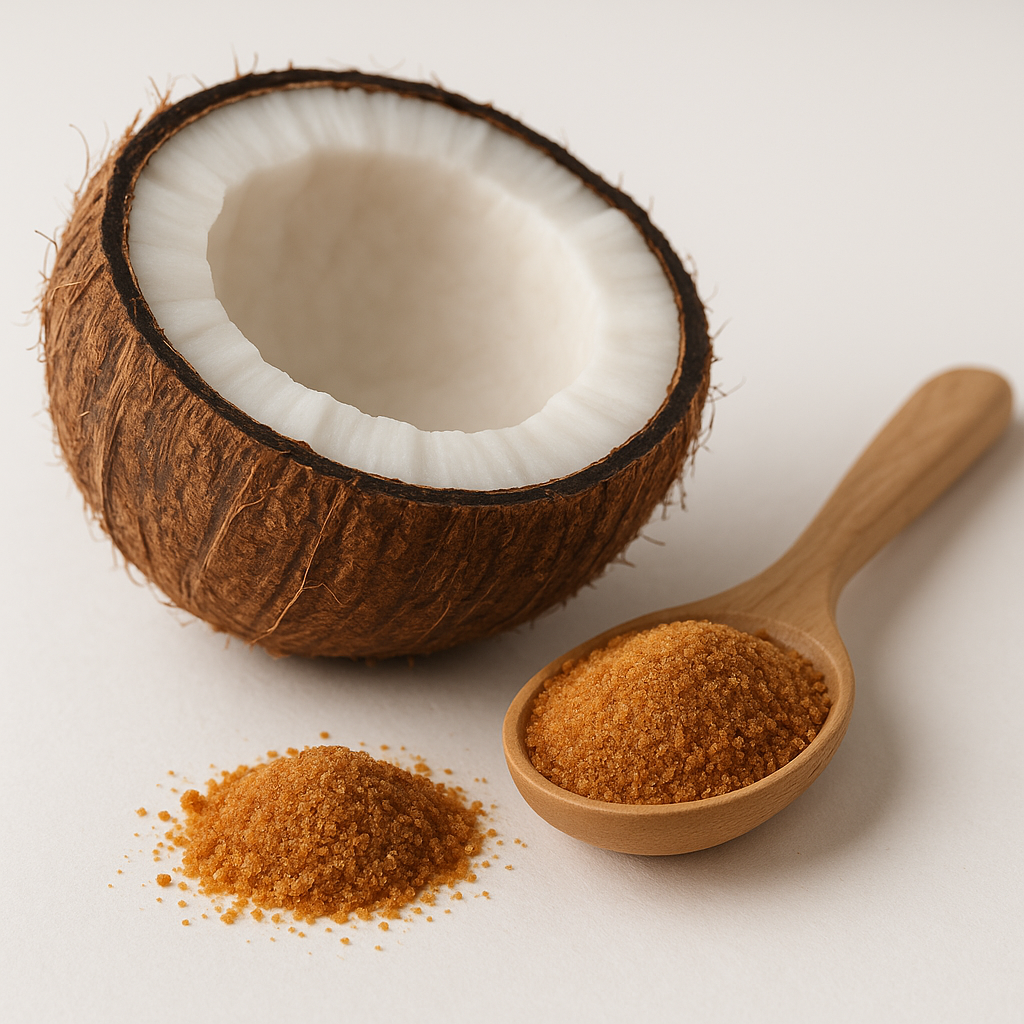
Coconut sugar gets a lot of credit for its antioxidant content, but cooking involves heat—and heat tends to be hard on delicate plant compounds. Understanding which Antioxidant Compounds in Coconut Sugar actually survive processing and cooking matters to buyers, formulators, and anyone trying to preserve nutritional value through the supply chain. This analysis looks at what’s present in raw coconut sugar, what endures thermal stress, and what new compounds form along the way.
Phytochemical Profile of Raw Coconut Sugar
Coconut sugar, derived from the sap of the coconut palm, has a surprisingly complex phytochemical makeup even before it gets anywhere near a pan. That raw profile is the baseline for figuring out what survives cooking.
Primary Polyphenolic Compounds and Flavonoids
Raw coconut sugar contains a diverse array of polyphenolic compounds and flavonoids—plant compounds well known for their antioxidant properties, and a big part of why coconut sugar gets its health-halo reputation. The presence of these Antioxidant Compounds in Coconut Sugar distinguishes it from heavily refined alternatives.
Concentration of Gallic Acid and Protocatechuic Acid
Research consistently identifies gallic acid and protocatechuic acid as two of the most prominent antioxidants in coconut sugar, contributing significantly to its overall antioxidant capacity.
Studies measuring these two phenolic acids in raw coconut sugar have found concentrations high enough to suggest a real impact on health, not just a trace presence. Sap collection timing influences these baseline levels before any heat processing comes into play.
The Impact of Initial Processing and Evaporation
The very first processing steps already start shaping the antioxidant profile. [source] Research highlights how careful sap collection and initial heating play a role in how much survives.
Thermal Degradation During Sap Reduction
Reducing sap into sugar requires heat, and some heat-sensitive Antioxidant Compounds in Coconut Sugar don’t make it through unchanged. Both the duration and intensity of heating play a role in how much is lost. Processing method shapes final product chemistry in significant ways.
Retention of Bioactive Compounds in Granulated vs. Liquid Forms
Granulated coconut sugar and its liquid syrup form go through different processing, which raises a natural question: does one retain more of these compounds than the other?
The answer varies. Granulated sugar goes through additional drying, which can either concentrate the remaining compounds or degrade them further depending on the method used. Liquid coconut sugar spends less time exposed to heat during concentration but retains more moisture. In both cases, the specific temperature and duration of processing end up being the deciding factors.
Thermal Stability of Antioxidants Under Culinary Heat
Different cooking methods affect these compounds differently, and the interplay gets complex fast. Here’s a rundown of what tends to survive and what doesn’t.
Critical Temperature Thresholds for Phenolic Breakdown
Knowing the temperature at which phenolic compounds start breaking down makes it possible to minimize losses by staying below these thresholds where practical.
| Phenolic Degradation Temperatures | |
| Flavonoids | Begin degradation around 180°C (356°F) |
| Phenolic Acids | Generally stable up to 200°C (392°F) |
Comparative Resistance of Specific Antioxidant Molecules
Different antioxidant molecules have very different heat tolerances—some hold up far better than others.
| Antioxidant Heat Resistance | |
| Quercetin | High stability, even in boiling |
| Catechins | Moderate stability, some loss with prolonged heat |
The specific chemical structure of each compound plays a big role in its resistance to heat. Glycosylated forms of flavonoids—where a sugar molecule is attached—tend to be more stable than their aglycone counterparts, which can mean more of these compounds survive cooking intact.
| Structural Factors in Heat Resistance | |
| Glycosylation | Increases stability of flavonoids |
| Molecular Size | Larger molecules sometimes more resistant |
What Actually Survives Cooking
Baking and high-moisture cooking affect Antioxidant Compounds in Coconut Sugar differently, and research backs that up. [source] For more on the broader nutritional picture, understanding effects on crumb color, spread, and texture helps contextualize survival rates in real applications.
Retention Rates in Dry Heat Environments
Dry heat, like baking, degrades some antioxidants more than others. Flavonoids and phenolic acids show varying degrees of stability under these conditions, with some holding up noticeably better than others. Reaction pathways during heating determine which compounds survive.
Solubility and Stability in Aqueous Culinary Applications
Aqueous cooking—simmering, stewing—introduces a different challenge: solubility. Water can leach certain antioxidants out of the sugar, reducing their concentration in the final dish.
Because many of these compounds are water-soluble, they can dissolve into the surrounding liquid during cooking—and prolonged heat in an aqueous environment accelerates their degradation further still. Both effects together influence the overall antioxidant capacity of the finished dish.
The Maillard Reaction and Formation of Neo-Antioxidants
Here’s the twist: heat doesn’t just destroy antioxidants, it also creates new ones. The Maillard reaction—the same browning reaction responsible for toast and seared meat—transforms sugars and amino acids into compounds called melanoidins, which have their own antioxidant activity. [source]
Development of Melanoidins During Caramelization
Melanoidins, the brown pigments formed during caramelization, are themselves potent antioxidants. These complex polymers contribute to both the sugar’s distinctive flavor and its ability to neutralize free radicals, even after all that heat exposure. Understanding reaction pathways and process levers helps optimize melanoidin formation.
Balancing Nutrient Loss with Enhanced Antioxidant Activity
Some initial nutrient degradation during processing is real—but the new compounds formed through the Maillard reaction often more than compensate, leading to a net gain in overall antioxidant capacity.
It’s a bit of a paradox: the same heat treatment that diminishes certain heat-sensitive antioxidants is also what creates melanoidins. Cooking, in other words, doesn’t just deplete beneficial compounds—it can generate them too, which is why Antioxidant Compounds in Coconut Sugar still carry meaningful value even after processing.
Comparative Efficacy Against Refined Sweeteners
How does all this compare to refined sweeteners in practical terms? The table below breaks down the key differences.
| Comparison Point | Details |
|---|---|
| Antioxidant Levels | Coconut sugar consistently shows higher levels of various antioxidant compounds compared to white cane sugar. |
| Processing Impact | Refined sugars undergo extensive processing that strips away virtually all of these beneficial compounds. |
| Nutrient Density | Beyond antioxidants, coconut sugar retains trace minerals that refined sugar lacks entirely. |
Total Antioxidant Capacity vs. Cane Sugar
Studies consistently show coconut sugar has a significantly higher total antioxidant capacity than refined cane sugar—a stark difference that largely reflects how minimally processed coconut sugar is by comparison. Mineral speciation and ash content contribute to this advantage.
Bioavailability and Health Implications of Cooked Residues
The natural follow-up question is whether any of this survives cooking in a form the body can actually use. Research suggests that a meaningful portion of these compounds endure heat and remain bioavailable.
Flavonoids and phenolic acids, the dominant antioxidants in coconut sugar, show some genuine resilience to heat. Some degradation is inevitable, but a measurable amount makes it through cooking intact and absorbable—which is more than can be said for most sweeteners. Moisture pickup and oxygen exposure can further affect compound stability post-processing.
Summing up
Thermal processing presents both challenges and opportunities for Antioxidant Compounds in Coconut Sugar. While some phenolic acids and flavonoids degrade under heat, others prove remarkably resilient—particularly glycosylated forms that resist temperatures up to 200°C. The Maillard reaction simultaneously generates melanoidins with their own antioxidant activity, often offsetting initial compound losses. The net result is clear: coconut sugar maintains a measurable antioxidant advantage over refined alternatives across baking, aqueous cooking, and beverage applications. For B2B buyers evaluating nutritional claims or formulating functional products, this thermal resilience—combined with trace mineral retention—offers genuine differentiation in health-focused product lines.