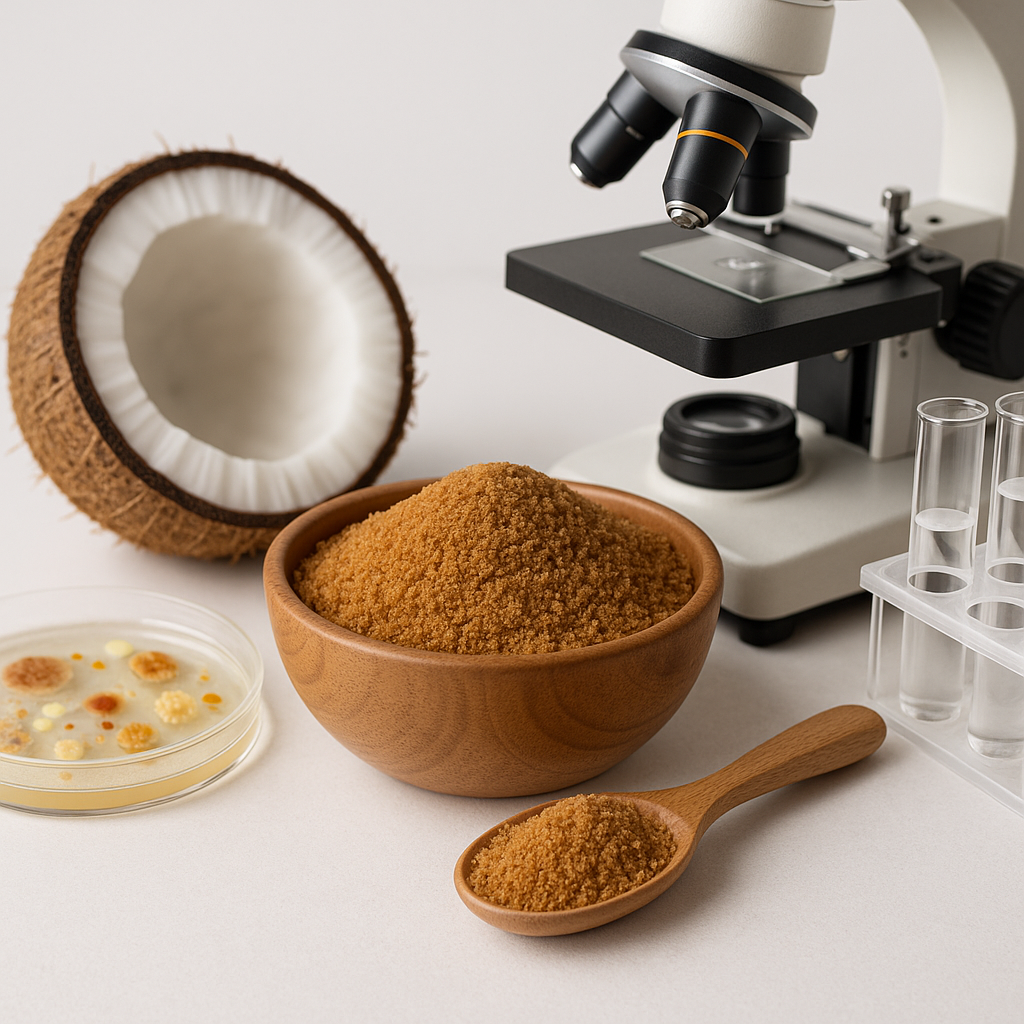
Microbiological Specifications for Coconut Sugar serve as critical checkpoints between raw sap and retail shelves. Those numbers reveal whether processing held the line against contamination, spoilage, and health risks. Every test captures a snapshot of hygiene from harvest to packaging, and the stakes are high—brands that ignore these specs put their reputation on the line.
Why do we even care about these numbers?
Counting microbes isn’t busywork. Those figures tell whether a product is safe, stable, and market-ready. High counts can signal contamination, spoilage, or worse—health risks. Each test provides a window into hygiene practices from the moment sap touches a collection vessel until the final bag seals shut.
Keeping the scary bacteria away
Pathogens like Salmonella or E. coli have no place in coconut sugar, and Microbiological Specifications for Coconut Sugar exist to keep it that way. These tests act like bouncers at the club: if the bad bugs show up, the batch doesn’t get in. Regular screening stops contaminated product from ever reaching a consumer’s pantry.
What the big-name buyers actually demand
Major retailers and food manufacturers don’t just ask for specs—they enforce them. Microbiological Specifications for Coconut Sugar must meet strict thresholds, or shipments get rejected on the loading dock. No negotiations. No second chances. They rely on certified lab results, not promises.
When a global brand puts its name on a product, they’re betting on consistency and safety. That means every shipment must fall within narrow microbial limits—total plate count under 10,000 CFU/g, absolutely no detectable coliforms or pathogens. These aren’t suggestions. They’re non-negotiable lines in the sand, and yes, they test every single batch. Meeting these numbers isn’t just paperwork—it’s the ticket to the big leagues.
Let’s talk about the usual suspects
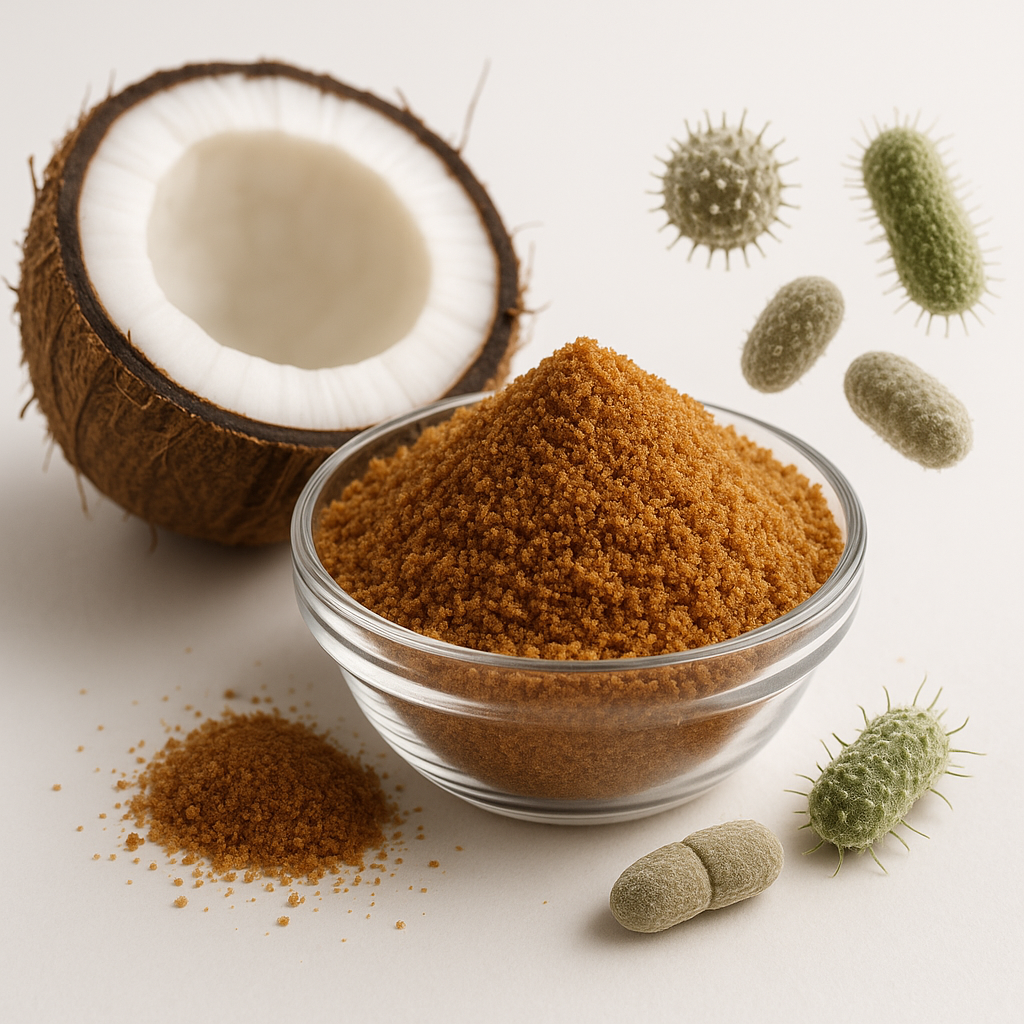
Lab reports with long lists of microbes flagged in coconut sugar samples aren’t random paranoia. Testing zeroes in on specific organisms because they’re the most common threats to safety and shelf life. Yeast, mold, and total plate counts aren’t just numbers on a sheet—they’re red flags that show what’s really going on behind the scenes. [source]
Why yeast and mold are such a pain
Mold spores float around everywhere—air, soil, processing surfaces—and they love moisture. Even a little humidity in a bag of coconut sugar can wake them up. Yeast might not sound dangerous, but it ferments sugars and changes texture, taste, and smell fast. That off-putting sour note? Probably yeast having a party. When these appear above limits, it raises real questions about whether Microbiological Specifications for Coconut Sugar were properly enforced.
The real deal with total plate counts
Total plate count (TPC) isn’t about catching one bad bug—it measures all growing bacteria in a sample. Think of it as a snapshot of overall hygiene during production. High TPC means something went wrong somewhere—maybe poor sanitation, contaminated equipment, or storage issues. It doesn’t say which bacteria, just that there’s too much microbial activity.
Here’s what most people miss: a high TPC doesn’t automatically mean coconut sugar will make someone sick, but it does mean the product was exposed to less-than-ideal conditions. Pathogens might not show up on the test, but their presence becomes more likely when general contamination is high. Regulators use TPC as an early warning system—one of the first lines of defense. If TPC is off, everything else comes under scrutiny.
My take on those “perfect” safety specs
Coconut sugar sometimes gets labeled with specs that claim zero pathogens, no mold, no yeast—basically, a sterile product from a tropical tree. But let’s be real: Microbiological Specifications for Coconut Sugar aren’t about achieving lab-grade purity. They’re about managing risk in a natural product. When brands advertise “perfect” results, the real question is what they’re not saying about testing methods or sampling size. Nature doesn’t do zero.
Is a zero-count even possible?
Can a batch have absolutely no microbial presence? Unlikely. Even under strict conditions, environmental exposure during tapping, boiling, or drying introduces microbes. Realistic specs account for acceptable levels—not fantasy numbers. A “zero” result often means it wasn’t detected in the sample, not that it’s truly absent. Testing has limits, and pretending otherwise misleads consumers.
Being realistic about a product from a tree
It comes from a palm, not a cleanroom. Every step—from sap collection to crystallization—happens in open-air facilities, often in humid climates perfect for microbial growth. Realistic specs reflect this. Coconut sugar is minimally processed, not a synthetic sweetener. Expecting it to be microbe-free is like expecting rainwater to be distilled.
Farmers harvest sap using bamboo or plastic collection vessels, sometimes left overnight. That sap is boiled over wood fires, stirred by hand, then cooled in open trays. No matter how clean the operation, airborne yeasts, molds, and bacteria will show up—just usually in harmless amounts. The real value of these specs lies in confirming those levels stay within safe, science-backed ranges. It’s not about eliminating microbes entirely—it’s about ensuring they don’t pose a health risk.
What your lab results aren’t telling you
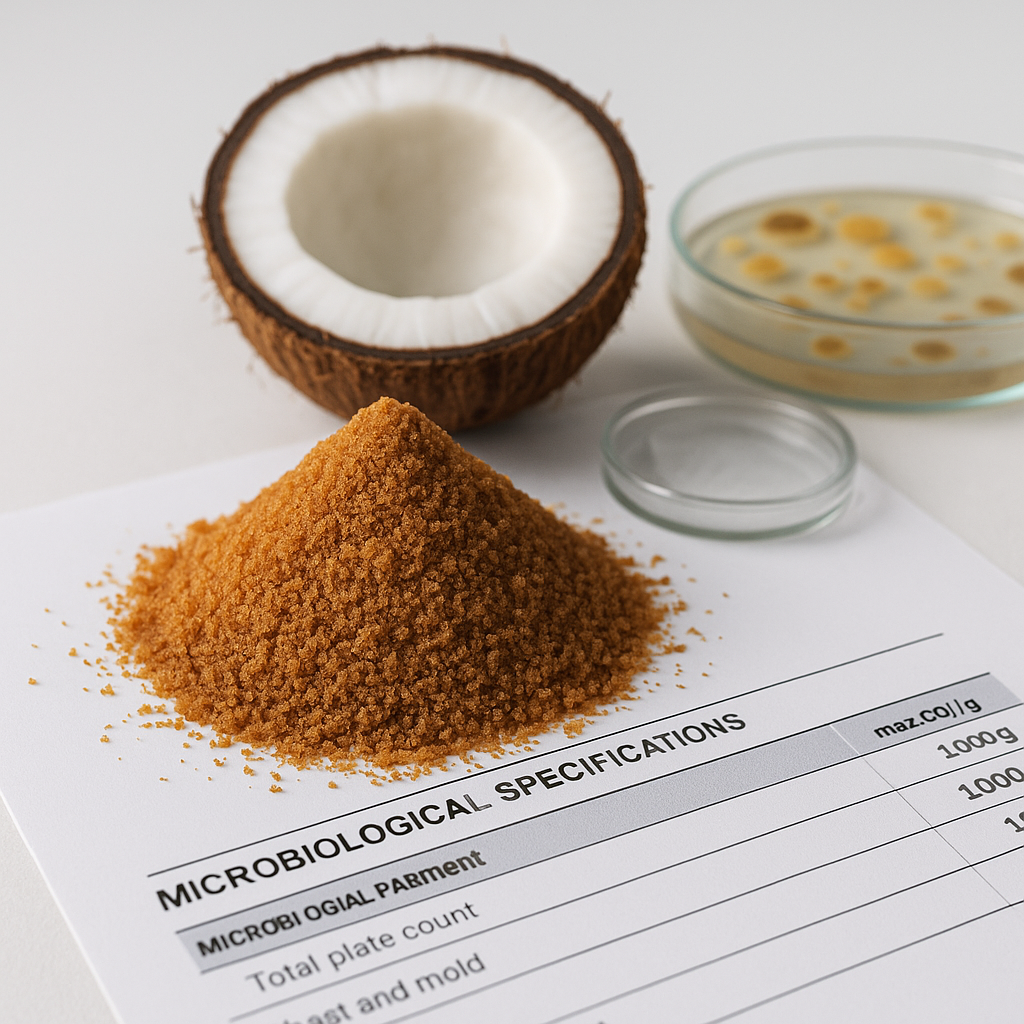
A batch can pass microbial testing and still cause issues downstream—here’s why. Lab reports only reflect the exact sample tested, not the entire lot. Research highlights how processing variables affect microbial load unevenly, meaning a certificate of analysis might miss hidden hotspots of contamination lurking in other parts of the shipment. [source]
Why one tiny sample isn’t the whole story
Pulling one sample from a 500-kilogram tote—how representative is it really? Microbial levels can vary dramatically within a single batch due to inconsistent drying, storage conditions, or handling. That one test might catch a clean spot while other pockets harbor yeast or mold ready to bloom under the right humidity. Understanding water activity in coconut sugar helps predict these risks more accurately than moisture percentage alone.
Seriously, don’t just trust every number you see
Did that lab really test for the right organisms, or just the easy ones? Not all labs screen for the full range of relevant organisms—some skip yeasts, molds, or indicator pathogens like Enterobacteriaceae. A “passing” result might just mean they didn’t look hard enough.
A “total plate count of 1,200 CFU/g” sounds safe, but it depends on who ran the test—and how. Methods differ, equipment varies, and technician experience plays a role. Two labs can test the same sample and return different numbers. Microbiological Specifications for Coconut Sugar aren’t absolute—they’re snapshots shaped by procedure, timing, and interpretation. Always ask what’s behind the number.
How to stop the germs before they start
Waiting until contamination shows up in test results is too late. Preventing microbial growth starts the moment sap is collected, and hinges on how fast and cleanly processing moves. Every surface, tool, and hand that touches the sap is a potential vector, so hygiene isn’t just good practice—it’s built into the specs from the ground up.
Keeping the evaporation pans actually clean
Cleaning isn’t just wiping down a pan after use—real cleanliness means removing every trace of old residue that microbes love to feed on. Leave even a thin film behind, and bacteria get a five-star meal. Scrubbing with food-safe agents and rinsing thoroughly matters, because any leftover gunk becomes a breeding ground. Staying within Microbiological Specifications for Coconut Sugar means treating every pan like it’s the first of the day—every single time.
Why getting the moisture out fast is key
Moisture is the enemy when trying to meet microbial limits. The longer water stays in the syrup, the more time bacteria and mold have to multiply. Evaporating it quickly and consistently matters—delays of even an hour can tip the scales toward contamination. Speed here isn’t about efficiency alone; it’s about survival of the batch.
Moisture is basically an open invitation to microbes—once the sap starts heating, it’s a race. The ideal window for evaporation is narrow: too slow, and mesophiles start thriving; too fast, and scorching becomes a risk. Get it right, though, and water activity drops below 0.6, shutting down microbial activity almost completely. This isn’t just drying sugar—it’s strategic dehydration aimed at meeting the spec. Every minute counts, and the thermometer matters just as much as the hygrometer.
Why This Actually Matters
Microbiological Specifications for Coconut Sugar aren’t just lab jargon—they’re the frontline defense for safety and quality. They reveal what’s really in each batch, from yeast levels to potential pathogens, shaping decisions on both sides of a shipment. These numbers tell stories about hygiene, processing integrity, and origin. Understanding them isn’t about checking boxes—it’s about protecting trust between suppliers and buyers. Quality isn’t assumed. It’s proven through rigorous testing, batch after batch, ensuring stability over the product’s shelf life and compliance with global standards. When specs are met consistently, they become proof that every step—from sap collection to final packaging—was executed with precision and care.