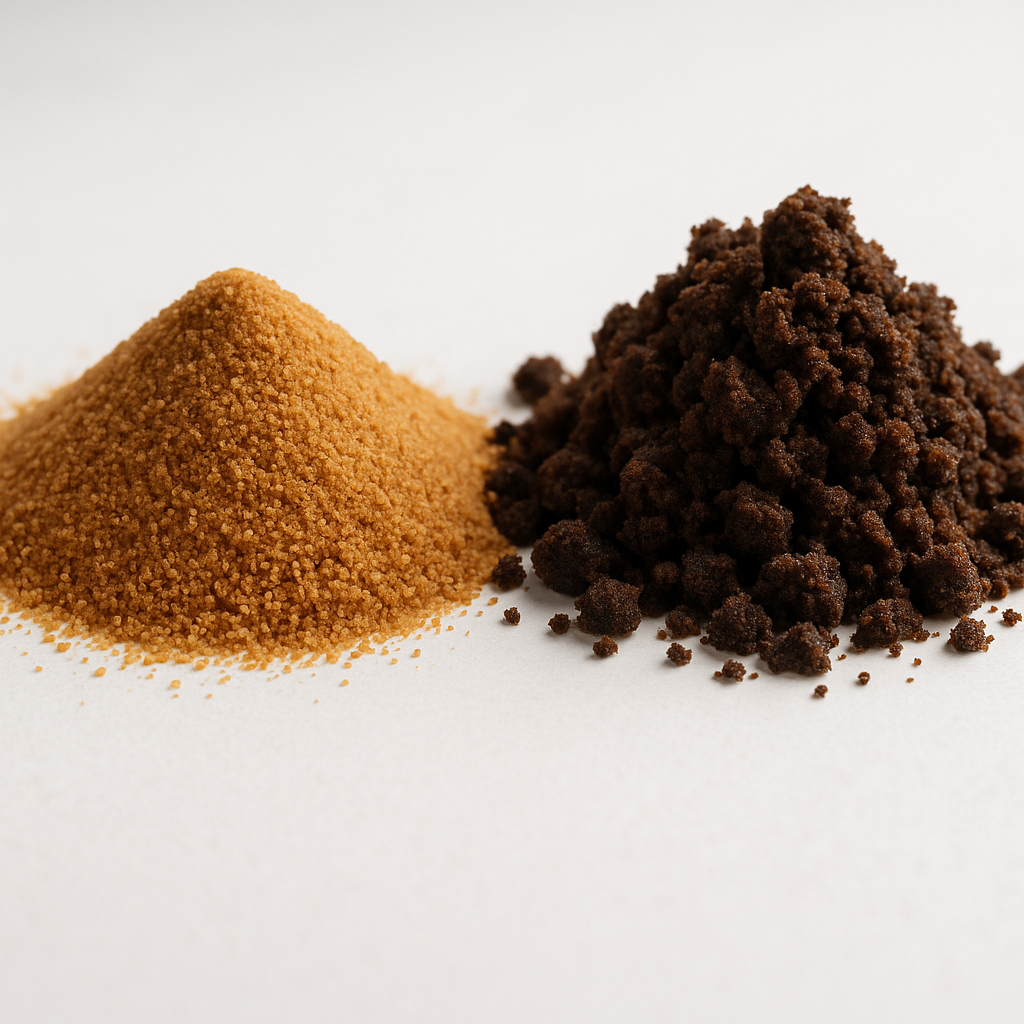
Just when choosing a natural sweetener seemed straightforward, two remarkably similar options show up that leave a person wondering if they’re actually the same thing. Coconut Sugar vs. Muscovado presents a confusing choice because both share that deep caramel color and complex molasses-like taste. Sorting out the difference means looking at their distinct processing methods, even though their flavors overlap considerably in recipes.
Where do these two actually come from?
A pantry might hold both of these sweeteners, but they start their journeys from completely different plants. One comes from a tropical tree that produces sap high in its canopy, while the other originates from tall grasses cultivated in fields. Understanding their botanical sources helps explain why they taste so similar despite their distinct processing methods.
The lowdown on coconut palm sap
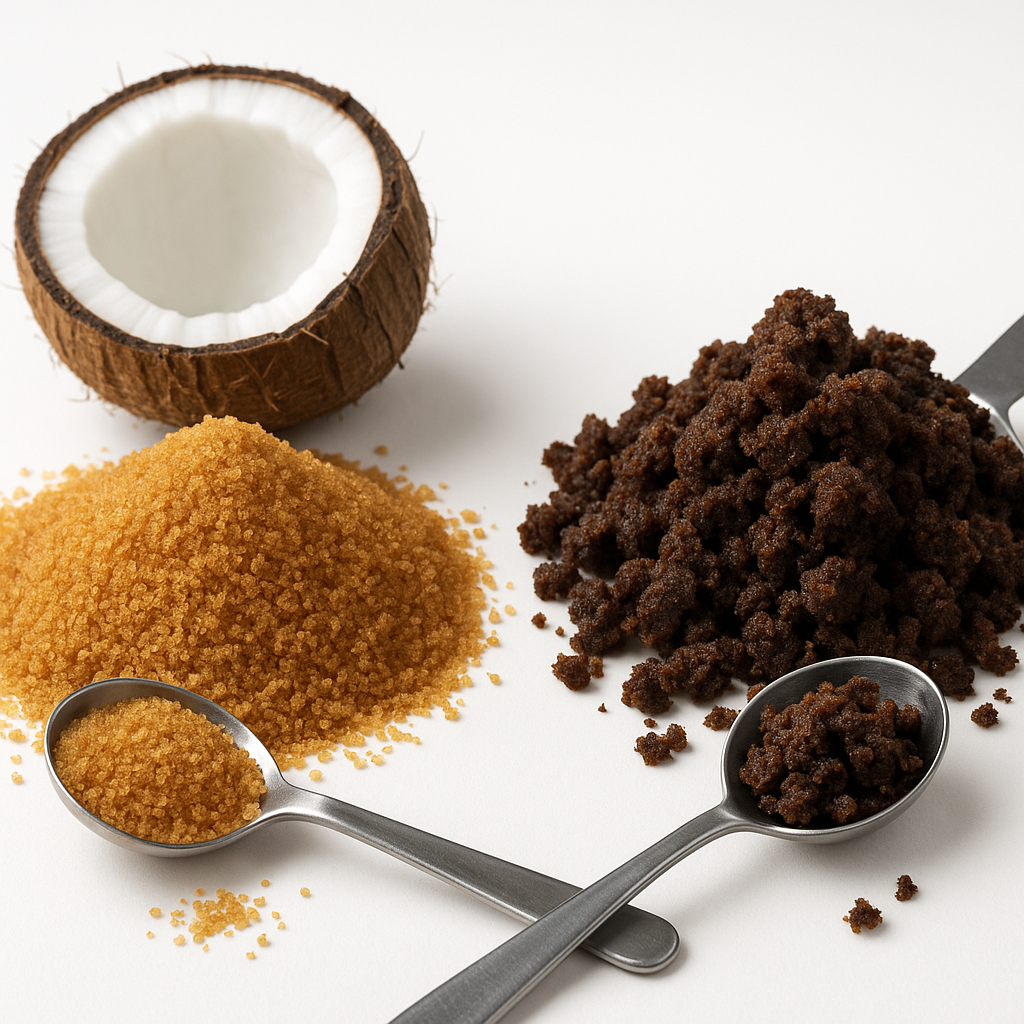
Coconut sugar begins as nectar tapped from coconut palm flower buds before they bloom. Farmers climb these trees daily to collect the fresh sap, which flows naturally when the buds are cut. The liquid gets boiled down immediately to prevent fermentation, creating those caramel-colored granules most people recognize.
What’s the deal with sugar cane juice?
Sugar cane stalks get crushed to extract their sweet juice, which becomes the foundation for muscovado. The raw juice contains natural molasses that stays in the final product. Buying authentic muscovado means getting minimally processed cane sugar.
Muscovado production keeps all that sticky molasses right where it belongs – mixed throughout the sugar crystals. Traditional mills press fresh sugar cane stalks, and the extracted juice goes straight into evaporation pans without any refining or centrifuging. This old-school method means tasting sugar cane in its most natural form, with all the minerals and flavor compounds intact. The juice gets heated until it crystallizes, but unlike white sugar production, nobody separates out the molasses. That’s why Coconut Sugar vs. Muscovado often gets compared on similar moisture content and deep flavors – both retain their natural components instead of being stripped down to pure sucrose.
How they’re made is honestly the biggest difference
Production methods separate these two sweeteners more than anything else. Two completely different source materials are at play here – coconut palm sap versus sugarcane juice. Coconut sugar comes from tapping the flower buds of coconut palms and slowly boiling down that sap until it crystallizes. Muscovado gets made by extracting juice from sugarcane, then heating it until the water evaporates, leaving behind those dark, sticky crystals most people recognize.
My take on the slow-boil method for coconut sugar
Watching coconut sap transform into sugar is actually pretty mesmerizing to see in person. The process involves collecting fresh sap twice daily, then boiling it in large woks over open flames for hours. That slow evaporation concentrates the natural sugars while developing those caramel notes that make this comparison such an interesting one.
Why muscovado is basically just unrefined cane sugar
Stripping away the fancy name, muscovado is sugarcane juice that’s been cooked down without removing the molasses. It’s raw sugar in its most natural form – no centrifuging, no bleaching, no refining steps that white sugar goes through. That’s why it stays dark and moist with all those minerals still intact.
The lack of refinement in muscovado production means tasting everything the sugarcane has to offer. While white sugar gets spun in centrifuges to separate molasses from crystals, muscovado skips that entire step. Muscovado retains between 8-10% molasses content, which gives it that intense flavor and sticky texture. This is where things get interesting – both are minimally processed, but coconut sugar never had molasses to begin with. The dark color in coconut sugar comes purely from caramelization during boiling, not from retained molasses like muscovado. That’s a huge distinction for baking projects, because the moisture content and molasses intensity will affect recipes differently.
Why do they taste so similar, though?
The Maillard reaction is at work in both of these sugars – that magical chemical process where sugars and amino acids meet heat and create hundreds of flavor compounds. Both undergo minimal refining, which means those complex molecules stick around instead of getting stripped away like they do in white sugar. The molasses notes that come through happen because both contain similar levels of residual plant matter and minerals that survived processing.
That deep caramel vibe we all love
Caramelization happens naturally when any sugar gets heated past a certain temperature, and both of these sweeteners get there during their respective production methods. The coconut sap gets boiled down until it crystallizes, while muscovado’s sugarcane juice goes through a similar reduction process. The result is that toasty, butterscotch-like quality that makes both sugars so addictive in baking.
Here’s why you can’t always tell them apart
Blind taste tests have shown that even experienced bakers struggle to distinguish between the two when they’re baked into cookies or cakes. The moisture content and molasses levels sit in nearly identical ranges – usually between 3-10% depending on the batch. Taste buds simply can’t detect enough difference when other ingredients are involved.
Temperature plays a bigger role than expected. Side by side at room temperature, subtle differences might show up – maybe a slight floral note in the coconut version or a more assertive molasses punch in the muscovado. But once heat enters the equation, those distinctions blur fast. Both sugars caramelize at similar temperatures (around 320-350°F), and both release comparable aromatic compounds when they melt. The other ingredients in a recipe – butter, vanilla, chocolate, spices – end up masking whatever tiny flavor variations existed in the raw sugars. The mineral composition (iron, calcium, potassium) that gives both their characteristic taste profiles is actually pretty similar percentage-wise, even though they come from completely different plants.
Let’s talk about that earthy flavor profile
Both sweeteners share this deep, caramel-like earthiness that catches people off guard the first time they try them. Those mineral-forward notes that white sugar just can’t deliver come through in both – and that’s because they’re minimally processed. Everything from toffee to almost coffee-like undertones shows up on the palate.
Seriously, what’s with the smoky notes?
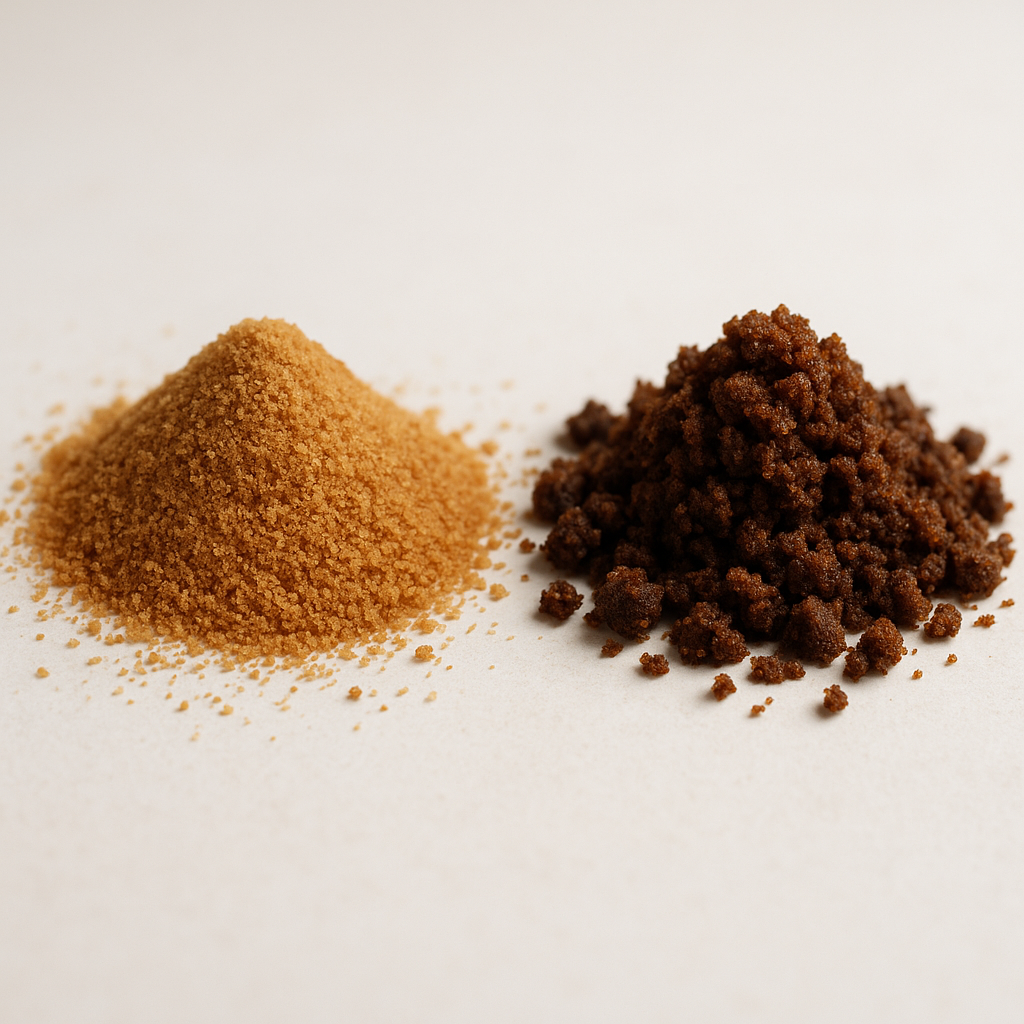
Both develop subtle smoky characteristics during their heating processes. Reducing coconut sap or sugarcane juice is basically caramelizing natural sugars at high temperatures. That slight char-like quality isn’t a flaw – it’s actually what makes these sugars so interesting in baking. Understanding browning pathways helps producers control these desirable flavor notes.
Why muscovado hits a bit harder on the molasses
Muscovado keeps all its molasses content intact, which gives it that aggressive, almost treacle-like punch. It dominates recipes more than coconut sugar does. The moisture from those molasses creates this sticky, intense sweetness that’s borderline overwhelming if you’re not expecting it.
The molasses factor really separates these two when choosing which to use. Muscovado’s production literally stops before the molasses gets spun out – that’s the whole point of it. What’s left is this wet, clumpy sugar that packs serious flavor density. Coconut sugar doesn’t have traditional molasses at all since it comes from palm sap, not cane, but it does retain similar compounds that create comparable depth. Side by side, muscovado will always taste “heavier” and more aggressively sweet because of that molasses content sitting at around 8-10% of its total composition. It’s like the difference between a light drizzle and a heavy pour.
Can you just swap one for the other?
Swapping works in most recipes, but things get interesting when moisture content comes into play. Muscovado holds more moisture than coconut sugar, which means baked goods might turn out slightly different in texture and spread.
The real deal about baking with them
Cookies made with muscovado spread less and stay chewier, while coconut sugar creates a crisper edge. Cakes won’t collapse from a swap, but expect subtle changes in how they rise and brown.
Don’t worry, the ratios aren’t that scary
Swapping between the two works at a 1:1 ratio in nearly every recipe. Liquid might need adjusting by a tablespoon or two when using muscovado because of its higher moisture content. Similar substitution principles apply when replacing other liquid sweeteners.
The texture difference between these two sugars really only matters to a perfectionist baker. When substituting coconut sugar for muscovado, consider reducing other liquids in the recipe by about 1-2 tablespoons per cup of sugar used. Going the other direction – muscovado for coconut sugar – a tiny splash of milk or water can compensate. But here’s what most home bakers find: the difference is so minimal it probably won’t even register unless the project is delicate French macarons or something equally finicky. Chocolate chip cookies will turn out great either way. The choice becomes more about flavor preference than technical precision, and that’s honestly a relief – nobody wants to do math while baking.
Which one should you actually buy?
The decision between these two really depends on what it’s being used for and whether subtle flavor differences matter. Both sweeteners deliver similar caramel notes and work interchangeably in most recipes, so there’s no real wrong choice.
What’s better for your morning coffee?
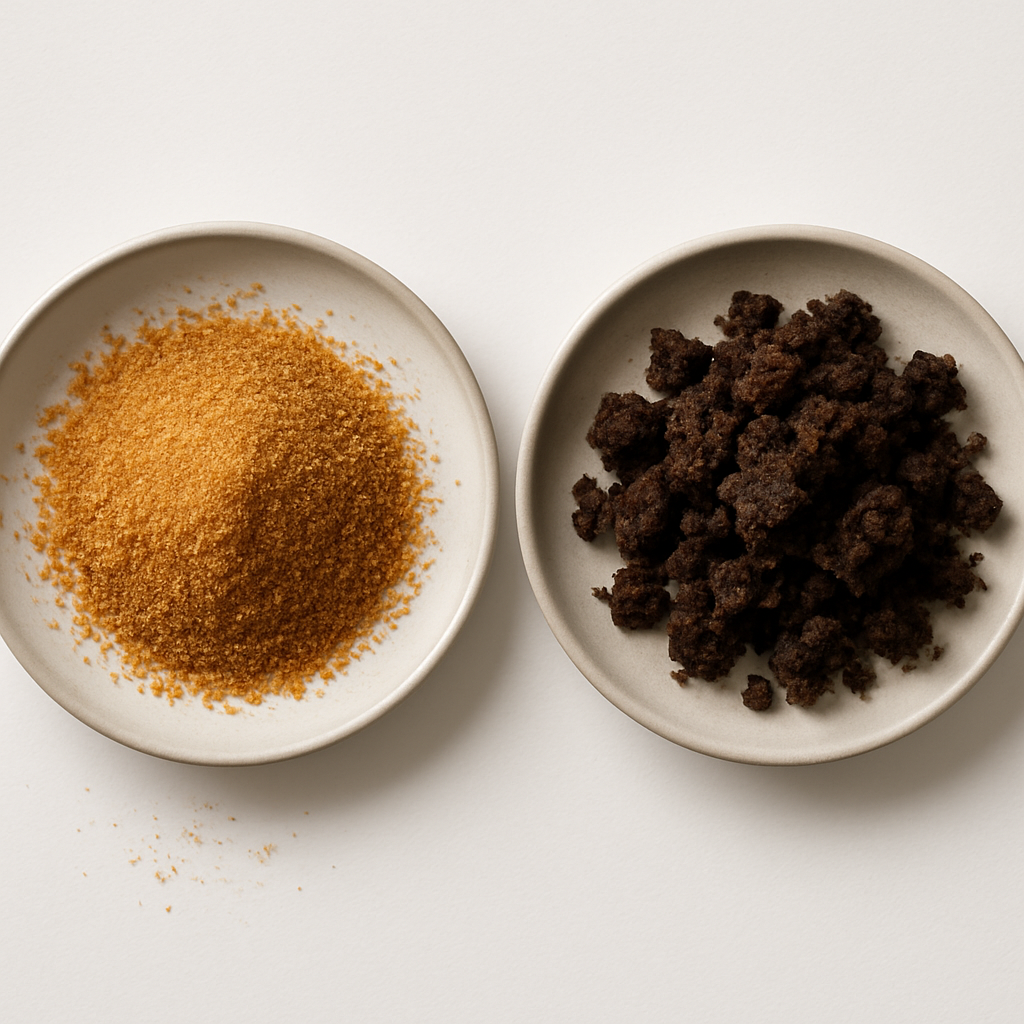
Coffee drinkers will find both perform almost identically in hot beverages. Muscovado dissolves slightly faster due to its moisture content, but coconut sugar won’t disappoint either – both add that deep, molasses-like sweetness without overpowering the brew.
Honestly, it just comes down to the price
Price tags tell the real story at the store. Coconut sugar typically costs 30-50% more, and that premium doesn’t translate into dramatically different results in the kitchen.
Muscovado usually costs between $4-7 per pound, while coconut sugar often runs $8-12 for the same amount. That difference adds up fast for a regular baker or daily use. The marketing around coconut sugar positions it as somehow healthier or more exotic, but the nutritional profiles are nearly identical side by side. Both contain similar amounts of minerals, similar glycemic indexes, and similar calorie counts per serving. The extra cost mostly buys the coconut label and a slightly different processing method that doesn’t impact the final dish in any meaningful way. Whichever option fits the budget will work fine – cookies, cakes, and coffee won’t know the difference. The whole Coconut Sugar vs. Muscovado debate becomes pretty straightforward once it’s clear that comparable flavor and function show up at vastly different price points.
More Alike Than Different
Looking at Coconut Sugar vs. Muscovado side by side, these sweeteners share more similarities than expected. The flavor overlap comes from their minimal processing methods, which preserve natural molasses-like content in both. Choosing between them mainly comes down to processing differences in the source material – coconut sap versus sugarcane – but the end result delivers comparable caramel notes and performs nearly identically in recipes. Price and availability are the real deciding factors. For manufacturers sourcing at scale, muscovado’s lower cost and similar functional properties make it practical, while coconut sugar’s premium positioning appeals to specific market segments. In applications where the subtle differences won’t be detected – beverages, baked goods, dry rubs – either sweetener fulfills the same role without compromising quality.