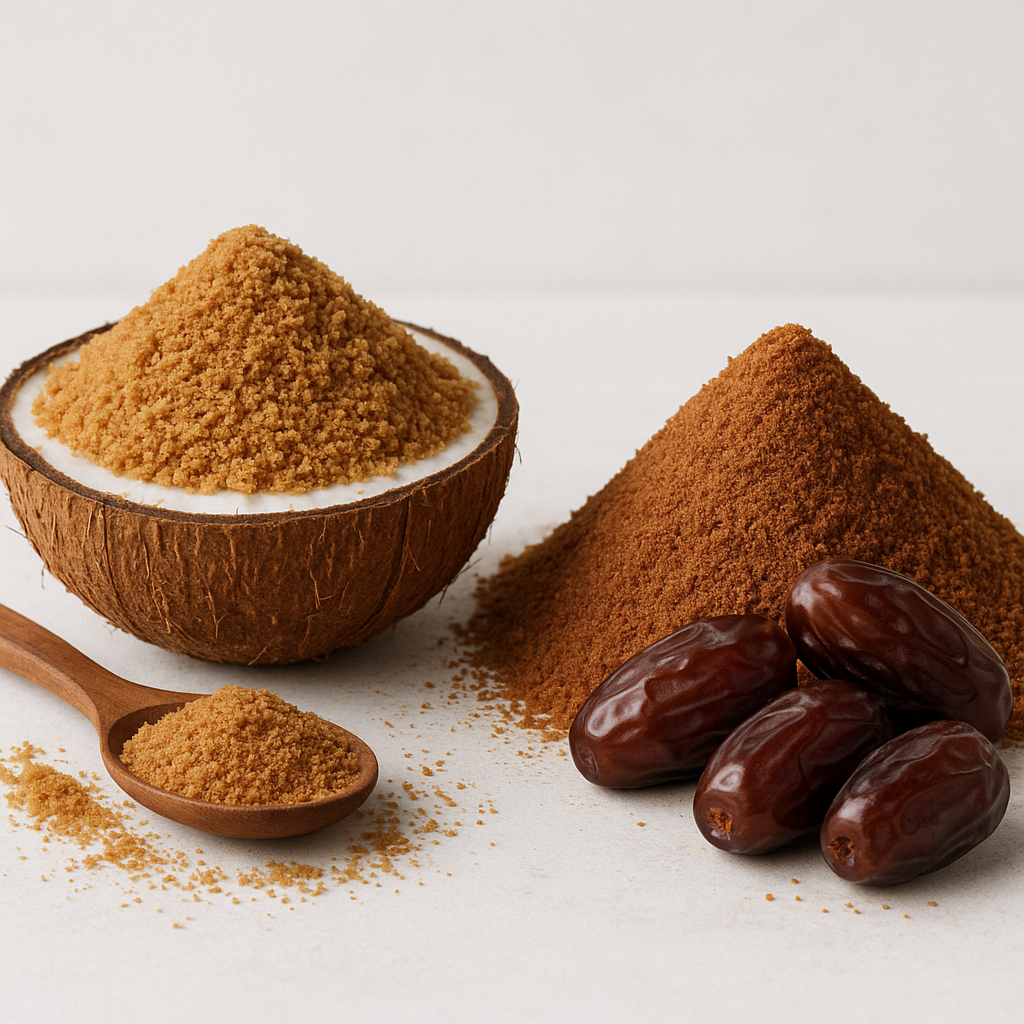
With so many natural sweeteners popping up, Coconut Sugar vs. Date Sugar might look like basically the same thing – just trendy alternatives to white sugar. But they’re not interchangeable, and the differences are worth knowing.
Grabbing one assuming it’s healthier or easier to use can end with a gritty cookie or an off-flavor brownie. That’s because the comparison isn’t just about taste – it’s about how they’re made, how they behave in recipes, and what the body does with them.
Coconut sugar comes from sap, while date sugar is literally ground-up dates – no extraction, no processing. That simple fact changes everything, especially when baking gluten-free or managing blood sugar.
One dissolves easily, the other doesn’t – one has a caramel note, the other tastes like fruitcake. Picking the wrong one can ruin a morning smoothie or weekend banana bread. That’s why understanding the composition, taste, and best use cases for each actually makes a difference.
Not all natural sugars are created equal. Once the real picture comes into focus, choosing between them stops being a guessing game.
What are we actually talking about here?
Standing in the baking aisle staring at labels, it’s easy to wonder how these two sweeteners actually differ beyond the price tag. These aren’t just trendy sweeteners – they’re whole-food alternatives with unique textures, flavors, and nutritional profiles. Understanding what sets them apart makes for smarter swaps in the kitchen without sacrificing taste or health goals.
The lowdown on how coconut sugar is made
Harvesters tap the sap from coconut palm flower buds, then slowly heat it to evaporate the moisture – what’s left is a caramel-colored granulated sugar. Unlike refined white sugar, it keeps trace nutrients like potassium and magnesium. This process gives coconut sugar its signature toffee-like depth, making it a go-to choice for balanced sweetness.
Why date sugar isn’t even technically sugar
It’s literally just dried, ground dates – no extraction, no refining, no liquid processing. That means it retains all the fiber, vitamins, and natural fruit sugars in their original form. Using it means adding a sweetener that’s more like fruit meal than sugar. By that measure, date sugar is the least processed option by far.
Because it’s made from whole dates, date sugar doesn’t dissolve like traditional or even other alternative sweeteners. There’s no smooth syrup or clear batter here – instead, tiny specks of fruit and a rustic texture that works great in muffins or oatmeal. It’s not ideal for drinks or delicate desserts, but that’s part of its charm. Really, the choice comes down to a true sugar versus a whole-food stand-in, and that distinction changes everything – from flavor to function. Each has strengths, and knowing the real differences helps in picking the right one – every time.
Let’s talk about the flavor profile
The two sweeteners differ in origin, but their tastes? That’s where things get personal. One leans into rich, toasty warmth while the other stays true to its fruity roots. Depending on the recipe – or the mood – one might win out over the other. The real question is which flavor actually fits what’s being baked.
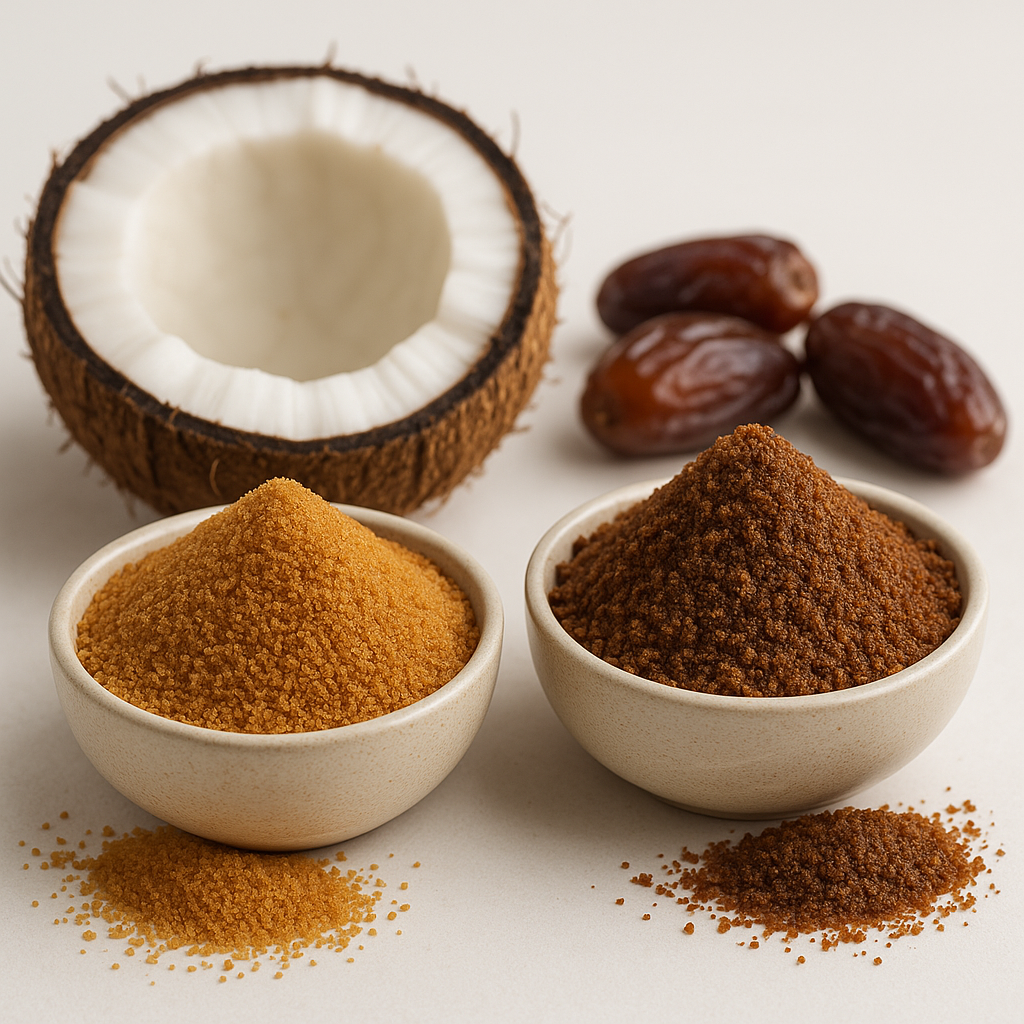
That deep, caramelly vibe of coconut sugar
Coconut sugar brings a slow-building sweetness that’s more complex than plain white sugar. Think molasses, but lighter – like caramel kissed by a campfire. It brings depth to cookies, muffins, and even savory glazes. For that warm, almost smoky note, coconut sugar delivers without stealing the spotlight. This is where the choice starts to feel like a real one.
Why date sugar tastes just like the fruit
Date sugar doesn’t hide what it is – it tastes like dates, period. No caramel twist, no molasses whisper, just pure, earthy fruit sweetness. It crumbles down with a rustic texture and a bold flavor that stands its ground. When that unmistakable date taste needs to be front and center, this is the go-to. Here, it’s about staying authentic.
Because it’s literally just ground-up dates, there’s zero flavor transformation – no cooking, no refining, no magic tricks. What’s left is the full-bodied, slightly tangy, honey-adjacent taste of fresh dates, complete with their natural fibers. It’s less versatile in liquid-heavy recipes, sure, but in energy balls or dense breads, it’s unbeatable. This honesty in flavor is exactly why the Coconut Sugar vs. Date Sugar debate isn’t just about health – it’s about taste truth. The tree, the sun, the soil all come through. And sometimes, that’s exactly what a recipe needs.
Is one actually healthier than the other?
Both get praised as “natural” swaps for white sugar – but let’s cut through the noise. While neither is a miracle food, date sugar holds a slight edge due to its fiber and nutrient content. It’s not just a swap in sweetness; it’s something closer to whole food.
Looking at the fiber and real nutrients
Sweetening coffee with date sugar means adding actual food, not just sweetness. It’s made from ground dates, so it keeps the fiber, potassium, and small amounts of B vitamins. On nutrient density, date sugar wins this round. Coconut sugar has trace minerals, sure – but barely enough to matter.
The real deal on the glycemic index
Low GI supposedly means slower sugar spikes – but here’s the catch. Coconut sugar often gets praised for its lower glycemic index, usually around 54. Date sugar isn’t officially tested, but whole dates land around 44-55. Does it really matter? Maybe not as much as it seems.
Here’s what no one talks about: glycemic index measures pure sugar in isolation, not how it actually gets eaten. Date sugar usually shows up in a muffin with fat, fiber, and protein – slowing absorption anyway. And coconut sugar is still 70-79% sucrose. So while the GI debate rages online, the real win comes from context, not numbers on a chart. Neither will spike blood sugar like table sugar, but neither is a free pass either. Balance is still king. The two might be a close match on paper, but in practice, whole-food sweetness wins. Every. Single. Time. For more on how coconut sugar affects blood sugar, individual results can vary widely.
Getting busy in the kitchen
More natural sweeteners keep popping up in favorite recipes lately, and this pairing is definitely having a moment. Both bring earthy depth, but how they behave when heat hits the pan – or bowl – makes all the difference. One blends smoothly, the other keeps things interesting.
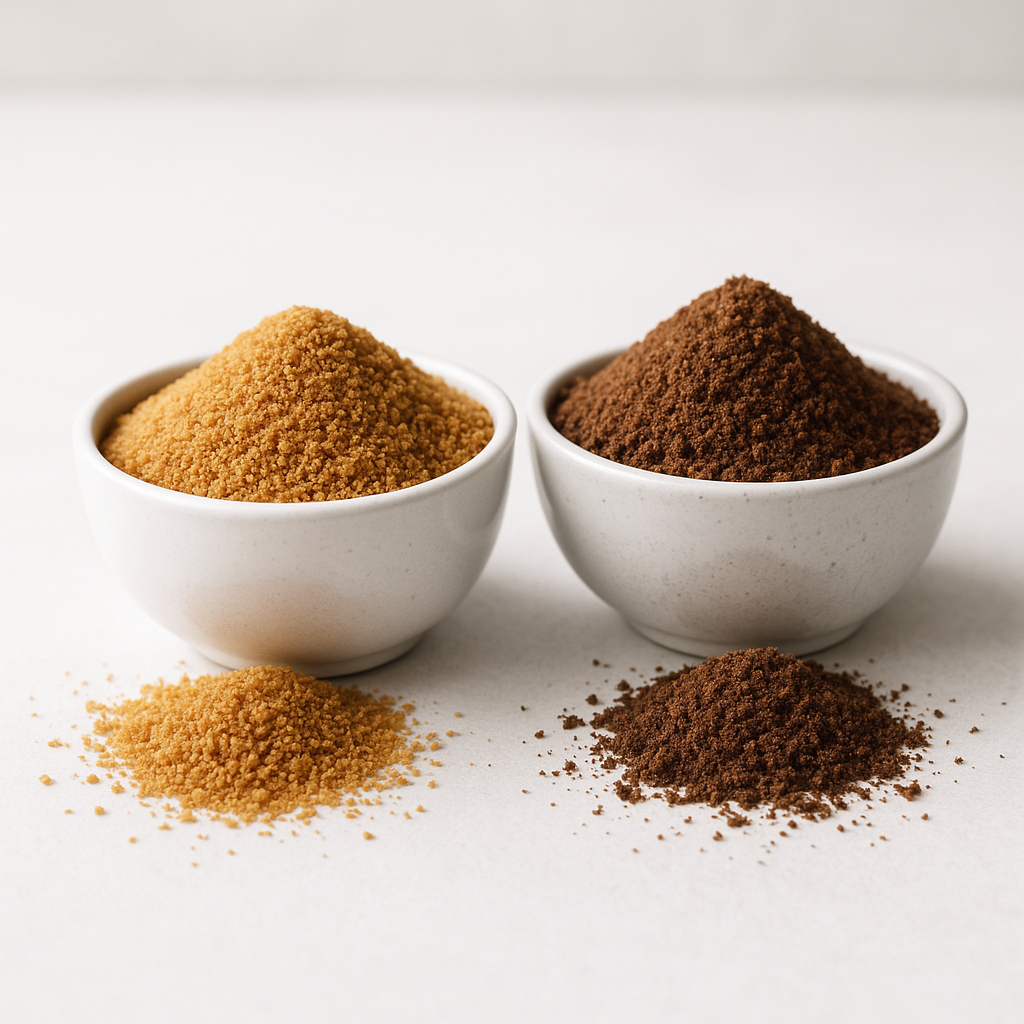
Why coconut sugar is a baker’s best friend
Coconut sugar dissolves easily in batters and doughs without altering texture. Its fine granules mimic white sugar closely, making it a no-brainer for cookies, cakes, and muffins. It caramelizes beautifully, adding a subtle molasses note without overpowering – perfect for sweetness with restraint. Understanding caramelization versus Maillard reactions helps predict how it will perform under different baking conditions.
The struggle with date sugar and liquids
Things get messy when date sugar meets wet ingredients. It doesn’t dissolve – at all. The result is gritty pockets in a smoothie or batter, which nobody wants. This is where the gap between Coconut Sugar vs. Date Sugar really shows, especially in drinks or custards where smoothness matters.
Because date sugar is literally ground-up dried fruit, it holds onto its structure no matter how long it gets stirred. So in a syrup, sauce, or even a simple stirred drink, it just clumps. This stubborn texture is exactly why coconut sugar often wins on versatility – it can be swapped in without worrying about graininess ruining the final bite. And honestly, nobody has time for that kind of kitchen drama.
My take on the best ways to use them
Each one shines in different kitchen roles – knowing when to reach for which can upgrade a baking game instantly. When considering replacements, substitution ratios matter, especially when swapping out liquid sweeteners.
When to grab the coconut stuff
Coconut sugar earns its place when a fine, pourable texture is needed – something that blends smoothly into batters and doughs. It dissolves better than date sugar and won’t leave gritty bits in cookies or cakes. For most standard baking, this one wins on consistency. Its versatility extends even to ice cream formulations, where it affects texture and freezing properties.
When date sugar is the clear winner
Baking with whole grain flours or making energy balls? Reach for date sugar – it clumps, binds, and brings a rich caramel depth that feels homemade in the best way. Its fiber-rich punch makes it the obvious pick when nutrition and rustic texture are the goal.
Because it doesn’t melt, date sugar works magic when creaming or dissolving isn’t the goal – think no-bake bars, granola clusters, or topping oatmeal. The full fruit benefit comes through, not just sweetness. In these cases, it isn’t even a fair fight – date sugar owns this territory.
Here’s the truth about price and storage
These two sweeteners differ noticeably at checkout – date sugar often costs 30-50% more due to labor-intensive production. Both require smart storage, but their shelf lives depend heavily on moisture control. Keeping them dry, sealed, and away from heat maintains texture and usability over time. The choice between them might come down to both budget and pantry habits.
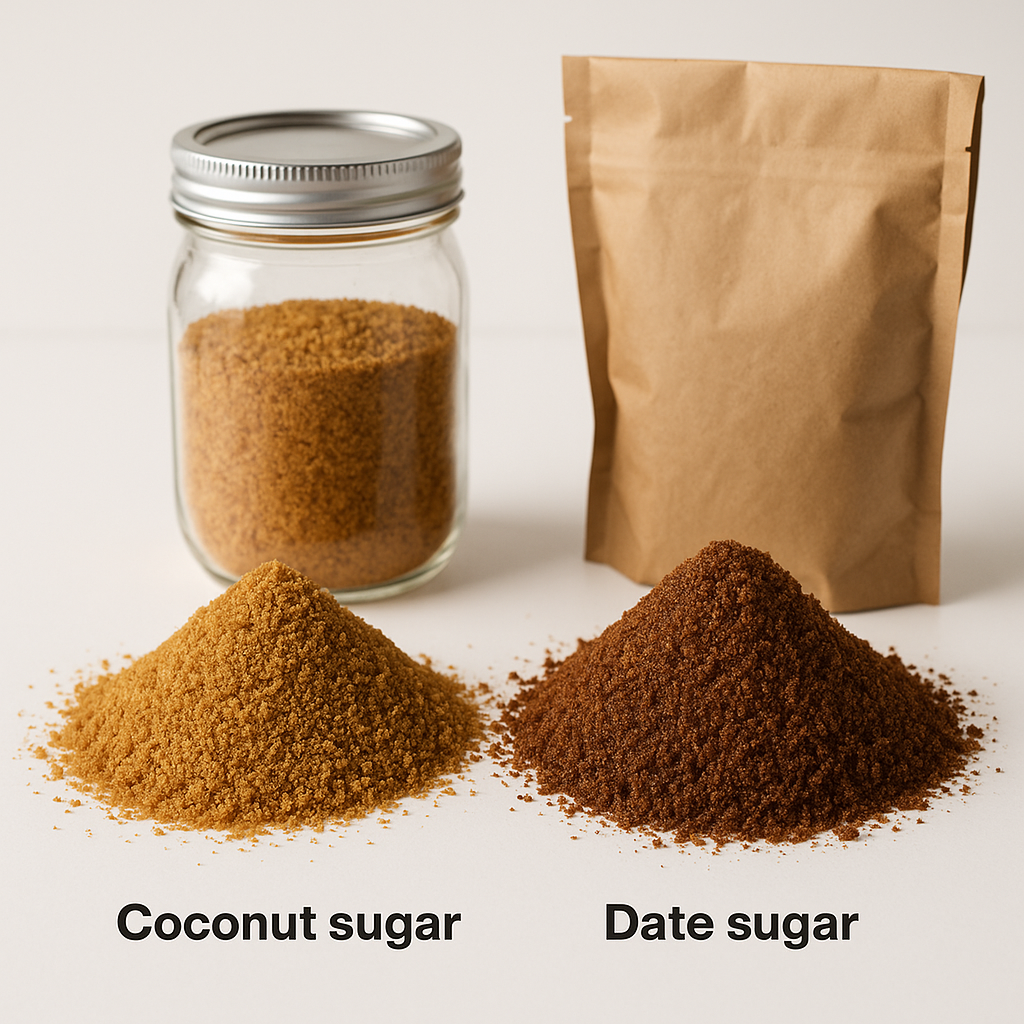
Why your wallet might feel the difference
Price per pound for date sugar can hit $12 or more, while coconut sugar averages $6-$9. That gap isn’t just markup – it reflects how date sugar is stone-ground from whole fruit with no liquid extraction. Lower yield and higher labor get paid for. For frequent bakers, that’s a real cost conversation.
Keeping things fresh so they don’t clump
Moisture is the enemy – both coconut sugar and date sugar absorb humidity like sponges. Store them in airtight containers, ideally with a silica pack. Clumping doesn’t mean spoilage, but it makes measuring a pain. A dry, cool cupboard works better than under-the-sink chaos. Simple habits keep both sweeteners flowing smoothly.
Ever open a bag only to find a solid brick? That’s what happens when ambient moisture sneaks in. Date sugar, being pure dried fruit, is especially prone – it lacks the crystalline structure that helps coconut sugar resist clumping. Break up small clumps with a fork, but for larger chunks, a quick pulse in the food processor saves the batch. Always scoop with a dry spoon – introducing even a drop of water starts the hardening process all over again. For more on keeping coconut sugar free-flowing, moisture and water activity are critical factors to manage.
Picking the Right One for the Job
Both sweeteners show up in recipes and at the health food store, and the question of which one actually fits a given need comes down to more than sweetness – it’s about texture, moisture, and how they behave when heated. The difference shows up most during baking – one dissolves easily, the other adds chew.
Coconut Sugar vs. Date Sugar isn’t a matter of declaring a single winner. Each performs best in specific contexts. Coconut sugar works brilliantly when smooth incorporation matters – think cookies, cakes, glazes, and beverages. Date sugar excels where rustic texture and whole-food nutrition take priority – energy bars, granola, oatmeal toppings, and no-bake treats.
When reformulating commercial products or scaling recipes for production, understanding batch-to-batch variation in coconut sugar becomes critical for consistency. Meanwhile, date sugar’s inability to dissolve limits its use in liquid applications but makes it irreplaceable in applications where binding and chew are desired.
Ultimately, the right choice depends on the recipe, the desired outcome, and whether solubility or whole-food integrity matters more. Knowing the differences means always picking the right one.