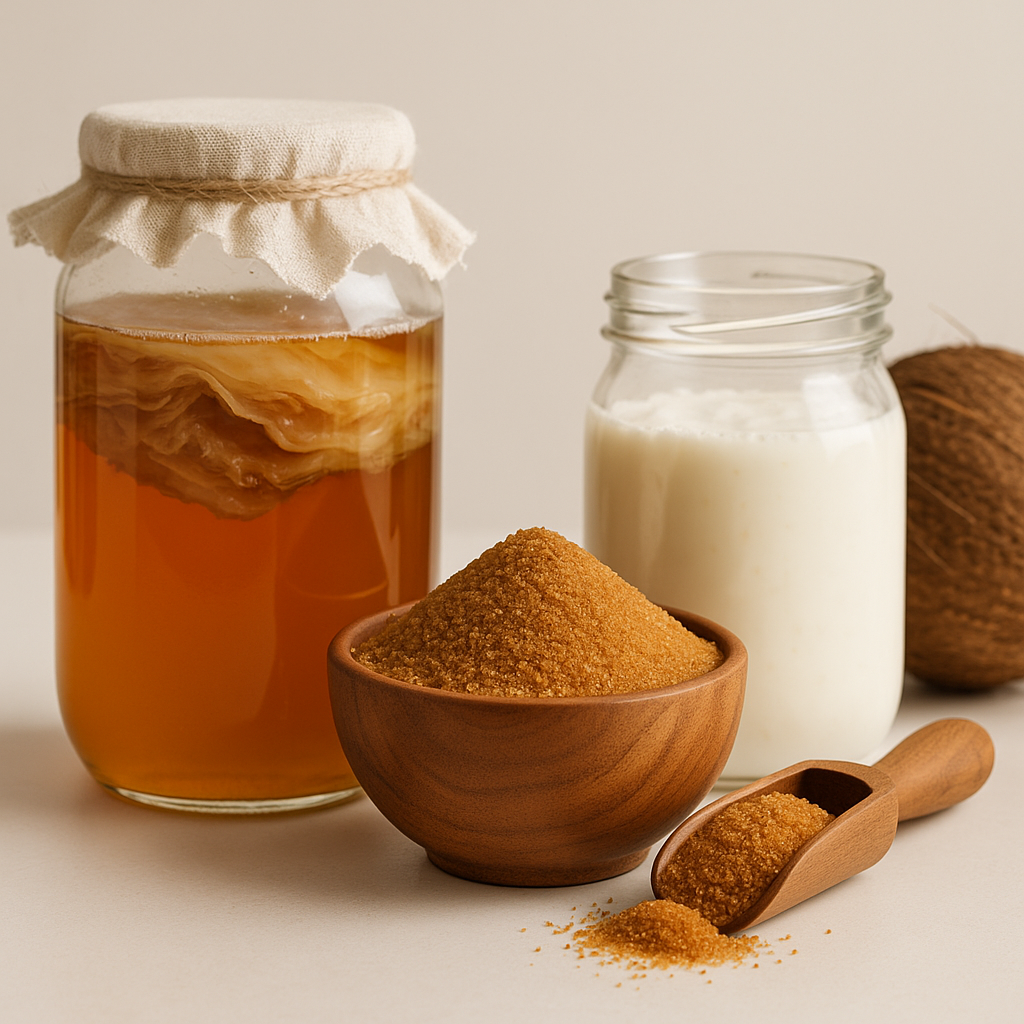
Coconut Sugar in Fermentation isn’t just a trendy pantry swap – it actually behaves differently in fermentation, whether that’s kombucha, kefir, or a homebrew batch. It’s often described as a one-to-one substitute for cane sugar, but that’s not the whole picture. Its mineral content and lower glycemic index can affect both fermentation speed and how the cultures themselves respond.
Results vary – some batches start slower, others surprise with extra depth of flavor. That’s because Coconut Sugar in Fermentation brings more than sucrose to the table; the trace nutrients it carries feed cultures in slightly different ways, often showing up as earthy notes in kombucha or a smoother tang in kefir. It’s not always a drop-in replacement, though – a SCOBY or kefir grains that aren’t acclimated to it can stall.
Consistency matters here. Switching back and forth between sugar types can throw cultures off, but sticking with Coconut Sugar in Fermentation consistently can make it a reliable part of a routine – whether the goal is flavor complexity or the marginal health upside. It just takes a bit of adjusting, observing, and tasting along the way. It’s not magic, just microbiology meeting real-world results – and it’s worth the experiment.
Is coconut sugar actually better than the white stuff?
Coconut sugar gets touted as a health hero in natural food stores, but does it actually outperform plain white sugar in a ferment? It does bring more minerals and a lower glycemic index, but it’s not a miracle ingredient – kefir cultures won’t suddenly thrive in some dramatic new way. It’s a subtle shift in flavor and nutrition, not a magic upgrade, and if the only motivation is a perceived health benefit rather than taste or fermentation behavior, it might not be worth overthinking.
Why I’m obsessed with that deep caramel flavor
The rich, almost molasses-like depth that comes from using Coconut Sugar in Fermentation is the real draw for a lot of brewers. It adds a warm background note to kombucha that white sugar can’t replicate. A SCOBY doesn’t care whether it’s eating sucrose from coconuts or cane, but the flavor difference is noticeable from the first sip. Those caramel and toffee notes develop naturally during processing.
What’s really going on with the nutrients
Coconut sugar contains small amounts of iron, zinc, and polyphenols – not enough to call it a superfood, but more than refined white sugar offers. Some of those compounds may survive the microbial feast, especially in slower ferments like water kefir, adding to a more complex microbial environment that shows up in the final flavor.
The nutrient content alone won’t transform anyone’s health, but those trace minerals do interact with the microbes in interesting ways – lactobacilli and yeast strains respond differently to mineral availability, sometimes producing more nuanced acids or esters. The small amounts of iron or potassium present can influence fermentation speed or final pH, so the real story isn’t the “natural nutrients” label so much as how those trace amounts quietly shape the fermentation process itself. Understanding the ash chemistry and mineral speciation explains why these effects occur. It’s less about substitution and more about interaction – and once that difference is tasted, it’s easy to see why a lot of home fermenters stick with it for a richer, more layered result.
What your SCOBY thinks about coconut sugar
Feeding a SCOBY something new gets noticed. Coconut sugar delivers minerals and a lower glycemic spike, but a kombucha culture thrives on consistency – it can ferment coconut sugar, just more slowly and sometimes unevenly. A thinner biofilm or a sluggish start is normal, not a red flag.
Dealing with that weird, muddy look in your jar
A brew that looks murky, almost like weak tea with sediment, is common with coconut sugar – the molasses content and trace minerals can create cloudy particulates. That’s not contamination, and straining between fermentations helps. It doesn’t affect the taste, just the appearance.
Why you shouldn’t ditch the cane sugar entirely
Switching entirely to coconut sugar can slow a ferment to a crawl. A SCOBY prefers simple sucrose – cane sugar breaks down quickly and gives microbes reliable fuel. Coconut Sugar in Fermentation works well in blends, but a full substitution risks stalled batches; it’s better treated as a supplement than a total replacement.
Running an entire batch on coconut sugar strips away the predictability that makes home brewing manageable. Cane sugar isn’t just tradition – it’s efficiency, and the yeast in a SCOBY expects that quick hit of glucose and fructose. Coconut sugar brings complexity but also inconsistency: longer brew cycles, off-flavors, even vulnerability to mold if fermentation drags. That’s why a lot of experienced brewers keep cane sugar in rotation – coconut sugar plays better as a supporting ingredient than the main one.
Keeping your kefir grains happy and fed
Feeding kefir grains with coconut sugar works about as well as cane sugar, with a slightly richer mineral profile – though moderation matters. For more on which sugars work well, this guide to sugar breaks it down without the fluff.
The real deal on mineral overload
Kefir grains do respond to minerals, but too much from coconut sugar can backfire – excess potassium and magnesium might slow fermentation or alter texture over time. The goal isn’t to create a supplement, just to feed the culture. Moderate amounts, with occasional rotation to other sugars if activity slows, work best. The pH buffering from minerals and organic acids plays a subtle but real role here.
How to tell if your grains are getting mushy
Texture changes are the first warning sign. Grains that feel soft, slimy, or break apart easily indicate something’s off – healthy grains should be firm, bouncy, and cohesive, like small cauliflower florets. Coconut Sugar in Fermentation can contribute to mushiness if used exclusively, due to its moisture content and mineral load.
That mushy texture tends to show up after a few rounds without a break – though hydration and pH play roles too. Refreshing the grains in plain sugar water for a cycle usually firms them back up within 24-48 hours. Coconut sugar works well in rotation, but isn’t always ideal as a sole food source long-term.
Homebrewing with the fancy sugar
Coconut sugar brings a unique depth to homebrews that plain table sugar can’t match – subtle caramel-like tones and a smoother finish, especially in darker ales and stouts. For more on how this sugar affects fermentation, see Secrets of Fermentation and Coconut Sugar: How to Make …, where the science and flavor side meet.
Getting those rich, toasty vibes in your beer
That deep, almost smoky character some brews develop comes from coconut sugar adding layers of complexity – toasted nuts, dried fruit – especially when used in moderation. It’s not just about sweetness; it shapes the flavor profile from the start. Understanding caramelization versus Maillard reactions helps explain those nuances.
Why your yeast might act a bit funky
Yeast isn’t always thrilled with coconut sugar – it breaks down more slowly than cane sugar, so fermentation might stall early, with sluggish bubbles or a longer wait. That’s normal, just something to watch for.
Because coconut sugar isn’t just sucrose – it carries traces of inulin, minerals, and other compounds – yeast has to work harder, which can lead to inconsistent attenuation or off-notes if the strain isn’t up to it. Alcohol-tolerant, resilient yeasts like US-05 or S-04 handle it better, and a proper starter helps too.
My top tips so you don’t ruin a batch
Coconut sugar deserves a bit of respect, not just a straight substitution. A few things help:
- Dissolve coconut sugar fully before adding cultures
- Use filtered water to avoid chlorine killing the SCOBY or kefir grains
- Don’t overfeed – too much sugar stresses fermentation cultures
- Keep batches away from strong odors and direct sunlight
Knowing that Coconut Sugar in Fermentation behaves differently than cane sugar helps avoid off-flavors and stalled ferments.
Finding the right ratio for a perfect ferment
Coconut sugar’s lower sucrose content changes the math – matching the fermentable sugars in cane sugar typically takes about 25% more volume. Too little and the brew stalls; too much overwhelms the culture. For kombucha, roughly 1 cup of coconut sugar per gallon is a reasonable starting point, adjusted based on taste and fermentation speed. Getting that ratio right means a clean, tangy result without excess grittiness or sluggish activity.
Temperature tweaks you’ll honestly need
Fermentation doesn’t lie, especially with coconut sugar in the mix. Cooler temperatures slow the process, which can be risky if a brew sits too long before fermentation completes; warmer environments speed things up but risk sour or vinegary results. The sweet spot is between 72°F and 78°F – outside that range, the microbes start to struggle, and consistency matters more than chasing perfection.
| Temperature Ranges for Fermentation | |
|---|---|
| Below 68°F | Fermentation slows dramatically – risk of mold increases with prolonged exposure |
| 68-72°F | Acceptable but sluggish – expect longer brew times with coconut sugar |
| 72-78°F | Optimal range – microbes thrive, sugar breaks down efficiently |
| Above 80°F | Too fast – can kill kefir grains or over-acidify kombucha; off-flavors emerge |
A kitchen isn’t a lab – drafts from windows, AC cycling, or a hot stove nearby all shift things. With coconut sugar, those small swings matter a bit more because the sugar profile is less predictable. A heating pad or fermentation belt isn’t overkill in that context – it’s insurance for stable, repeatable results.
Is it worth the extra cash?
For anyone already buying organic tea and glass fermentation jars, coconut sugar might seem like a natural next step. It does bring subtle mineral depth and a lower glycemic impact, but kefir cultures don’t care about a wellness halo – it adds nuance, not magic.
Let’s be real, the price tag is a bit much
Coconut sugar typically costs two to three times more than plain cane sugar – for a slightly earthier note that most people won’t even notice. Most home fermenters won’t see a dramatic shift in fizz or tang. It’s a nice touch, but not a game-changer when the SCOBY or kefir grains are doing the real work.
When to splurge and when to stick to the basics
There are moments – gifting a batch of vanilla-kissed kefir, or brewing something for a special occasion – where coconut sugar’s mild caramel note can elevate the final result. For everyday batches, plain sugar works just fine. It shines in small, intentional uses rather than as a default.
Think of it like reaching for sea salt instead of table salt – it has its place, but it’s not necessary every time. For flavor experimentation or a low-glycemic diet, it’s worth reaching for; otherwise, kefir grains will do just as well on regular sugar. It’s a flavor choice more than an upgrade, and sometimes simplicity wins.
The Bottom Line
Coconut Sugar in Fermentation brings real, if subtle, depth to kombucha, kefir, and homebrews – its mineral content interacts with cultures in ways that show up in the final flavor. It’s not a straight swap for cane sugar; fermentation may run a bit slower and the result will taste a little different, with more tang, fizz, or complexity depending on the batch. Whether you’re exploring probiotic beverage systems or simply experimenting with flavor, it works reliably on its own timeline. For anyone serious about exploring what a ferment can taste like, it’s worth trying.