- Raw Material Variability: The Botany of Coconut Sap
- Harvesting Practices and Sap Collection Timing
- Thermal Processing and the Maillard Reaction
- Processing Equipment and Heat Distribution
- Post-Production Storage and Environmental Factors
- Quality Assurance and Standardization Protocols
- What It Comes Down To
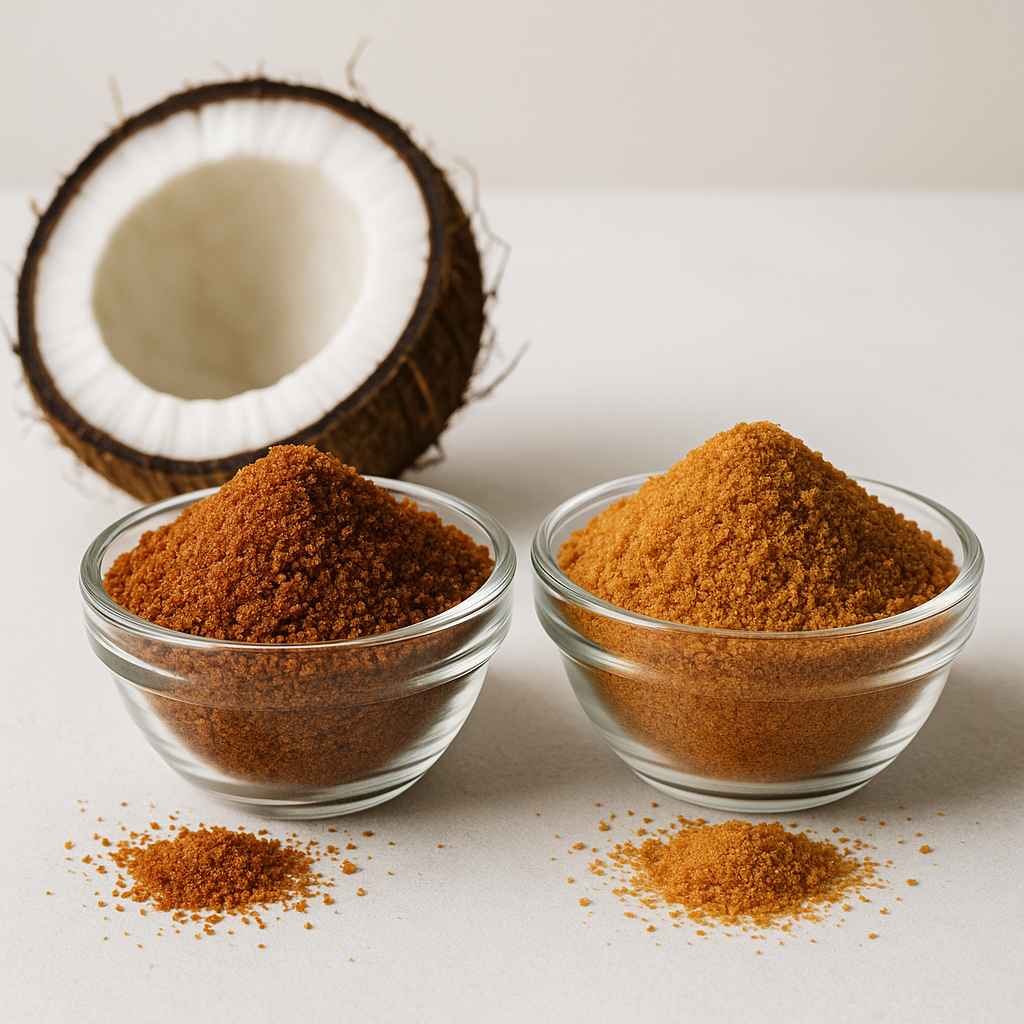
It’s a familiar frustration: the same brand of coconut sugar tastes noticeably different from one bag to the next. That variation isn’t random—it’s the cumulative result of a long chain of biological and processing factors. Batch-to-Batch Flavor Variation in Coconut Sugar starts before the sap is even collected. Here’s what actually drives it.
Raw Material Variability: The Botany of Coconut Sap
The coconut palm is a living organism constantly responding to its environment, and that shows up directly in the sap it produces. This biological variability is the starting point for everything downstream.
Soil Composition and Regional Mineral Influence
Soil mineral profiles vary by region, and that variation feeds directly into the sap’s mineral content—which shows up in the final sugar’s flavor. Sugar from different growing regions can taste noticeably different for this reason alone. The ash chemistry of coconut sugar reflects these regional differences in mineral composition.
Seasonal Fluctuations in Sap Chemistry
Seasonal changes—rainfall, humidity, sunlight hours—shift the sap’s sugar content and chemical makeup over the course of the year. This is one of the bigger drivers of Batch-to-Batch Flavor Variation in Coconut Sugar.
These aren’t minor adjustments. They reflect real changes in the palm’s metabolic activity. Drier periods tend to concentrate the sap, producing a sweeter, richer sugar, while heavy rainfall dilutes it toward a milder profile. In a sense, every granule carries a trace of that year’s weather.
Harvesting Practices and Sap Collection Timing
Harvesting practices matter just as much as where the palm grows. The timing and method of sap collection from tapping to kettle directly shape the resulting sugar’s flavor profile. [source]
Microbial Fermentation Risks During Tapping
Fermentation begins the moment the sap is tapped. If it’s not controlled, microbial activity quickly alters the sugar composition and introduces off-flavors that contribute to Batch-to-Batch Flavor Variation in Coconut Sugar.
Impact of Ambient Temperature on Freshness
Ambient temperature plays a big role too. Warmer conditions speed up both enzymatic reactions and microbial growth, accelerating sap degradation in ways that show up directly in the final sugar’s taste. Harvest hour affects composition more than many producers realize.
Even a slight increase in temperature shrinks the window producers have to process fresh sap before it starts changing. Sugars break down faster and unwanted microorganisms multiply more quickly. Less processing time means less margin for consistency.
| Factors Affecting Sap Freshness | |
|---|---|
| Microbial Activity | Microorganisms thrive in warmer environments, rapidly consuming sugars and producing off-flavors. |
| Enzymatic Breakdown | Natural enzymes in the sap become more active at higher temperatures, altering sugar composition. |
Thermal Processing and the Maillard Reaction
Heat is fundamental to making coconut sugar, and it’s also where the Maillard reaction comes in—the chemical process responsible for much of the [characteristic flavor]. How much that reaction happens depends heavily on thermal exposure, which varies from batch to batch unless it’s tightly controlled.
Heat Intensity and Caramelization Profiles
Different heat intensities produce distinct caramelization profiles. Higher temperatures accelerate sugar breakdown and can push the flavor toward more intense, sometimes bitter notes. Understanding which pathway dominated helps explain why precise temperature control matters so much for consistency.
Consistency Challenges in Evaporation Methods
Evaporation is where uniformity gets genuinely hard to achieve. Open-pan evaporation—still the most common traditional method—makes consistent heat distribution difficult. The choice between traditional wok versus vacuum evaporation has a real effect on the final product.
Open pans struggle with uniform heat distribution across their wide surface. Some areas get more direct, intense heat than others, causing localized differences in caramelization and the Maillard reaction. That means even a single batch can have subtle internal variation, before you even get to differences between production runs—a key source of Batch-to-Batch Flavor Variation in Coconut Sugar. More advanced, controlled evaporation systems can address this, but they require real investment and expertise to run.
Processing Equipment and Heat Distribution
Equipment choice is one of the most direct levers on flavor consistency. The processing method shapes the flavor profile enough that it explains a lot of the variation you’ll encounter between producers.
Manual Open-Pan vs. Automated Systems
Open-pan processing relies on the operator’s judgment, which naturally introduces inconsistency. Automated systems offer precise temperature regulation and agitation instead, producing more uniform batches as a result. The difference between vacuum evaporation and open-pan cooking involves important flavor, color, and energy trade-offs.
Filtration Levels and Impurity Removal
Filtration is another major factor. Different methods remove different amounts of impurities, and that directly affects both the taste and the appearance of the finished sugar.
Coarser filtration leaves behind more plant fiber and trace minerals, which can add earthy or slightly bitter notes. Finer filtration produces a cleaner, sweeter, more consistent result. The level of filtration a producer chooses ends up being one of the bigger fingerprints on each batch’s flavor.
Post-Production Storage and Environmental Factors
Even after processing is done, storage conditions keep shaping the flavor. Environmental factors after production can either preserve the sugar’s delicate notes or accelerate their breakdown.
The main variables to watch are:
- Temperature fluctuations
- Humidity levels
- Exposure to light or air
All three play a role in whether a batch holds onto its flavor or starts to drift.
Moisture Content and Flavor Degradation
Excess moisture after packaging invites microbial growth and enzymatic activity, both of which break down complex sugars and aromatic compounds. The result is a stale or fermented taste. This is why water activity predicts mold and yeast risk better than simple moisture percentage during storage.
Packaging Integrity and Oxidation Prevention
Packaging is the primary defense against the outside world. Oxygen exposure triggers oxidation of delicate flavor compounds, which tends to produce a duller, sometimes slightly bitter taste. How moisture pickup and oxygen exposure change coconut sugar aroma chemistry over shelf life is well documented.
Airtight packaging—low-oxygen-transmission bags or vacuum-sealed pouches—minimizes air contact and goes a long way toward preventing this kind of drift. Some producers go further and use nitrogen flushing to displace oxygen entirely before sealing, which extends shelf life and helps the sugar reach consumers tasting the way it did at production.
Quality Assurance and Standardization Protocols
Standardized quality assurance protocols—covering everything from sap collection to crystallization—are how producers keep Batch-to-Batch Flavor Variation in Coconut Sugar in check. Research on [variations in syrup concentration] shows how something as specific as syrup concentration directly affects the final sugar’s properties.
Sensory Analysis and Organoleptic Testing
Regular sensory evaluation—trained panels assessing taste, aroma, and texture—is one of the most direct ways to catch flavor drift before a batch ships.
Establishing Chemical and Physical Benchmarks
Objective benchmarks help too. Measuring Brix levels, pH, moisture content, and crystal size gives producers a consistent reference point to check each run against.
Consistently monitoring those attributes lets producers make precise adjustments during processing rather than discovering problems after the fact. Combined with regular equipment calibration and adherence to defined parameter ranges, this is what separates a producer with tight batch-to-batch consistency from one without it.
What It Comes Down To
Tree genetics, sap collection timing, processing heat, filtration, and storage all add up. None of these factors is decisive on its own, but together they explain why Batch-to-Batch Flavor Variation in Coconut Sugar occurs even from the same brand. Producers who control more of these variables—through standardized protocols, modern equipment, and rigorous quality checkpoints—end up with a more consistent product. The rest is, to some extent, just the nature of working with a seasonal, biological raw material that changes with weather, soil, and the palm’s own life cycle.