Table of Contents
Many coconut sugar producers utilize either traditional wok cooking or vacuum evaporation. You might wonder how these distinct methods impact the final product. Understanding the differences in Traditional Wok vs. Vacuum Evaporation in Coconut Sugar Processing reveals significant variations in chemical composition and sensory attributes. This exploration into Traditional Wok vs. Vacuum Evaporation in Coconut Sugar Processing will clarify how your chosen processing method for Traditional Wok vs. Vacuum Evaporation in Coconut Sugar Processing directly influences the sugar you produce, particularly in Traditional Wok vs. Vacuum Evaporation in Coconut Sugar Processing.
Biochemical Composition of Raw Coconut Sap
Understanding the raw material is key to appreciating how Traditional Wok vs Vacuum Evaporation in Coconut Sugar Processing impacts the final product. You will discover the intricate chemistry of fresh coconut sap, the foundation upon which all subsequent processing builds.
Primary Carbohydrates and Amino Acid Profiles
Coconut sap contains a rich array of sugars, primarily sucrose, alongside glucose and fructose. You also find various vital and non-vital amino acids, contributing to the sap’s unique flavor and nutritional profile before any processing, including Traditional Wok vs Vacuum Evaporation in Coconut Sugar Processing.
Influence of pH and Microbial Stability on Processing Outcomes
The sap’s natural pH and its susceptibility to microbial activity significantly dictate initial processing steps. You must manage these factors to prevent rapid fermentation, which alters the sugar profile and impacts the subsequent effectiveness of Traditional Wok vs Vacuum Evaporation in Coconut Sugar Processing.
Your understanding of the sap’s initial pH is critical, as it directly influences enzymatic activity and microbial growth. A higher pH inhibits the rapid conversion of sucrose into glucose and fructose by invertase enzymes, preserving the sugar profile desired for premium coconut sugar. You must also consider the rapid proliferation of microorganisms in unprotected sap, leading to fermentation and the production of alcohol and acetic acid. This not only diminishes the sugar yield but also introduces undesirable flavors and aromas, making careful handling and prompt processing, regardless of whether you choose Traditional Wok vs Vacuum Evaporation in Coconut Sugar Processing, absolutely necessary.
Vacuum Evaporation: Principles of Low-Temperature Concentration
You understand the stark contrast offered by traditional wok processing. Now, consider the alternative: vacuum evaporation. This advanced method processes coconut sugar under significantly reduced pressure, allowing the sap to boil at much lower temperatures. This gentle approach is key to preserving the natural chemistry and integrity of the final product, a significant factor in the debate of Traditional Wok vs Vacuum Evaporation in Coconut Sugar Processing. For more details on various production methods, explore the Incredible Coconut Sugar Production Methods in 2025.
| Vacuum Evaporation Principles | |
|---|---|
Thermodynamics of Reduced-Pressure BoilingReducing ambient pressure significantly lowers the boiling point of liquids. This principle allows coconut sap to concentrate at temperatures far below 100°C, minimizing heat exposure during processing. You gain a gentler evaporation process. | Mitigation of Thermal Degradation and HMF FormationLower processing temperatures directly reduce the formation of undesirable compounds like HMF. This controlled environment safeguards the sugar’s natural flavor and nutritional profile. You protect delicate components. |
This careful control over temperature is a primary advantage in the Traditional Wok vs Vacuum Evaporation in Coconut Sugar Processing discussion. You avoid the intense heat stress that can lead to caramelization and the creation of off-flavors, which are common issues with traditional wok methods. The result is a purer, more consistent coconut sugar, maintaining its inherent sweetness and beneficial compounds. You ensure a higher quality product.
Comparative Phytochemical and Antioxidant Retention
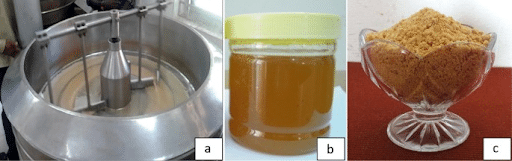
You understand the importance of preserving beneficial compounds in coconut sugar. You might wonder how Traditional Wok vs Vacuum Evaporation in Coconut Sugar Processing affects these delicate molecules. Research shows different processing methods yield varying phytochemical profiles. For example, studies on Processing of coconut sap into sugar syrup using rotary … highlight how processing conditions impact final product chemistry.
| Processing Method Impact on Phytochemicals |
|---|
| Traditional Wok processing, with its higher temperatures and longer exposure, can lead to degradation of heat-sensitive compounds. |
| Vacuum evaporation, operating at lower temperatures, offers better preservation of these beneficial phytochemicals. |
Stability of Phenolic Compounds and Flavonoids
Observing the stability of phenolic compounds and flavonoids provides insight. You will find vacuum evaporation better maintains these compounds. Traditional Wok vs. Vacuum Evaporation in Coconut Sugar Processing significantly impacts their survival.
Impact on Total Antioxidant Capacity and Bioactivity
You can measure total antioxidant capacity to assess a sugar’s potential health benefits. Vacuum evaporation consistently yields products with higher antioxidant capacity. This method helps retain compounds contributing to bioactivity.
This difference in antioxidant capacity directly relates to the processing conditions. The intense heat and longer exposure times characteristic of traditional wok methods can degrade many of the naturally occurring antioxidants in the coconut sap. In contrast, the reduced pressure and lower temperatures employed in vacuum evaporation minimize thermal degradation, allowing a greater concentration of these valuable compounds to remain intact in the final coconut sugar. This means the choice between Traditional Wok vs. Vacuum Evaporation in Coconut Sugar Processing is a key determinant of the final product’s antioxidant power.
Physicochemical Properties and Granule Morphology
You will find distinct differences in the physical makeup and appearance of coconut sugar depending on its processing method. The Traditional Wok vs Vacuum Evaporation in Coconut Sugar Processing significantly impacts characteristics like particle size and shape. For a deeper investigate these comparisons, explore this comparison of crystallized coconut sugar produced by traditional method and amorphous coconut sugar.
Crystallization Behavior and Solubility Indices
Observing the crystallization behavior reveals how sugars processed by Traditional Wok vs Vacuum Evaporation in Coconut Sugar Processing differ. Vacuum-evaporated sugars often exhibit more uniform crystals, affecting their dissolution rate and overall solubility in liquids.
Moisture Content, Water Activity, and Hygroscopicity
Examining moisture content and water activity provides insights into product stability. Sugars produced via Traditional Wok vs Vacuum Evaporation in Coconut Sugar Processing show varying hygroscopic tendencies, influencing their shelf life and storage requirements.
Your sugar’s ability to absorb moisture from the air, known as hygroscopicity, directly relates to its processing. The Traditional Wok vs Vacuum Evaporation in Coconut Sugar Processing creates different internal structures, which then dictate how readily the sugar will clump or harden over time. Maintaining a low water activity is paramount for preventing microbial growth and ensuring a stable product, a factor heavily influenced by the chosen drying technique.
Sensory Divergence and Organoleptic Profiles
You discern distinct sensory profiles originating from the two processing methods. Traditional Wok vs Vacuum Evaporation in Coconut Sugar Processing creates sugars with vastly different aroma, taste, and mouthfeel, directly impacting your culinary applications. These differences extend beyond simple sweetness.
Correlation Between Chemical Markers and Flavor Perception
Identifying specific chemical markers directly explains flavor nuances. You will find that Maillard reaction products, prevalent in traditional wok processing, are absent in vacuum-evaporated sugars, altering the perceived caramel and toasted notes.
Colorimetric Analysis: Artisanal Amber vs Standardized Light Tones
Observing color immediately reveals processing method. You see traditional wok-processed sugar displaying a rich, artisanal amber hue, a stark contrast to the standardized light tones produced through vacuum evaporation.
Examining the colorimetric data further clarifies this distinction. You notice the deep amber of traditional coconut sugar results from controlled caramelization and Maillard reactions, a direct byproduct of the open-pan, higher-temperature method intrinsic to Traditional Wok vs Vacuum Evaporation in Coconut Sugar Processing. Conversely, the lighter, more uniform color of vacuum-evaporated sugar indicates minimal thermal degradation. This difference in color is not merely aesthetic; it signals fundamental chemical variations, directly influencing your perception of quality and authenticity. The visual contrast in Traditional Wok vs Vacuum Evaporation in Coconut Sugar Processing provides an immediate indicator of the underlying chemical transformations.
Summing up
Now, you understand how Traditional Wok vs Vacuum Evaporation in Coconut Sugar Processing profoundly impacts final product chemistry. You have seen how the Traditional Wok vs Vacuum Evaporation in Coconut Sugar Processing choice influences sugar profiles and nutrient retention. The Traditional Wok vs Vacuum Evaporation in Coconut Sugar Processing debate highlights distinct advantages for each. You can now appreciate the nuances of Traditional Wok vs Vacuum Evaporation in Coconut Sugar Processing and its effect on your coconut sugar. The method of Traditional Wok vs Vacuum Evaporation in Coconut Sugar Processing truly defines the end product.