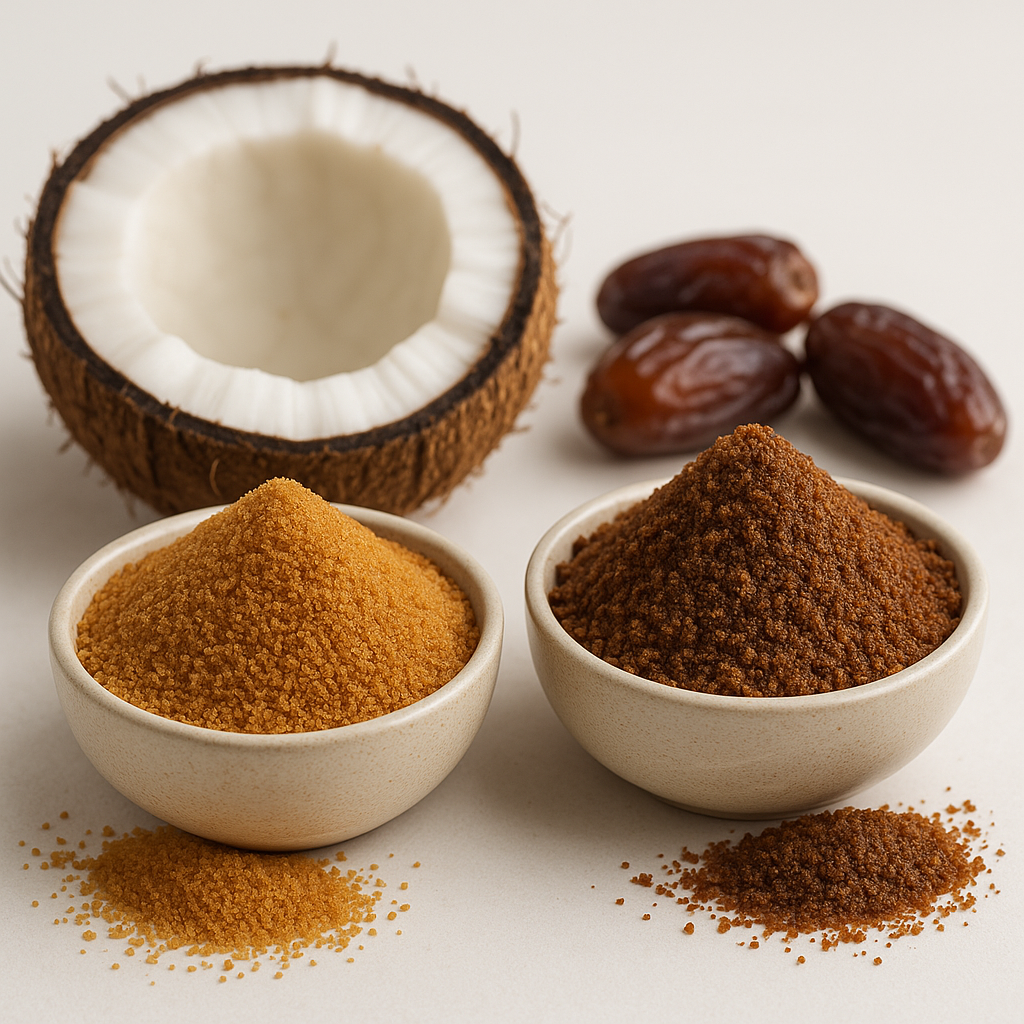
What’s the deal with coconut sugar anyway?
Coconut Sugar for Diabetics shows up in health food stores and on trendy café menus, marketed as a “natural” sweetener that supposedly won’t spike blood sugar the way regular sugar does. Here’s the thing, though: it’s still sugar, just from a different source. For anyone managing diabetes, that distinction matters a lot more than the packaging suggests.
How it’s made and why it’s so trendy
Sap gets tapped from coconut palm flowers, then heated until most of the moisture cooks off, leaving behind a caramel-colored granulated sugar. It sounds rustic, almost artisanal, and that’s part of the appeal. Influencers call it “paleo-friendly” or “eco-conscious,” but trendy doesn’t always mean better, especially when blood glucose is on the line. It might feel like a safer swap, but the reality is more complicated.
The real story behind those glycemic index numbers
It has a glycemic index somewhere around 35 to 54, which sounds reassuring on its own. But those numbers come from small, inconsistent studies, and GI alone doesn’t tell the full story. How much you eat, what you pair it with, and your own metabolism all change the outcome. It might cause a slightly slower rise than table sugar, but it still raises blood sugar. That part doesn’t change.
One study shows a low GI; another shows it behaving almost identically to table sugar in real-world meals. Testing conditions vary a lot – some use it on an empty stomach, others mix it with fiber-rich foods – so those numbers aren’t something to bank on. Understanding why coconut sugar GI varies across studies helps explain the inconsistency. It does contain trace amounts of inulin, a fiber that may slow glucose absorption slightly, but not nearly enough to offset the sugar load. So when it comes to sweetener choices, Coconut Sugar for Diabetics isn’t a free pass – it’s a calculated risk that still needs measuring and monitoring, not a reason to relax. At the end of the day, blood sugar doesn’t care how “natural” the label looks.
Is it actually a “superfood” for diabetics?
Coconut Sugar for Diabetics gets hyped like some kind of miracle sweetener, but the reality is far less exciting. It’s been labeled a health food, even a superfood, especially in influencer circles. The truth is simpler: it still raises blood sugar. Yes, it has a lower glycemic index than table sugar, but that’s not a free pass. It’s not a cure-all, and treating it like one can backfire fast.
Why the “natural” label is honestly pretty misleading
Natural sounds safer, and that’s exactly what marketers count on. But coming from a palm tree doesn’t make something harmless – the body still breaks it down into glucose. It’s less processed than white sugar, sure, but so is honey, and nobody’s pouring that over oatmeal every morning without a thought. Don’t let the “natural” tag suggest it won’t move the needle on blood sugar levels.
A quick look at the minerals and nutrients inside
It’s true that coconut sugar contains iron, zinc, and some antioxidants – but the amounts are tiny, barely registering on a nutrition label. Getting any real benefit from those minerals would mean eating far more than makes sense, and that amount would spike blood sugar fast. So while it technically has more nutrients than refined sugar, it’s not enough to matter in practice.
Those trace minerals sound impressive on paper, but the math tells a different story – one teaspoon gives less than 4% of a day’s iron, and matching what’s in a single serving of spinach would mean eating half a cup of sugar. Nobody’s doing that. There might be a slight nutritional edge over refined sugar, but the question remains: are these meaningful amounts or marketing hype? It’s still sugar.
What your doctor really wants you to know
Most doctors agree Coconut Sugar for Diabetics isn’t a free pass to eat more sweets. It might be labeled “natural” or “low glycemic,” but the body still breaks it down into glucose just the same. Trying it in small amounts isn’t off the table – the bigger point is not assuming it’s safe just because it sounds healthier. Most would rather see attention go toward overall carb control than swapping one sugar for another.
Why it’s still just sugar at the end of the day
Sugar is sugar, even when it comes from a coconut palm. It still contains sucrose – roughly 70 to 80% – plus some trace minerals that don’t cancel out the carbs. That “healthier” label doesn’t change how it adds up across a day, and the pancreas responds the same way regardless of where the sugar came from.
How it can still spike your insulin levels
A teaspoon can raise blood glucose much like table sugar does – slowly or not, insulin still has to respond. A lower GI doesn’t mean zero impact. The body registers the carbs, and insulin follows. The spike might be delayed, but it isn’t avoided.
Even with a glycemic index in the 35-54 range, it still contains calories and carbohydrates that convert into glucose. The fructose and inulin content might slow absorption slightly, but it doesn’t stop it – the rise still happens, and insulin still kicks in, sometimes just a bit later. For a deeper dive into coconut sugar and blood sugar response, individual results vary more than most realize. That delay can actually complicate timing for insulin or medication. The real risk is assuming it’s safe because it’s “natural.” It still demands the same caution as any other sweetener – the smart move is to treat it like sugar and use it sparingly, if at all. It isn’t a loophole. It’s just another form of sugar that needs to be counted, and most doctors will say exactly that.
My honest take on all the coconut sugar hype
It gets talked about like a game-changer – natural, low glycemic, guilt-free. But after digging into the research and talking with dietitians, it’s clear Coconut Sugar for Diabetics isn’t the miracle it’s made out to be. It has a slightly slower impact on blood sugar than regular sugar, but that doesn’t mean it can be used freely. It still raises glucose, sometimes almost as much as table sugar. Don’t get swept up in the wellness buzz.
Why I don’t think it’s the miracle we’ve been told
It’s best thought of as just another form of sugar – not a cure, and not really a major upgrade. It has roughly the same calories and carbs as regular sugar. The fiber content it’s praised for isn’t enough to meaningfully change the blood sugar response. Assuming it’s safe in large amounts is how spikes happen. It still calls for caution, not celebration.
The marketing tricks you should definitely watch out for
Labels love words like “natural,” “unrefined,” and “low glycemic,” as if those are automatic passes. But natural doesn’t mean safe for glucose levels. Brands lean on trust in plant-based names while quietly delivering sugar in nicer packaging. Watch for phrases like “diabetic-friendly” with no clinical backing behind them – that halo effect isn’t earned.
The inulin in coconut sugar often gets framed as a built-in blood sugar blocker, but the amount in a typical serving is too small to matter much. And that “low glycemic index” claim is often based on studies using unrealistic portions or outdated methods. It’s a story more than it is science. The number that actually matters is the carb count per teaspoon – that’s what the body responds to, and the pancreas doesn’t see much difference between this and other sugars.
Can you actually fit it into a diabetic diet?
Yes, Coconut Sugar for Diabetics can have a place in a diabetes-friendly eating plan, but with real caution. Even with a lower glycemic index than regular sugar, it still contains calories and carbohydrates that affect blood glucose. Moderation is the key word here. Some experts say small amounts can work, but watching how your body responds matters more than any general guideline.
Smart portion sizes that won’t cause a massive spike
One teaspoon is often manageable within a meal that already includes fiber, protein, and healthy fats. Going beyond that – tablespoons, say – can lead to noticeable glucose spikes. Think of it like hot sauce: a little adds flavor, too much overwhelms everything. Stick to small amounts and pair them thoughtfully, and keep in mind that even natural sweeteners still count as carbs on the plate.
Easy tips for baking with it more safely
Swapping it into recipes works best as a gradual change – start by replacing only half the sugar. It browns faster and absorbs more moisture, so baked goods might come out crispier than expected. Dense treats like muffins or brownies hide texture changes better than delicate ones. For a sense of how it compares to other sweeteners, check out replacing honey with coconut sugar for proper substitution ratios. A favorite cake recipe probably won’t turn out exactly the same, and that’s fine.
- Combine with fiber-rich flours like almond or oat to slow glucose absorption
- Add cinnamon or vanilla for extra sweetness without more sugar
- Test blood sugar after trying a new baked item, even one labeled “diabetic-friendly”
- Store treats in small portions to avoid overeating
- Remember that “healthier” sugar still calls for portion control
Better alternatives that won’t mess with your health
It might seem like a smart swap, but research shows it still affects blood glucose more than a lot of people realize. Sweeteners that don’t spike insulin at all – like monk fruit or stevia – are worth considering instead, especially for anyone managing diabetes. These alternatives offer sweetness without the metabolic tradeoff.
Why I’m a big fan of monk fruit and stevia instead
Zero calories, zero glycemic impact – that combination is hard to beat. Monk fruit and stevia don’t raise blood sugar at all, which makes them solid choices for anyone managing diabetes. The sweetness is there without any of the tradeoffs, and once the taste becomes familiar, coconut sugar starts to feel like a step backward.
Using cinnamon and vanilla to trick your taste buds
A half-teaspoon of cinnamon can make plain yogurt taste like dessert – it adds warmth and sweetness without any sugar at all. Vanilla does something similar, enhancing the natural sweetness already present in food. Together, they go a long way for anyone trying to cut back on even “natural” sweeteners.
Cinnamon contains compounds that may help improve insulin sensitivity over time, which is a nice bonus for long-term health. Real vanilla extract contains vanillin, which activates sweet receptors on the tongue even when no sugar is present. So when a sweet craving hits after dinner, stirring cinnamon into unsweetened applesauce or adding a splash of vanilla to coffee can scratch that itch. These small moves make managing blood sugar feel a lot less restrictive – and coconut sugar can’t really compete with that kind of flavor hacking. For those exploring other natural options, understanding palm sugar versus coconut sugar clarifies whether they’re truly different products.
Where the Evidence Lands
Pulling together what doctors and dietitians actually say, the question of whether Coconut Sugar for Diabetics fits into a blood sugar-friendly diet doesn’t have a simple yes-or-no answer. It isn’t a free pass – it still raises glucose. In small amounts, though, it can work as an occasional swap, as long as regular monitoring stays part of the routine, since it still carries calories and carbs like any sugar. The glycemic index can be unpredictable, processing methods vary, and batch-to-batch variation means consistency isn’t guaranteed. It’s not a miracle fix, but used carefully, Coconut Sugar for Diabetics can have a place. Just don’t mistake it for a green light.