What’s this stuff actually made of anyway?
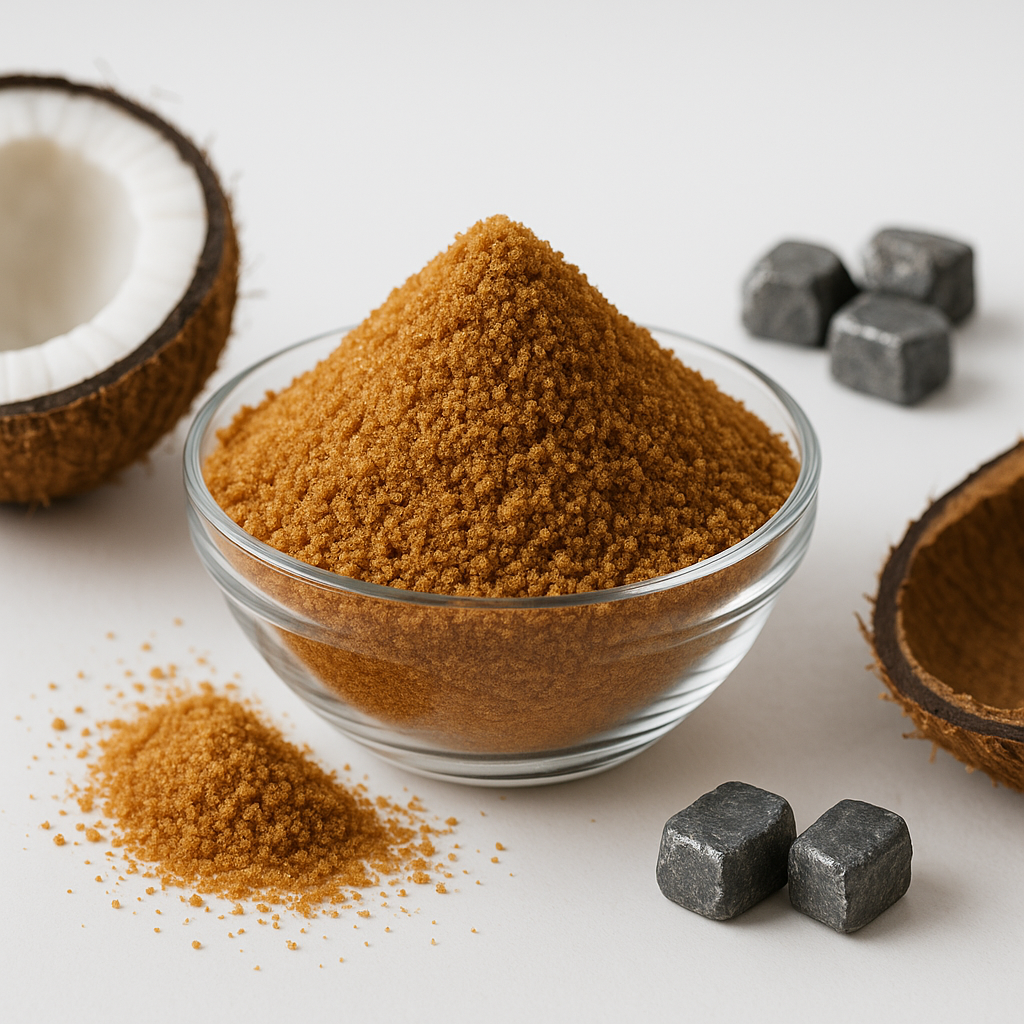
“Raw” Coconut Sugar comes from the sap of coconut palm flower buds, not from coconuts themselves. That sap starts out as a watery, sweet liquid that farmers collect by cutting into unopened flower clusters. It then gets boiled down until most of the water evaporates, leaving behind the golden-brown granules that end up in your coffee.
How they tap the trees and boil the sap
Farmers climb coconut palms – sometimes more than 50 feet up – to slice into the flower buds and collect the dripping sap in bamboo containers. These climbs happen twice a day, since the sap ferments quickly in tropical heat. Once collected, the liquid moves to large woks or pans for the evaporation process that turns it into sugar.
The low-heat vs. high-heat drama
This is where the word “raw” supposedly earns its place – some brands claim they keep temperatures below 118°F to preserve enzymes and nutrients. But here’s the catch: coconut sap can’t actually crystallize into sugar at temperatures that low. The physics doesn’t work that way, and that moisture level would leave a syrupy mess instead of dry crystals.
So what’s actually happening with these low-temperature claims? Most coconut sugar production involves boiling the sap somewhere between 212-250°F – that’s the only way to drive off enough water for proper crystallization. Some producers use slightly lower temperatures than others (maybe 220°F versus 240°F), and that relatively small difference is what gets marketed as “raw” processing. Realistically, all of it has been heated well above what food purists would call truly raw – heat treatment happened, period. The bigger question isn’t whether it was heated, but whether the specific temperature actually matters for nutrition… and that’s a different question worth digging into.
Is “raw” even a real thing in the food world?
The word “raw” gets thrown around so often in health food circles that it sounds like it must have an official definition. It doesn’t. Expectations about what makes something genuinely “raw” are often based on assumptions manufacturers aren’t required to meet. The FDA has no standardized definition for this term on sweeteners, so companies can use it on packaging with a lot of freedom.
Why the FDA doesn’t really care about the word “raw”
Regulatory oversight of the word “raw” on sugar packaging is basically nonexistent. The FDA focuses on safety and accurate nutrition labeling, but hasn’t set temperature thresholds or processing standards for this kind of marketing claim. Brands self-regulate, so what one company calls raw can look completely different from another’s version.
The slippery truth about temperature claims
Temperature thresholds attached to “raw” claims vary wildly between manufacturers, with no industry standard keeping anyone honest. Some brands say their product stays below 115°F, others say 118°F, and plenty don’t specify anything at all. The evaporation process that concentrates coconut nectar into sugar naturally generates heat, which makes truly low-temperature processing questionable at best.
| Temperature Claim | Reality Check |
| Below 115°F | Difficult to verify; evaporation requires heat |
| Below 118°F | Arbitrary threshold with no scientific basis |
| No temp specified | Most honest approach, but least marketable |
| “Minimally processed” | Vague term that means almost nothing |
Manufacturers face a physical challenge marketing can’t get around – liquid sap can’t become crystallized sugar without significant heat. The traditional method involves boiling coconut nectar until the water evaporates and crystals form, which clears any “raw” temperature threshold by a wide margin. Even the so-called low-temperature methods use heat levels that would make raw-food purists wince. Whatever the package claims, the sugar inside likely experienced temperatures well above what most people would consider raw.
My Take on the Whole Nutrition Hype
Does “raw” really keep the good stuff alive?
“Raw” Coconut Sugar marketed this way probably isn’t that different from the regular version when it comes to nutrients. Processing below 115°F might preserve trace enzymes, but the amounts involved are so small they won’t move the needle on health. The inulin fiber content stays pretty much the same either way.
Seriously, let’s remember it’s still just sugar
It’s roughly 75% sucrose – the same molecule found in white table sugar. A “raw” label doesn’t change how the body processes it; it still works like any other sweetener. The glycemic index people rave about is only slightly lower than white sugar’s.
The marketing wants buyers to believe they’ve found a health food, but the pancreas doesn’t care whether those sugar molecules came from a minimally processed coconut flower or a sugar beet – the insulin response is the same either way. There might be a few extra minerals like potassium and iron compared to white sugar, but the amounts are so small that getting any real benefit would mean eating ridiculous quantities, which would defeat the purpose entirely. Some brands tout the antioxidant content, and there are some polyphenols present – but a single strawberry delivers more antioxidants than a tablespoon of any “Raw” Coconut Sugar. What’s actually happening is empty calories that spike blood glucose just like any other sugar. Preferring the taste or wanting to support coconut farmers are perfectly good reasons to buy it – just not because it makes cookies into health food.
Why brands love slapping “raw” on the bag
The marketing magic that makes us spend more
Seeing the word “raw” on a bag of sugar tends to open wallets wider, and that’s exactly what manufacturers count on. Studies show people will pay 20-40% more for products labeled “raw” without questioning what the word actually means. It triggers an automatic assumption of superiority – closer to nature, less processed, more pure. That one word can turn a commodity product into something that feels premium.
How health halos mess with our heads
Brands reach for “raw” because it creates what psychologists call a health halo effect. The word appears and suddenly the whole product seems to glow with benefits – lower calories, more nutrients, better for you – even before anyone checks the nutrition facts.
That health halo works by hijacking normal decision-making shortcuts. Spotting “raw” on a label gets a product mentally filed alongside other “healthy” foods without doing the math. Research shows people consistently underestimate the calories and sugar in products with health-focused labeling, and might end up using more of it in coffee or baking because it feels virtuous. The reality is that most sugar marketed this way goes through nearly identical processing to the regular version – heated to 200-plus degrees to evaporate moisture either way. The health halo just makes the choice feel better, even when the nutritional difference is negligible. Companies know shoppers will reach for the “Raw” Coconut Sugar version over the standard one, and price it accordingly.
What’s the real deal with the taste and texture?
This style of coconut sugar brings a subtle caramel undertone that’s more complex than refined white sugar. The texture runs slightly coarser, with granules that take a bit longer to dissolve in cold liquids. In baking or cooking, the moisture content tends to run a touch higher than conventional sugar, which can affect how recipes turn out.
Does it actually bake any differently?
Cookies and cakes tend to come out slightly denser with this kind of sugar because of that extra moisture. Baked goods also brown faster, so dropping the oven temperature by about 25 degrees helps. It doesn’t cream quite as well with butter compared to regular sugar, which can leave the texture a little less light and fluffy in certain recipes. When considering substitution ratios in baking, these characteristics matter.
My honest thoughts on the flavor profile
Tasting the “raw” version side-by-side with regular coconut sugar reveals minimal difference – maybe a slightly deeper molasses note. Most people won’t pick up on it in finished dishes, though. The flavor comes through best in coffee and oatmeal, where it’s tasted more directly.
It shines brightest when it’s not cooked at all. Sprinkled over yogurt, fresh fruit, or used in no-bake recipes, that subtle butterscotch character actually comes through. Once it’s baked into brownies or simmered into a sauce, the distinction between “raw” and regular coconut sugar pretty much disappears. So paying extra for the “raw” label expecting it to transform chocolate chip cookies might lead to disappointment. The real question is whether that slight flavor edge in uncooked applications is worth the higher price tag that usually comes with it.
What the Label Doesn’t Tell You
The word “raw” on coconut sugar packaging turns out to be more marketing spin than meaningful distinction. It doesn’t indicate special processing – all “Raw” Coconut Sugar goes through heating during production, typically well above any temperature that would qualify as truly raw in the eyes of most consumers. The nutritional profile remains virtually identical regardless of the label, with the same sucrose content and minimal micronutrient levels that won’t significantly impact health.
What matters more than the “raw” designation are verifiable quality markers: actual moisture content, color specifications, mineral composition testing, and transparent sourcing. Money is better spent comparing these concrete indicators than chasing a largely unregulated marketing term. If you prefer the flavor or want to support traditional coconut farming communities, those are legitimate reasons to choose this sweetener – just don’t expect the “raw” label to deliver health benefits that the chemistry simply doesn’t support.