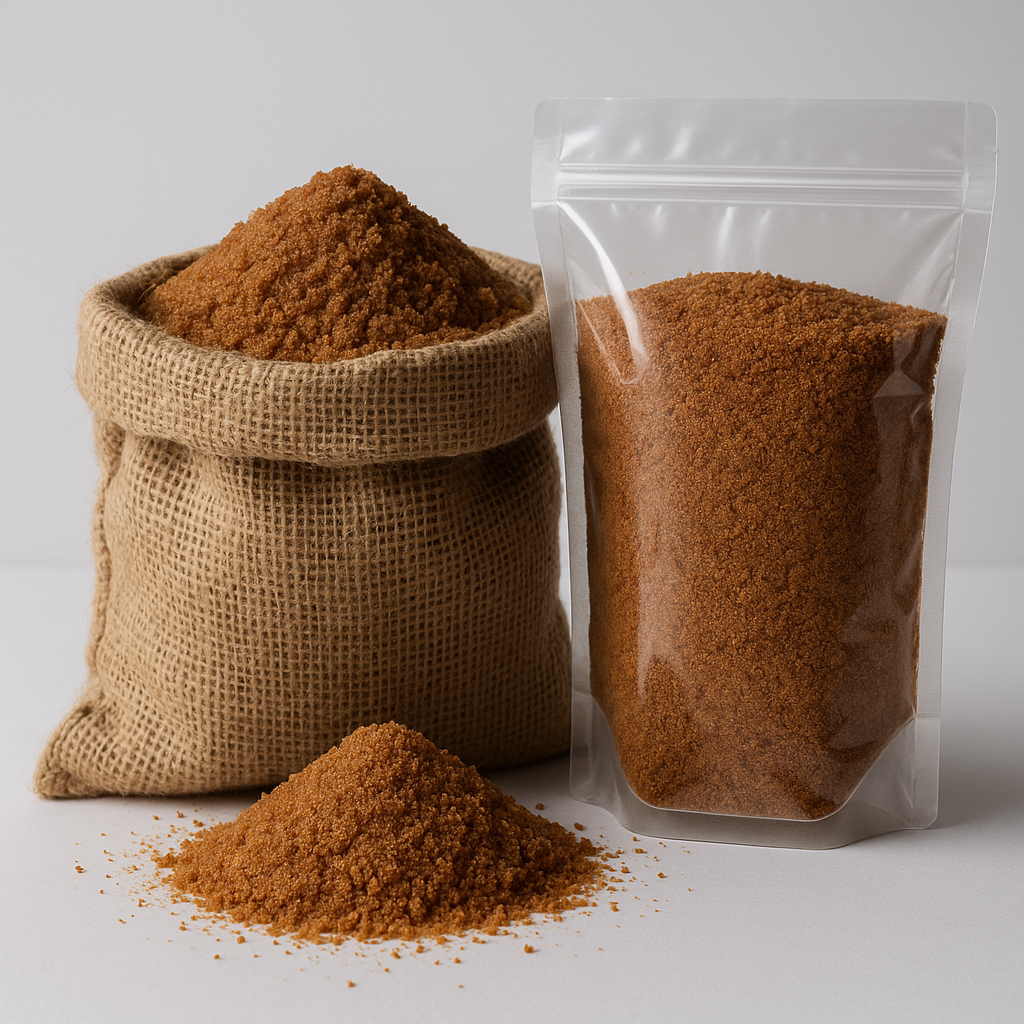
- What’s the deal with equilibrium moisture anyway?
- How water literally crawls through your sugar piles
- Why coconut sugar is actually a total moisture magnet
- Picking the right bag so your sugar doesn’t turn into a brick
- Keeping your storage room from ruining everything
- Some pro tips for keeping things dry and sweet
- Where This Leaves Storage Planning
Packaging isn’t just about getting coconut sugar off the shelf and into bags – it’s the frontline defense against moisture finding its way where it shouldn’t. Clumps forming in stored sugar aren’t spoilage in the usual sense – they’re moisture on the move. At the core of this is equilibrium moisture content: the point where sugar stops absorbing or releasing water because it’s balanced with the surrounding air. Understanding Moisture Migration in Bulk Coconut Sugar Storage starts with recognizing this critical equilibrium. Get this wrong, and the product degrades fast.
The science behind it hinges on humidity, temperature, and time. Sugar will always try to balance with the air around it – so if the environment’s too damp, it pulls in moisture like a sponge. That shift changes texture, promotes clumping, and can even invite microbial growth.
None of this is random. It follows predictable patterns, can be measured, modeled, and most importantly, controlled. Equilibrium moisture levels for coconut sugar typically sit between 2% and 4%, depending on relative humidity. Stay within that window, and most of the usual pitfalls get avoided.
Packaging choice makes or breaks this balance. Multi-layer barriers with low moisture vapor transmission rates matter here – without them, all the effort put into climate control goes out the window. Protecting the product comes down to controlling the environment – and never underestimating how deeply Moisture Migration in Bulk Coconut Sugar Storage affects quality.
What’s the deal with equilibrium moisture anyway?
Coconut sugar that clumps or hardens in storage isn’t random spoilage – it’s science. Equilibrium moisture is the point where sugar stops absorbing or releasing water because it’s perfectly balanced with the air around it. Ignore this, and texture changes, caking, or even microbial issues follow down the line.
Why we can’t ignore the balance between sugar and air
Coconut sugar isn’t sealed off from the world, no matter how tight the bag looks. The air’s humidity is constantly in conversation with the sugar. If the environment pushes more moisture than the sugar can handle, that balance tips the wrong way. That balance isn’t just ideal – it’s what keeps the product flowing freely and tasting right.
Honestly, humidity is the real enemy here
Humidity sneaks in like a thief – quiet, invisible, and totally destructive. Even slight spikes in ambient moisture can trigger major shifts in stored coconut sugar, moving water where it shouldn’t go. Clumping, hardening, spoilage – all of it starts with a little too much damp in the air.
Humidity is the invisible force driving nearly every moisture-related storage issue. It doesn’t take a monsoon – just 60% RH in a warehouse can push coconut sugar past its equilibrium, kicking off internal movement of water. Once that starts, water moves from wetter zones to drier ones inside the pile, creating pockets of caking or even mold risk. Moisture Migration in Bulk Coconut Sugar Storage means managing a dynamic system where air and product are always negotiating moisture – and without humidity control, that negotiation gets lost. This isn’t a one-time event – it’s an ongoing process that has to be stayed ahead of.
How water literally crawls through your sugar piles
Sugar that looked fine on top can turn out clumped and damp at the bottom weeks later. Water doesn’t pour – it moves slowly, molecule by molecule, through tiny air pockets between granules, drawn by differences in humidity and temperature. It’s not a flood. It’s a stealthy crawl.
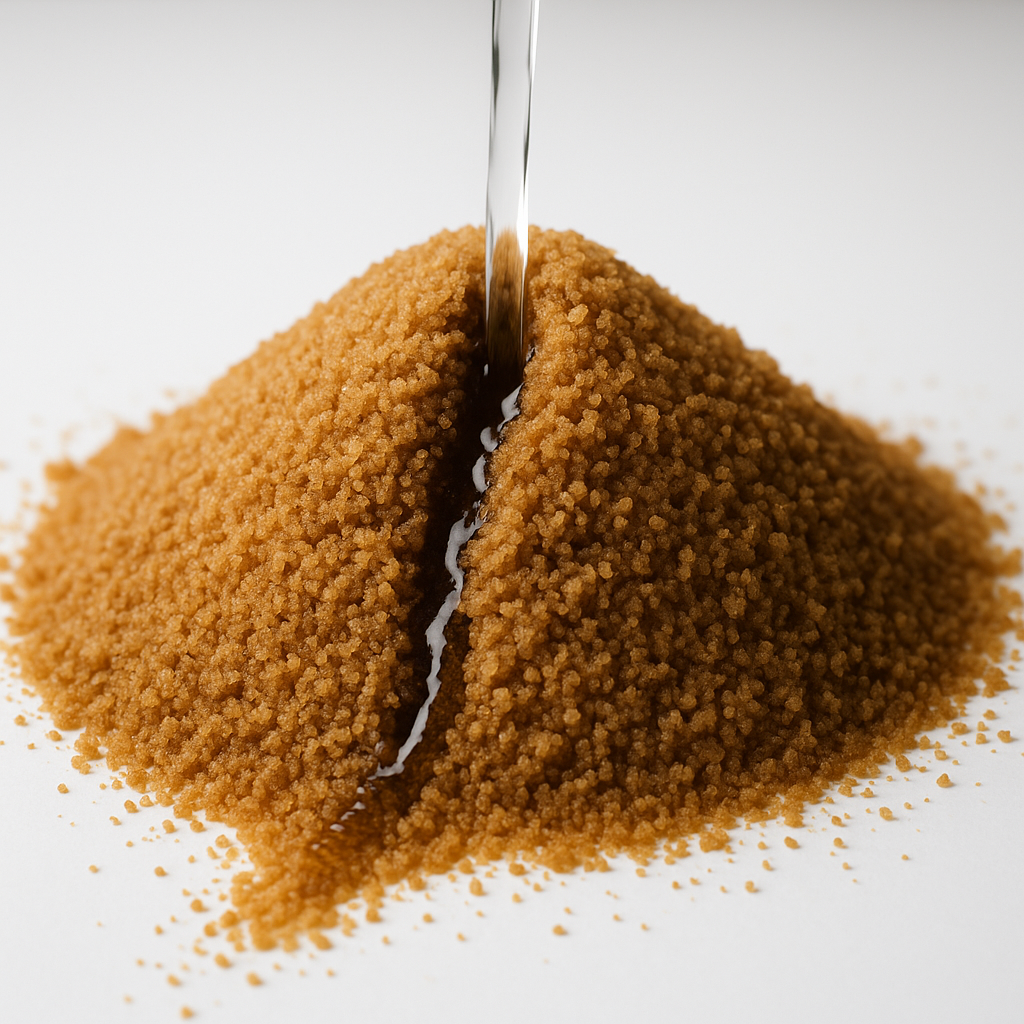
The science of why moisture doesn’t stay put
Moisture migrates because coconut sugar is hygroscopic – meaning it pulls water from the air like a sponge. Even sealed bags can’t stop this if the environment shifts. When warm, humid air meets cooler sugar, condensation forms inside the pile, redistributing water where it isn’t wanted. [source]
Here’s what happens when things get sweaty in the warehouse
Humidity spikes make a storage space feel like a sauna – and coconut sugar feels it too. Clumping starts, then caking, and before long there are pockets of damp sugar breeding mold. Quiet stacks turn into problem zones, and the damage is often already spreading before it’s visible.
Temperature gradients are the hidden trigger. Warm air rises, hits the cooler roof, and drips condensation down into the top layers of sugar. That moisture sinks slowly, dragging more humidity with it. Over time, this creates wet zones at the bottom while the surface looks dry. Left unchecked, this cycle worsens – leading to spoilage, loss of flowability, and serious quality drops. It’s a slow-motion disaster if packaging and ventilation aren’t dialed in. And once that sugar starts fermenting, there’s no coming back.
Why coconut sugar is actually a total moisture magnet
Coconut sugar might look like any other sweetener, but it’s far more eager to grab water from the air than most would expect. Its hygroscopic nature means it pulls in moisture fast – especially in humid environments – and that directly impacts how it behaves in storage. This isn’t just about clumping; it’s about long-term quality, shelf life, and how it gets packaged.
My take on why this stuff clumps so easily
It’s not magic – when coconut sugar turns into a solid brick, it’s because tiny crystals absorbed moisture and started dissolving just enough to stick together. A bag left open too long, and the result is concrete-like lumps. This behavior is a direct result of Moisture Migration in Bulk Coconut Sugar Storage, and it’s why handling matters so much.
It’s not just sugar, it’s a sponge for water vapor
It looks dry, but that fine granule is basically a moisture trap waiting to happen. The porous structure pulls water vapor right out of the air – no drama, no warning. This becomes a silent issue until someone’s scraping hardened sugar off the bag.
Each grain works like a tiny sponge with a mind of its own. Even in sealed containers, if the relative humidity shifts, those particles start absorbing and releasing moisture – triggering internal movement that’s invisible from the outside. Over time, hotspots form, caking begins, and the whole batch risks spoilage unless packaging actively blocks vapor exchange. This isn’t just a storage problem – it’s a material science issue hiding in plain sight.
Picking the right bag so your sugar doesn’t turn into a brick
Bulk coconut sugar can go from fluffy crystals to a solid lump surprisingly fast if packaging gets skimped on. The key is stopping that moisture movement before it starts – and that means choosing materials designed for the job. Grabbing any bag off the shelf isn’t enough; the sugar’s texture depends on what’s between it and the air.
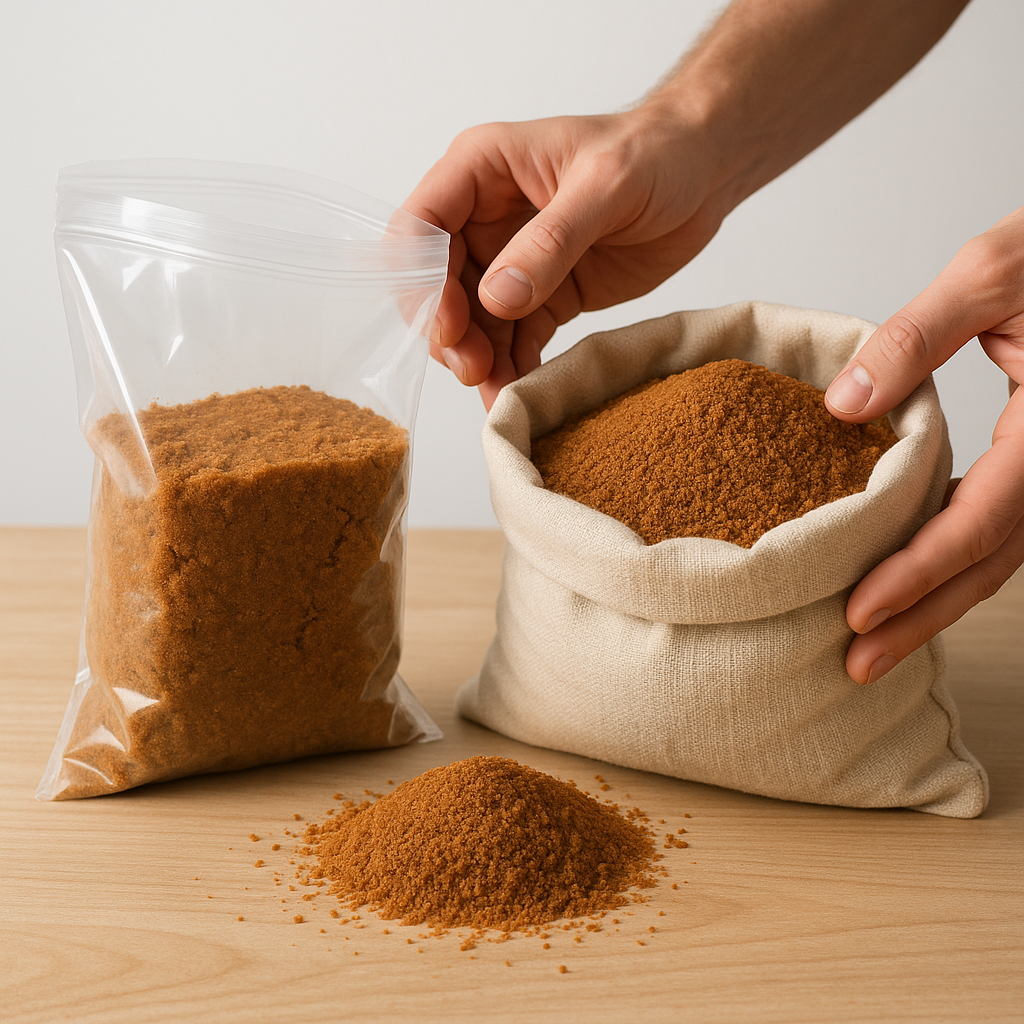
Seriously, don’t just use any old plastic
A grocery store produce bag is useless here. Regular plastic lets moisture sneak in like an uninvited guest at a dinner party. Once humidity gets inside, the clock starts ticking fast – and the sugar hardens into something that might need a hammer to break. Engineered film is the answer, not whatever’s sitting in a junk drawer.
What’s the real deal with moisture barriers?
Not all barriers are created equal – some block moisture like a pro, others barely slow it down. A good one creates a near-airtight seal against humidity. Multi-layer films with aluminum or metallized coatings do the job; basic poly doesn’t. [source]
A moisture barrier isn’t just about thickness – it’s about structure. Layers matter. A laminate that combines polymer strength with a true vapor barrier matters, because even tiny amounts of water vapor can set the whole process in motion. Once that starts, it’s game over for texture and shelf life. The sugar deserves better than guesswork.
Keeping your storage room from ruining everything
Temperature swings in a storage room can silently sabotage even well-managed moisture levels. Even slight fluctuations pull moisture from one area to another, creating hotspots of clumping or spoilage. A dry room alone isn’t enough – without stable conditions, it’s just delaying the inevitable. Moisture Migration in Bulk Coconut Sugar Storage becomes uncontrollable when temperature isn’t monitored.
Why I think temperature control is a total game-changer
Stability isn’t just nice to have – it’s non-negotiable. Here’s why:
| Temperature Control Impact | |
|---|---|
| Without Temp Control | With Temp Control |
| Moisture moves unpredictably | Moisture movement slows dramatically |
| Sugar cakes and hardens | Free-flowing texture stays consistent |
| Higher risk of mold | Microbial growth stays low |
It’s not about being cold – it’s about being steady. And that steady environment keeps moisture movement from going off-script.
Is your warehouse too humid? Let’s find out
A warehouse might feel “fine” just because it doesn’t drip or smell musty – but moisture problems don’t wait for visible signs. Sugar could already be absorbing moisture at a molecular level, even if the air feels only slightly sticky. Humidity above 65% RH? That’s a red zone.
A single hygrometer reading doesn’t tell the full story. Readings near the door or ceiling lie – moisture pools at floor level, especially in bulk bins. Spot checks won’t cut it; continuous monitoring in multiple zones matters. Once Moisture Migration in Bulk Coconut Sugar Storage starts moving where it shouldn’t, it starts quietly… then ruins everything fast. And once it starts, reversing it without reprocessing isn’t possible.
Some pro tips for keeping things dry and sweet
Smart storage choices make all the difference in preventing moisture problems before they start.
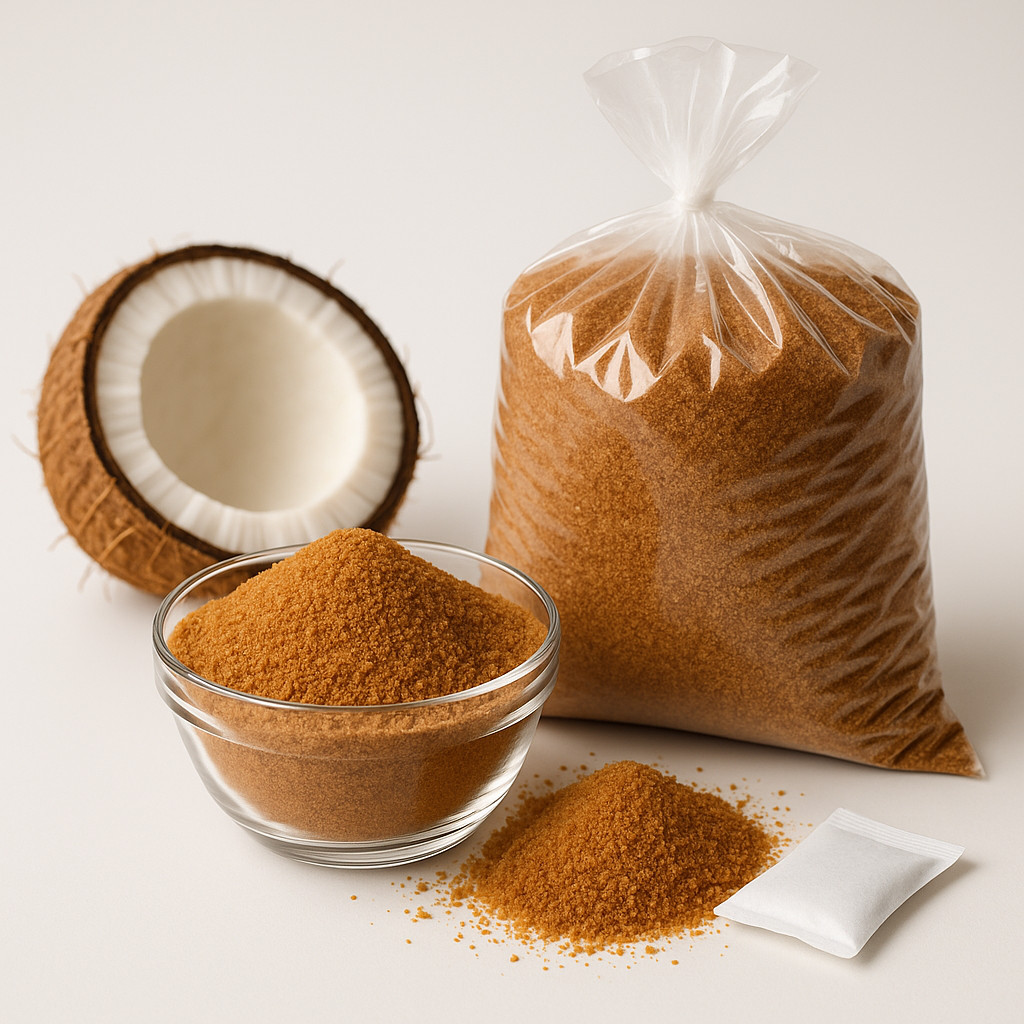
- Use moisture-barrier liners inside containers
- Keep storage areas climate-controlled, ideally under 60% RH
- Rotate stock using FIFO (first in, first out)
- Seal bags tightly after each use
Understanding how moisture moves through bulk storage helps stay ahead of clumping and spoilage.
How to check if your sugar is actually safe
A quick texture check tells most of the story – squeeze a handful. If it flows freely and doesn’t form clumps, it’s likely in the clear. A musty smell or visible damp spots are red flags. Since these issues can develop silently, inspecting bags weekly makes sense, especially in humid climates.
Don’t let your bulk bags sit on the floor
Placing bulk bags directly on concrete invites trouble – cold floors sweat, and that moisture climbs right into the sugar. Even sealed bags aren’t fully immune. This simple misstep accelerates the whole process. Pallets or raised platforms should be the default.
Concrete floors, especially in warehouses or sheds, often have higher relative humidity at ground level. When warm air meets cool flooring, condensation forms – right where bags sit. That invisible dampness seeps through packaging over time, triggering caking, microbial growth, or even fermentation. Preventing direct contact is one of the most effective ways to keep moisture under control. Elevating every bag, every time, keeps sugar drier, safer, and more consistent.
Where This Leaves Storage Planning
Moisture Migration in Bulk Coconut Sugar Storage shapes every part of a storage strategy for coconut sugar – it’s the core factor dictating shelf life, texture, and quality. How it interacts with packaging materials, ambient humidity, and storage duration can’t be ignored. Get the equilibrium moisture wrong, and the product suffers for it.
The key is recognizing that moisture behavior is predictable. With the right barriers, climate control, and handling protocols, what seems like a chaotic problem becomes manageable. Packaging must match the product’s chemistry. Storage environments need continuous monitoring, not occasional spot-checks. And every bag, every stack, every warehouse needs to be designed around one truth: moisture will always try to move.
Control it early, control it consistently, and the sugar stays stable. Skip one step, and the entire chain breaks. Moisture Migration in Bulk Coconut Sugar Storage isn’t a side issue – it’s the central challenge that defines success or failure in handling this product at scale.