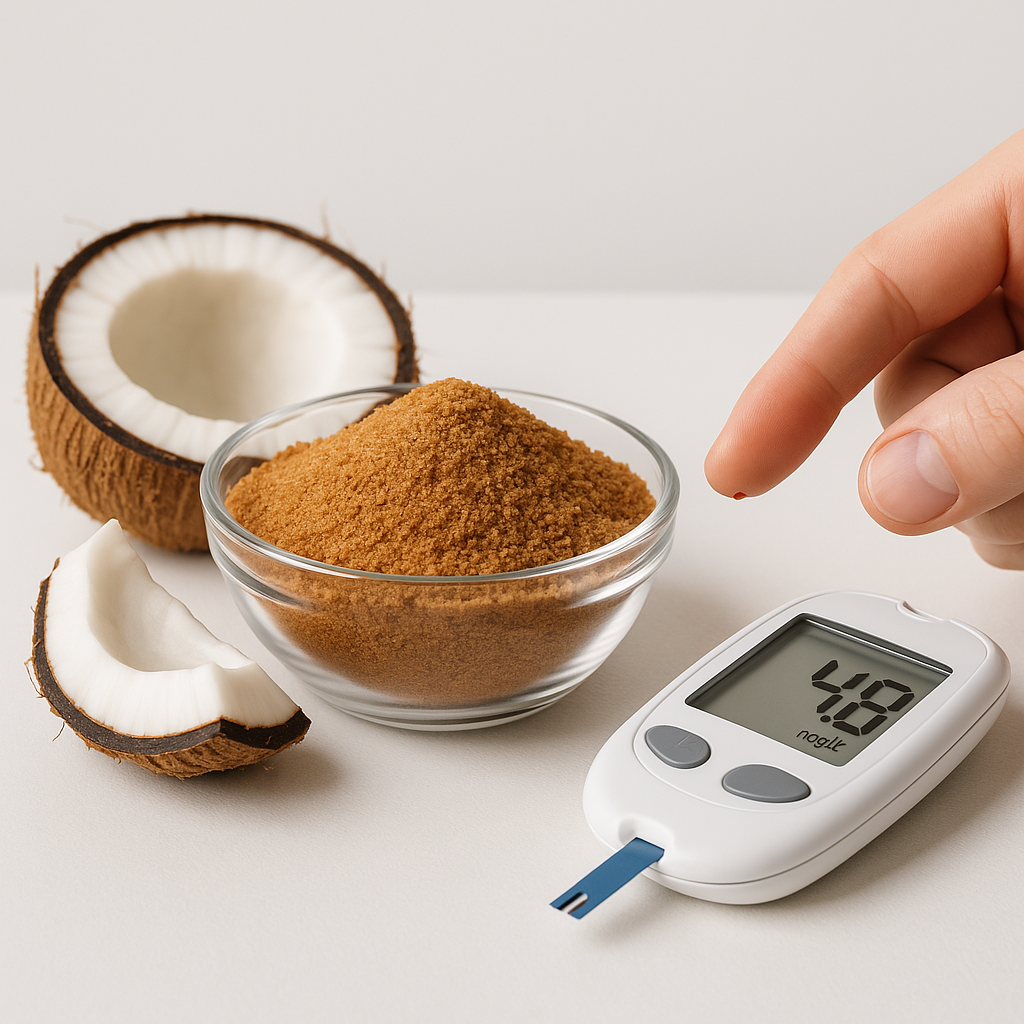
Coconut sugar has been showing up in smoothies, baked goods, and keto-adjacent recipes for years now, often with the promise that it’s gentler on blood sugar than the white stuff. But here’s the catch: Coconut Sugar and Blood Sugar Response varies dramatically from person to person—one individual’s reaction might not match someone else’s, or even their own response from the day before.
How coconut sugar affects blood sugar turns out to be more complicated than a single glycemic index number suggests. It depends on gut bacteria, meal timing, what else is on the plate, insulin sensitivity, activity levels, even sleep. A spoonful in coffee might feel fine while the same amount in pancakes causes a crash—and that’s normal. Tracking personal patterns ends up mattering more than generic advice.
What is coconut sugar anyway?
Coconut sugar often gets marketed as nature’s sweetener or a superfood alternative, but at its core it’s just sap from coconut palm blossoms, heated until the moisture evaporates and granules form. The result looks and pours a lot like brown sugar. Despite the name, it has nothing to do with the coconut fruit itself—a mix-up that trips a lot of people up.
Is it really better than the white stuff?
Coconut sugar does contain small amounts of iron, zinc, and antioxidants, but in typical serving sizes those differences from table sugar are minimal. It does have a lower glycemic index, which plays into Coconut Sugar and Blood Sugar Response—but that’s not the same as being unlimited. It’s still sugar.
What’s actually inside those brown granules?
Coconut sugar is mostly sucrose—somewhere around 70-80%—with small amounts of glucose and fructose, plus a bit of inulin, a fiber that may slow glucose absorption. That inulin content is part of why blood sugar response to coconut sugar can vary from person to person: it may soften the glucose spike somewhat, though how much depends on gut microbiome, insulin sensitivity, and what else is eaten alongside it.
The composition looks similar to regular sugar on paper, but the real-world effect is where things get personal. One person might feel steady, another might still crash. It’s not just about the sucrose content, but how an individual body interacts with the whole package. The amount of inulin present can vary significantly by source, which is why tracking a personal response tends to be more useful than any label claim.
Why your body reacts differently than mine
Feeling fine after a spoonful of coconut sugar while someone else crashes an hour later is completely normal—the response isn’t one-size-fits-all. Genetics, daily habits, and even stress levels all shape how a body manages sugar, which means two people can have genuinely different experiences with the exact same food.
The truth about your unique gut health
The gut microbiome is essentially a fingerprint—no two are alike. The bacteria living in the digestive tract help break down foods, including coconut sugar, and influence how quickly glucose enters the bloodstream. Some people have microbes that slow fermentation and absorption, leading to a gentler rise in blood sugar—which means the response can vary simply based on what’s living in someone’s gut.
How your metabolism handles the sweet stuff
Metabolic rate determines how fast sugars get processed, and it varies from person to person. Someone more insulin sensitive clears glucose efficiently, making coconut sugar less disruptive; someone with more insulin resistance can see even natural sweeteners spike their levels.
Metabolism isn’t just about speed, either—it’s about how the body prioritizes fuel. Active people with more muscle mass tend to burn sugar quickly for energy, while others store it more readily, especially under stress or poor sleep, with hormones like cortisol and insulin playing a role. Eating coconut sugar isn’t just a reaction to its sweetness—it’s a response shaped by lifestyle, history, and biology, which is why one person’s “safe” sweetener can be another’s rollercoaster.
Don’t let the low-GI label fool you
Coconut sugar often gets marketed as “low-GI,” which can sound like a free pass for steady blood sugar—but that number doesn’t tell the whole story. It still packs roughly 70-80% sucrose, which breaks down into glucose and fructose. While it looks favorable on paper, real-world reactions vary more than that single number suggests. Why coconut sugar GI varies across studies comes down to processing variables, mineral content, and sugar spectrum differences that make every batch unique.
Why GI numbers aren’t the whole story
Individual metabolism plays a huge role in how anyone responds to a sweetener, even one labeled low-GI. The glycemic index measures average responses, but gut hormones, meal composition, and insulin sensitivity all change the picture—which is why the number alone won’t predict an individual’s actual experience.
Here’s what’s happening with your insulin
The pancreas doesn’t distinguish between sugar from cane or coconut—it sees sucrose and responds accordingly. Even with a moderate glycemic index, coconut sugar still triggers insulin release because of its glucose content.
Insulin spikes aren’t just about blood sugar levels, either—they’re about timing and load. The glucose portion hits the bloodstream within minutes, prompting a rapid insulin surge, while the fructose portion doesn’t raise blood glucose directly but still factors into the broader metabolic picture around insulin resistance and fat storage. That hidden activity is part of why “natural” doesn’t automatically mean “gentle on insulin,” and over time, repeated insulin demands—even moderate ones—can matter more for people already managing insulin sensitivity issues.
My take on the fiber factor
Coconut Sugar and Blood Sugar Response isn’t just about the sugar—it’s also about what comes with it. There’s a small amount of fiber in coconut sugar, mostly inulin, which might help slow glucose absorption a little. But realistically, there’s not enough in a typical serving to make a dramatic difference for most people. Still, that small amount could nudge the blood sugar curve just enough to matter for someone more sensitive.
Does inulin actually do anything?
Inulin does show up in coconut sugar in trace amounts, and it’s a prebiotic fiber that can support gut health. But the dose here is tiny—getting any real effect on digestion or blood sugar would require eating far more than a teaspoon. It sounds good on paper, but it’s not going to meaningfully offset the sweetness.
How fiber slows down the sugar rush
Fiber physically slows how fast the body absorbs sugar—like a speed bump for glucose. Eating fiber alongside sugar delays stomach emptying and gives the body more time to manage insulin, which is part of why whole fruit doesn’t spike blood sugar the way juice does. But coconut sugar only contains about 1-2% fiber, nowhere near enough to create that kind of buffering effect on its own.
When fiber is present in meaningful amounts, it forms a gel-like matrix in the gut that traps sugars and slows their breakdown, so glucose enters the bloodstream gradually rather than all at once. Despite the inulin, coconut sugar on its own behaves closer to regular brown sugar than to a genuinely low-glycemic food. Pairing it with fat, protein, or real fiber from vegetables or whole grains makes a noticeable difference—on its own, less so. How this plays out depends heavily on context and individual metabolism: some people barely react, others feel a crash within the hour, which is exactly why tracking a personal response beats relying on the label.
It’s all about what else is on your plate
How coconut sugar affects blood sugar isn’t just about the sweetener itself—what it’s paired with changes everything. A spoonful in morning coffee hits differently than the same amount stirred into oatmeal with nuts and yogurt, because the body processes sugar in the context of the whole meal, not in isolation.
Why eating sugar solo is a bad idea
Sugar on its own, without fiber, fat, or protein to slow things down, tends to mean fast absorption and a quicker crash. That shows up in energy, mood, and cravings within minutes—and that post-sugar slump isn’t imaginary.
Pairing for a steadier blood sugar vibe
Coconut sugar behaves better with the right company. Pairing it with protein, healthy fats, or fiber-rich foods changes the picture significantly—the sweetness is still there, just without the rollercoaster. A dessert made with coconut sugar becomes much less of an issue served alongside Greek yogurt or a handful of almonds, since fat and protein act like brakes on glucose release.
Even a sprinkle of cinnamon can help modulate the reaction. The relationship between Coconut Sugar and Blood Sugar Response isn’t fixed—there’s real influence to be had in how it’s eaten. Whether formulated into chocolate, used in baking, or stirred into beverages, context matters as much as composition.
Seriously, listen to your own body
Coconut sugar gets a reputation as better for blood sugar, but whether that holds up depends on the individual—and real-life reactions can be surprising. One spoon stirred into tea instead of the usual sweetener led to a bigger spike than expected, which is the kind of result that changes how someone approaches sweeteners going forward.
Tracking your own spikes and crashes
What happens after eating matters more than anything printed on a jar. A personal reaction to coconut sugar only becomes clear through actually measuring it—feeling fine at first and then crashing an hour later, or staying steady with two teaspoons but not three. The patterns matter more than the promises.
Finding your personal sweet spot
How much coconut sugar someone can handle without a rollercoaster isn’t about rigid rules—it’s about figuring out an individual threshold. That threshold depends on metabolism, activity level, and stress, which means one person’s safe amount can be another’s rough afternoon.
Tolerance can even shift day to day: sleep, hormones, and what else was eaten that day all play a role. Over time, patterns emerge—maybe coconut sugar is fine after a walk but risky on an empty stomach. Real control comes not from avoiding sugar entirely, but from understanding the body’s signals, which shift from day to day and meal to meal. The prebiotic potential might offer some benefit, but it won’t override an individual’s metabolic response.
The Bottom Line
Coconut Sugar and Blood Sugar Response isn’t a free pass for stable blood sugar, no matter how it’s marketed. How any individual body handles it depends on genetics, gut health, and even what was eaten earlier in the day. It may mean a lower spike for some people, but real-world results vary widely from person to person.
The glycemic index offers a rough guide, but metabolic individuality renders blanket claims almost meaningless. The fiber content is negligible, the mineral profile modest, and processing method can influence final composition. Even harvest timing affects quality. The only way to really know how Coconut Sugar and Blood Sugar Response plays out is to test it—because the response is genuinely personal.