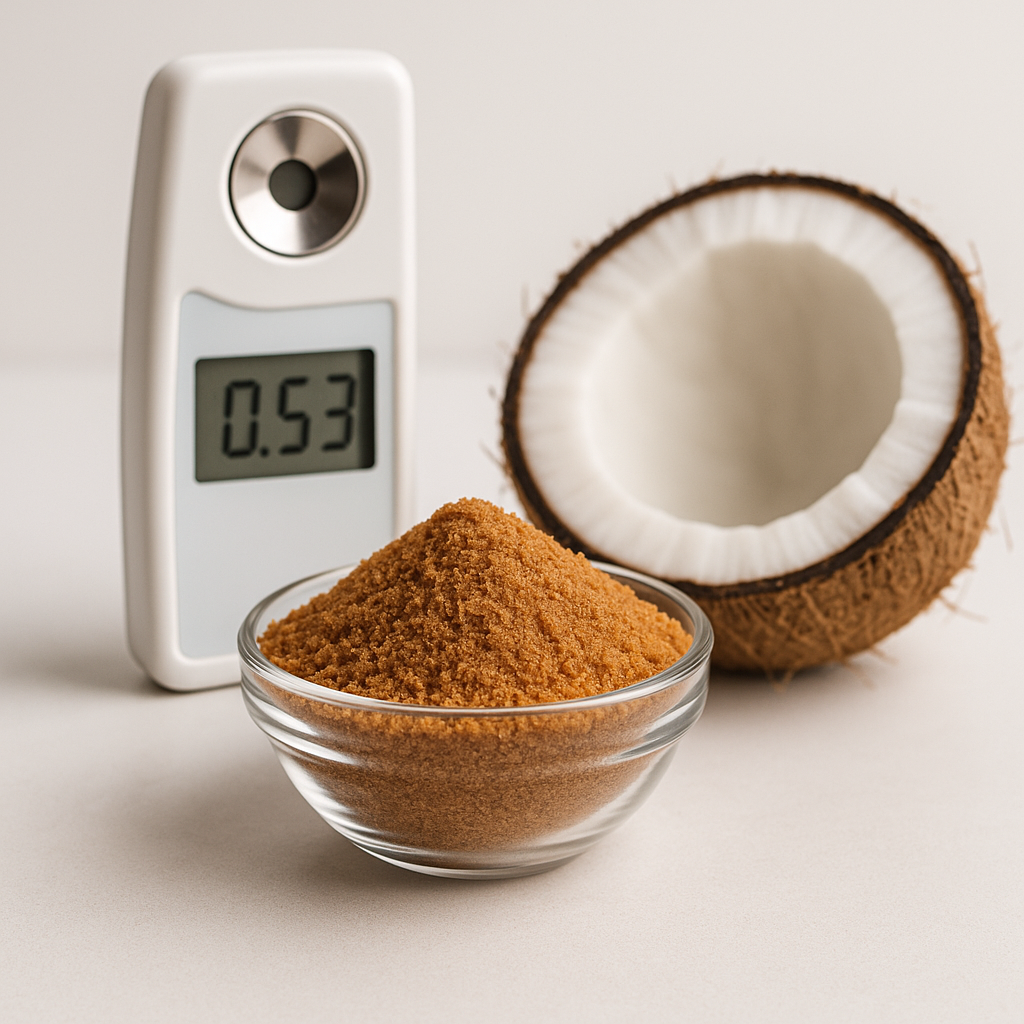
International sugar testing standards recognize the critical importance of water activity measurements for quality control. According to ICUMSA’s international sugar analysis standards, water activity is a fundamental parameter for assessing microbial stability in sugar products, providing standardized methods that enable consistent evaluation across global supply chains. These protocols are particularly relevant for coconut sugar exporters who must meet stringent shelf-life requirements in international markets.
Detection of quality issues extends beyond simple moisture analysis, as recent research demonstrates. A comprehensive Food Control Journal study on coconut sugar adulteration detection found that water activity measurements, combined with other analytical techniques, provide crucial data for authenticating product quality and identifying compromised batches that may be vulnerable to microbial contamination. This multi-parameter approach strengthens quality assurance protocols for B2B buyers evaluating supplier reliability.
Market demand for reliable coconut sugar continues to expand across key export regions. The CBI’s guide to coconut sugar export to Europe emphasizes that European buyers specifically require documented water activity levels as part of their quality specifications, with maximum aw thresholds typically set between 0.60 and 0.65 to ensure product stability during transport and storage. Meeting these precise benchmarks is essential for maintaining access to premium European food ingredient markets.
Moisture content seems like the obvious thing to track when it comes to preserving coconut sugar, but it’s not the full picture. Water activity is the better predictor of mold and yeast risk, and it’s the number that actually determines how long a product stays shelf-stable. Here’s why it matters more than a simple moisture percentage, and what it means for storage and packaging.
Defining the Metrics: Moisture Content vs. Water Activity
The distinction between moisture content and water activity matters for mold and yeast prevention – each metric tells you something different about microbial risk.
Total moisture percentage as a quantitative measure
Moisture content is simply the total amount of water in the sugar, expressed as a percentage of weight. It tells you how much water is physically present – not whether that water is available for anything to use.
Water activity (aw) as a measure of energy and availability
Water activity (aw) measures the unbound water that’s actually available for microbial growth. It reflects the energy state of that water, not just how much of it there is.
This number correlates directly with mold and yeast growth, even when total moisture looks low. Think of it as the “thirst” of microorganisms – the higher the water activity, the more easily they can access water for their metabolic processes. That’s why monitoring it gives a far more accurate read on spoilage risk than moisture content alone.
Why Moisture Percentage Falls Short as a Risk Predictor
A low moisture percentage might seem like a guarantee of safety, but moisture content alone doesn’t reveal how much water is actually available for microbial growth. The FDA’s guidance on Water Activity (aw) in Foods covers why it’s the more reliable predictor.
The role of bound water vs. free water in chemical stability
Bound water is chemically or physically tied up with food components and unavailable to microbes. Free water is the opposite – it supports enzymatic reactions and microbial growth. Water activity distinguishes between the two; moisture percentage doesn’t.
How hygroscopic properties of coconut sugar influence water distribution
Coconut sugar readily absorbs moisture from the environment. Because of this hygroscopic nature, its moisture content can shift without a corresponding change in free water – which is exactly why moisture percentage alone is an unreliable measure here.
This ability to attract and hold water affects how free and bound water are distributed within the sugar’s structure. A high moisture reading might just reflect absorbed atmospheric moisture, with the actual available water – the part that matters to mold and yeast – staying low because it’s bound. Conversely, a moderate moisture reading could still harbor enough free water to support spoilage. Either way, moisture content alone isn’t enough to predict microbial risk.
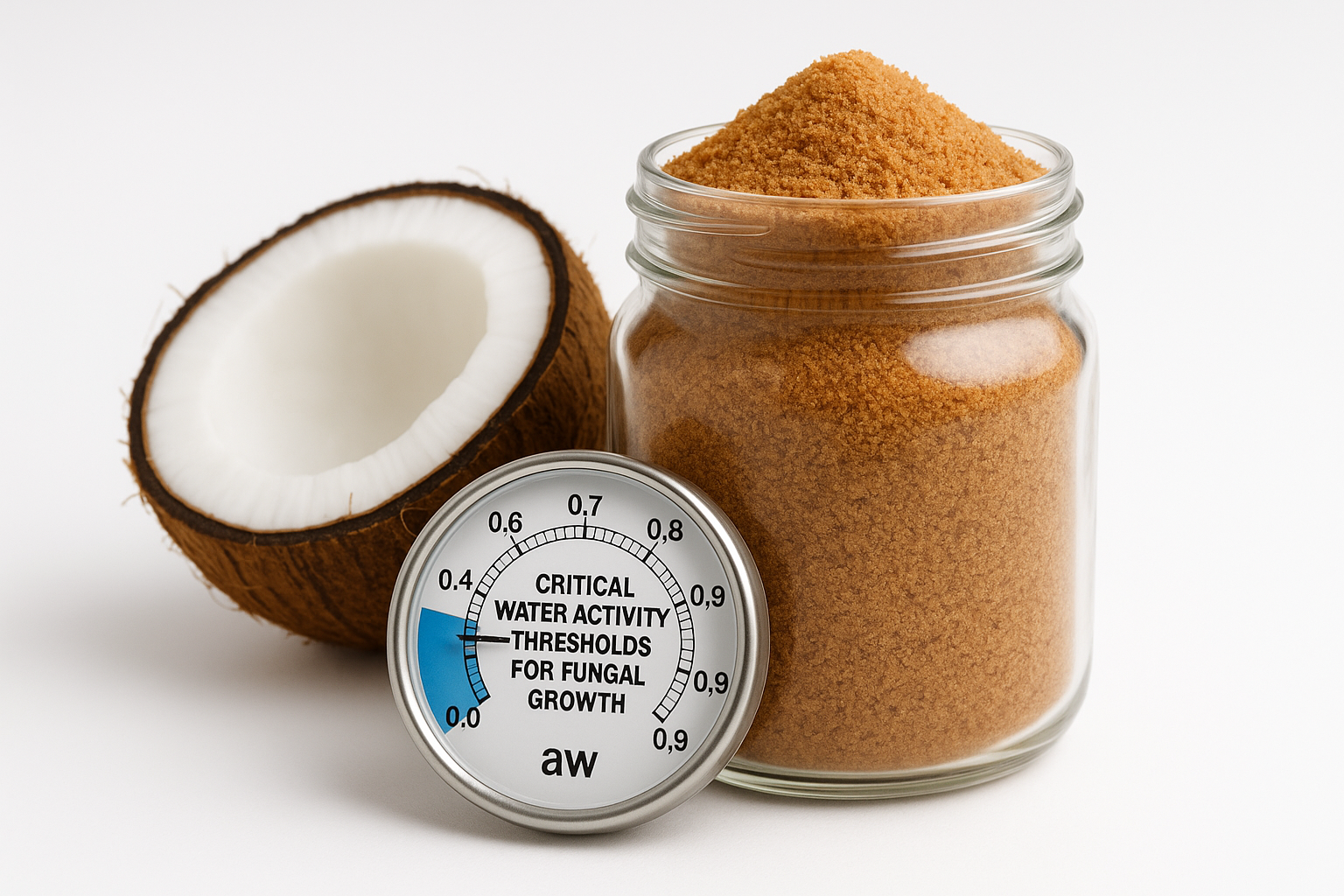
Critical Water Activity Thresholds for Fungal Growth
Knowing the specific aw levels that support fungal growth is essential for coconut sugar safety. Different microorganisms have different aw requirements for growth, which makes this a key factor in product stability.
Establishing the 0.60 aw safety limit for shelf stability
A water activity of 0.60 aw or below is the general target for preventing microbial spoilage in coconut sugar. At or below this threshold, most molds and yeasts can’t grow, which allows for extended shelf life without refrigeration.
Correlating aw levels with the growth rates of specific pathogens
Even below 0.60 aw, some xerophilic molds can still pose a risk, though their growth rates drop significantly. Identifying these specific organisms helps in designing more targeted preventative measures.
A 0.60 aw limit is generally effective against most common spoilage organisms, but a handful of highly resistant xerophilic molds and osmophilic yeasts can still grow – very slowly – at levels slightly below that. Monitoring for these resilient microorganisms is part of a comprehensive safety protocol, and that level of detail is what allows processing and packaging to be fine-tuned for optimal shelf stability.
Precision Measurement in Quality Control
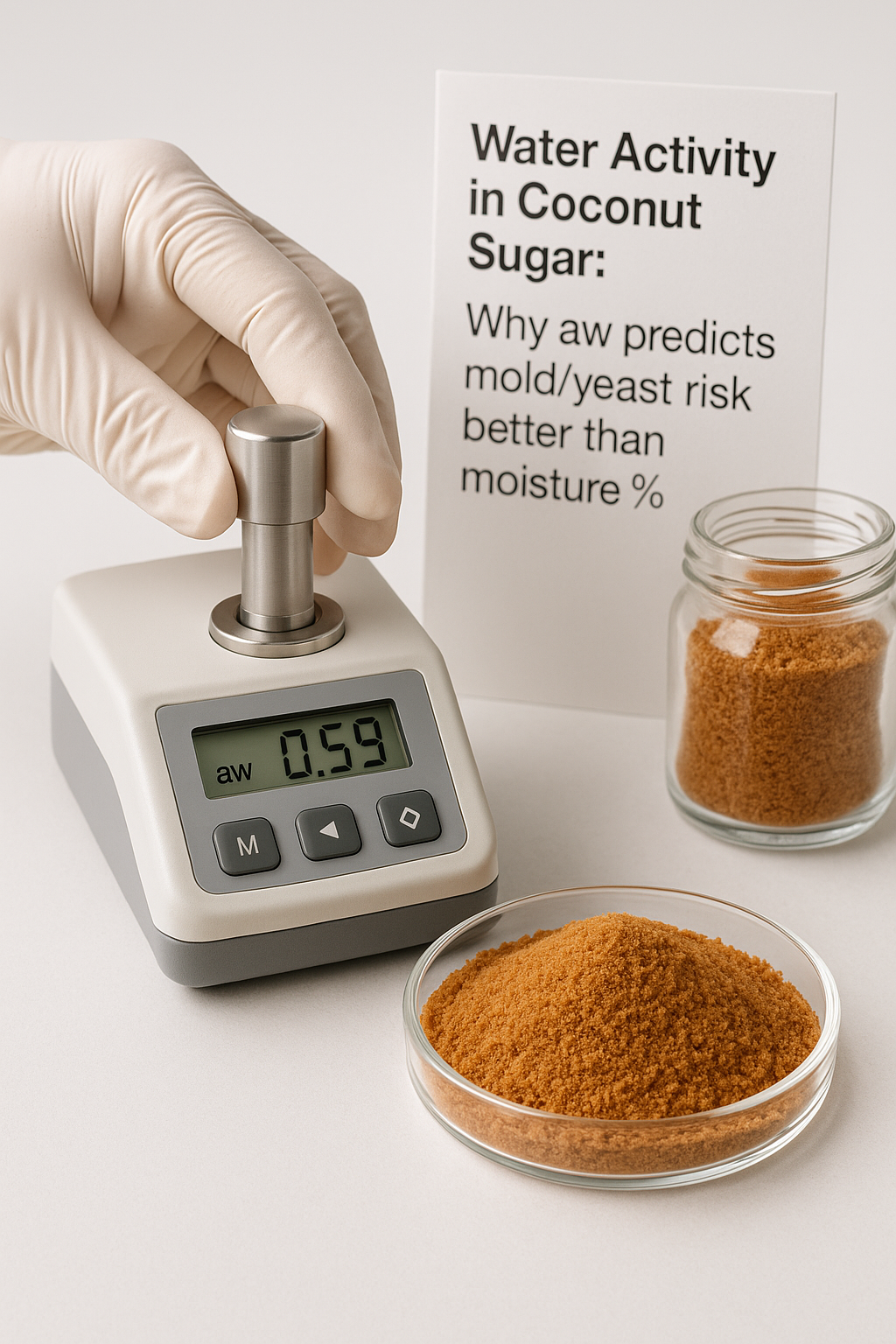
Accurate quality control depends on precise water activity data – it’s what predicts mold and yeast growth and underpins both safety and shelf life. The guide Understanding the Water Activity of Your Food is a useful resource for digging deeper into this.
Limitations of traditional oven-drying methods
Traditional oven-drying methods can be misleading here, since they measure total moisture content rather than the unbound water that’s actually available for microbial growth. That gap often leads to inaccurate risk assessments.
Advantages of chilled-mirror dew point and capacitance sensors
Modern sensors offer a more accurate read. Chilled-mirror dew point and capacitance sensors measure water activity directly, giving a more reliable prediction of microbial risk than moisture-based methods.
Chilled-mirror dew point sensors work by determining the dew point of the air in equilibrium with the sample, which gives highly precise readings. Capacitance sensors instead measure changes in electrical capacitance caused by water vapor, producing rapid and consistent results. Both are a significant step up from traditional moisture-content methods for monitoring product safety and stability.
Practical Implications for Storage and Packaging
Once water activity is on the radar, it becomes possible to make more informed decisions about storage and packaging – and to proactively head off mold and yeast growth before it becomes a problem.
Impact of environmental humidity on surface water activity
External humidity plays a significant role here. High ambient moisture can push surface water activity up, creating a hospitable environment for microbial growth even if the internal water activity stays low – which is why the storage environment is worth watching closely.
Selecting barrier packaging to maintain critical aw levels
Packaging choice matters for controlling water activity. Materials need to effectively block moisture from moving in or out, which keeps water activity levels where they need to be and directly affects shelf stability.
The water vapor transmission rate (WVTR) of packaging materials is worth checking closely – a low WVTR matters most in humid climates, where moisture moving in or out of the package can shift water activity enough to cause quality degradation or microbial growth. Good barrier packaging is one of the more overlooked steps in preserving coconut sugar’s quality and safety.
The bottom line
Water activity gives a far better read on mold and yeast risk than moisture percentage ever could, because it measures the water that’s actually available for microbial growth rather than just how much water is present. Keeping an eye on it – alongside the right packaging and storage conditions – is one of the more reliable ways to protect both the safety and quality of coconut sugar over its shelf life.