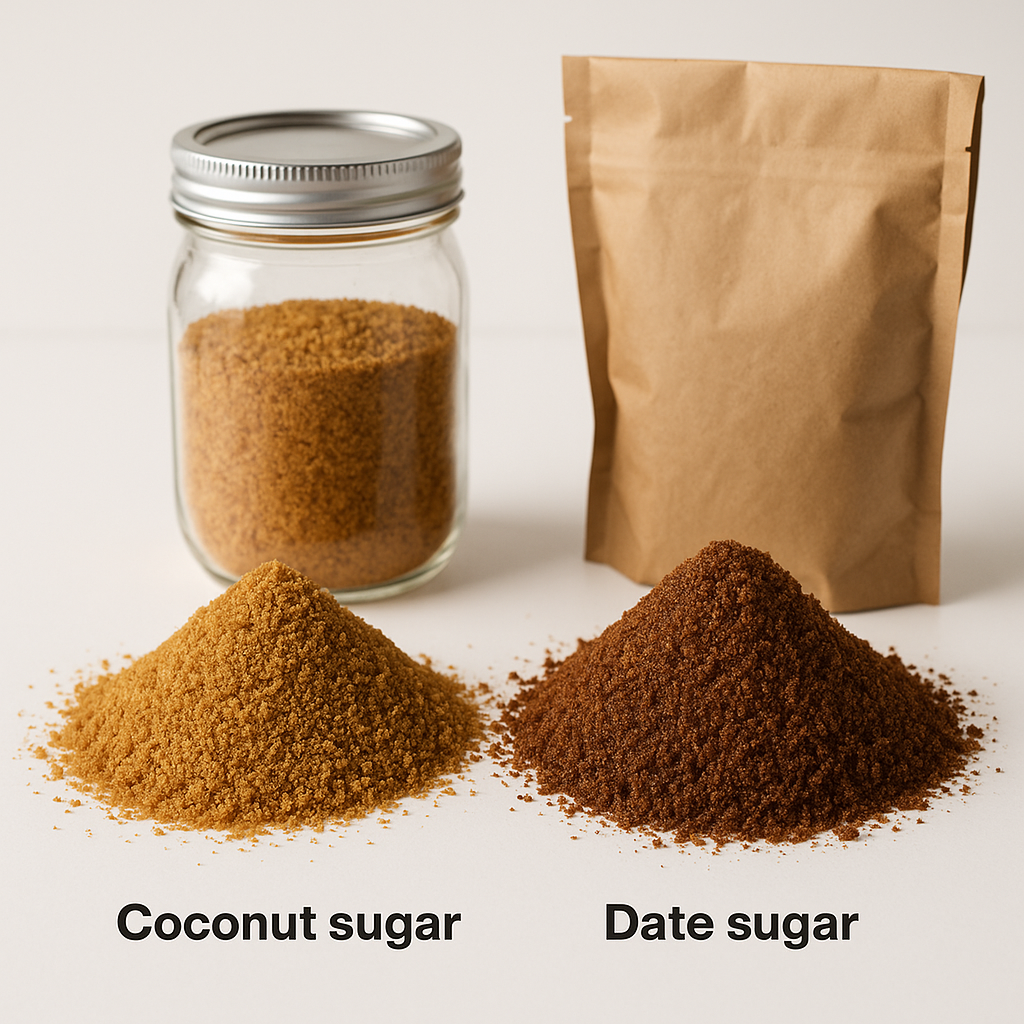
Coconut sugar can look like a simple ingredient, but its quality and flavor depend heavily on what happens between coconut sap collection and the finished product. Differences in raw sap, heating, concentration, drying, and storage can influence color, aroma, moisture, texture, and flavor consistency.
For food manufacturers, this creates an important sourcing challenge. Two coconut sugars may come from the same botanical source yet show noticeable differences in appearance and sensory characteristics. Understanding how processing shapes Coconut Sugar quality helps buyers define better specifications and select an ingredient that fits their formulation.
What Is Coconut Sugar?
Coconut sugar is a sweetener produced from the sap or nectar of coconut palm flower stalks. Producers collect the liquid sap and concentrate it through controlled processing until it reaches the desired consistency and, depending on the production method, a dry or granulated form.
The process differs from producing sugar cane or beet sugar. Coconut sugar retains characteristics associated with the original palm sap, including its characteristic color and flavor profile.
However, the finished ingredient does not depend on raw material alone. Processing conditions can significantly influence the final sensory and physical properties.
For food manufacturers, the key question is therefore not simply whether the product is coconut sugar. Buyers should also understand:
- Source and condition of the sap
- Collection and handling practices
- Filtration or clarification
- Heating and concentration
- Drying or crystallization
- Moisture control
- Particle size
- Color
- Flavor and aroma
- Packaging and storage
These factors provide a more useful basis for evaluating commercial coconut sugar.
Coconut Sugar: How Processing Shapes Quality and Flavor
Processing transforms liquid coconut sap into a stable sweetening ingredient. Each stage can influence the final product.
Sap collection
Quality starts with the condition of the collected sap.
Fresh sap can change over time because it contains water, sugars, minerals, and other naturally occurring components. Temperature, hygiene, collection equipment, and the time between collection and processing can therefore influence the raw material.
For manufacturers, consistent sap handling helps reduce unnecessary variation before processing begins.
Filtration and clarification
Producers may filter the collected sap to remove physical impurities before concentration.
Effective filtration helps create a cleaner starting material for subsequent processing. However, manufacturers should define their own requirements for clarity, foreign material, and other quality parameters.
Concentration
Concentration removes water and increases the solids content of the sap.
Producers commonly apply controlled heat during this stage. The intensity and duration of heating can influence color, aroma, flavor, and the development of characteristic caramel-like notes.
This stage therefore requires careful process control. Excessive or poorly controlled heating can create unwanted sensory differences, while insufficient concentration can leave excessive moisture in the finished ingredient.
How Heating Influences Coconut Sugar Flavor
Heating represents one of the most important processing variables because it changes the physical and sensory characteristics of the sap.
As the producer removes water, the concentration of sugars and other soluble components increases. At the same time, heat can contribute to the development of darker color and more pronounced cooked or caramel-like sensory notes.
Controlled heating
Controlled heating aims to achieve the required concentration without creating unnecessary variation between batches.
Manufacturers should therefore look for suppliers that monitor processing conditions rather than relying only on a final visual inspection.
Excessive heating
Higher thermal exposure can contribute to darker color and stronger cooked flavors. While some applications may welcome a pronounced caramel-like profile, others may require a milder and more consistent coconut sugar character.
The appropriate processing profile depends on the finished food.
Why flavor consistency matters
A food manufacturer may formulate a product around a particular sweetness, aroma, and color profile. If the coconut sugar changes significantly from one shipment to another, the finished product can also vary.
Therefore, flavor should form part of supplier qualification, not merely a subjective preference during product development.
Moisture and Texture: Key Quality Considerations
Moisture plays a central role in determining the physical behavior of coconut sugar.
For granulated products, excessive moisture can affect free-flowing properties, particle stability, and storage behavior. Conversely, very aggressive drying can influence texture and may produce a different sensory profile.
Moisture control
Manufacturers should establish an acceptable moisture specification according to the product form and application.
A supplier should also demonstrate that the process can maintain consistent moisture across production batches.
Granulation and particle size
Coconut sugar can appear as granules or other dry forms depending on the manufacturing process.
Particle size can influence:
- Dissolution rate
- Mixing behavior
- Dispersion
- Packaging
- Dosing
- Finished-product texture
A beverage manufacturer may require rapid dissolution, while a bakery or dry-mix manufacturer may prioritize a particular particle distribution.
For this reason, buyers should specify particle size when it matters to the formulation rather than relying on a generic description such as “granulated.”
Color Is a Processing Indicator
Color often represents one of the most visible differences between coconut sugar products.
The final shade can depend on raw sap characteristics, concentration, heating conditions, and drying. A lighter product may have a different sensory profile from a darker product, although color alone cannot establish the overall quality of the ingredient.
Manufacturers should therefore define an acceptable color range and evaluate it alongside flavor, moisture, and other technical parameters.
Why color consistency matters
Consider a food manufacturer producing cookies, sauces, beverages, or snack products where coconut sugar contributes to the finished appearance.
A significant change in sugar color can alter the appearance of the finished product even when the formulation remains unchanged.
Therefore, color control can help manufacturers maintain product consistency across production runs.
How Processing Affects Coconut Sugar for Different Applications
The appropriate processing profile depends on how the ingredient will function in the final product.
Bakery applications
In bakery products, manufacturers may value a consistent sweetening profile, moisture level, particle size, and characteristic color.
Coconut sugar can contribute both sweetness and color, so the manufacturer should evaluate its effect on the complete recipe rather than considering it only as a replacement for another sweetener.
Beverage applications
For beverages and liquid formulations, dissolution and dispersion become important.
A suitable particle size can support efficient incorporation, while consistent moisture helps maintain predictable handling during dosing and storage.
Confectionery applications
Confectionery products can place greater emphasis on flavor, color, and texture.
Manufacturers should evaluate how the sugar interacts with other ingredients and processing conditions before selecting a commercial grade.
Dry mixes and food ingredients
Dry blends require good flowability, consistent particle distribution, and appropriate moisture control.
The supplier should provide specifications that allow the manufacturer to establish predictable handling and formulation performance.
How Manufacturers Should Evaluate Coconut Sugar Quality
A supplier evaluation should combine technical specifications, sensory assessment, documentation, and sample testing.
Before approving a coconut sugar supplier, manufacturers should consider:
- Moisture content
- Total sugar or relevant compositional specifications
- Color
- Flavor and aroma
- Particle size
- Solubility where relevant
- Foreign matter
- Microbiological specifications
- Packaging
- Storage conditions
- Traceability
- Batch consistency
The exact analytical requirements should match the intended food application and destination market.
Codex provides international food standards and guidelines that support food safety and fair practices in food trade, although manufacturers should also follow applicable national requirements and product-specific regulations. Explore the Codex Alimentarius food standards.
Why Batch Consistency Matters
A coconut sugar sample may meet a manufacturer’s requirements during initial product development but still vary across later shipments.
This is why bulk buyers should review multiple batches where possible.
A practical quality review can include:
- Comparing several Certificates of Analysis.
- Checking moisture variation between batches.
- Reviewing color consistency.
- Evaluating flavor and aroma.
- Testing particle size where relevant.
- Conducting application trials.
- Reviewing packaging and storage controls.
This approach helps manufacturers distinguish between a supplier that can produce a suitable sample and one that can maintain a consistent commercial specification.
How Buyers Can Define a Coconut Sugar Specification
A clear purchasing specification makes supplier comparison much easier.
Before requesting samples or quotations, manufacturers should establish:
Physical requirements
Define:
- Color range
- Particle size
- Appearance
- Flow characteristics where relevant
- Foreign-matter limits
Chemical requirements
Depending on the application, define:
- Moisture
- Sugar composition
- Ash or mineral-related parameters where relevant
- Other application-specific limits
Sensory requirements
Specify the expected:
- Sweetness profile
- Coconut character
- Aroma
- Flavor intensity
- Absence of undesirable odors or flavors
Documentation requirements
Request:
- Product specification
- Certificate of Analysis
- Food safety documentation
- Traceability information
- Packaging specification
- Storage recommendations
- Relevant certifications
A clear specification gives procurement, quality assurance, and R&D teams the same criteria for supplier evaluation.
Common Processing and Purchasing Mistakes
Assuming all coconut sugar tastes the same
Processing conditions can influence color, aroma, and flavor. Buyers should evaluate actual samples rather than relying only on the product name.
Choosing by color alone
Color provides useful information, but it cannot establish the complete quality of the ingredient.
Ignoring moisture
Moisture can affect handling, storage, and physical characteristics. It should form part of the approved specification.
Skipping application testing
An ingredient can meet laboratory specifications but still behave differently in a specific formulation. Testing the product in the intended application provides more useful information.
Reviewing only one batch
One successful batch does not demonstrate long-term consistency. Multiple COAs and samples provide a stronger basis for supplier qualification.
Sourcing Coconut-Derived Ingredients From Indonesia
Indonesia is an important origin for coconut-derived ingredients, but buyers should evaluate suppliers based on quality systems, processing controls, documentation, and consistency rather than origin alone.
OilCocos supplies coconut-derived ingredients for food and industrial applications. Buyers can learn more about OilCocos and review its product information when evaluating coconut-based ingredients.
If you are also sourcing desiccated coconut, you can explore OilCocos as a desiccated coconut supplier from Indonesia and compare technical requirements across your ingredient portfolio.
For additional procurement considerations, see our guide on what buyers should check before purchasing desiccated coconut.
FAQ About Coconut Sugar Processing
How is coconut sugar processed?
Producers collect coconut palm sap, filter or prepare it, concentrate it through controlled processing, and then dry or crystallize it into the desired commercial form.
Does processing affect coconut sugar flavor?
Yes. Heating and concentration can influence color, aroma, and flavor intensity. Processing conditions therefore play an important role in sensory consistency.
Why does moisture matter in coconut sugar?
Moisture can affect handling, flowability, particle stability, and storage characteristics. Manufacturers should establish an appropriate moisture specification for the intended application.
Does darker coconut sugar mean better quality?
Not necessarily. Color can reflect processing conditions and raw material characteristics, but buyers should evaluate color together with flavor, moisture, composition, and other quality parameters.
What should food manufacturers check when buying coconut sugar?
Manufacturers should review moisture, composition, color, flavor, aroma, particle size, microbiological quality, packaging, traceability, and batch consistency.
Conclusion
Processing plays a central role in determining the quality, color, texture, aroma, and flavor of Coconut Sugar. Raw sap handling, filtration, concentration, heating, drying, and packaging can all contribute to differences between commercial batches.
For food manufacturers, the practical approach is to define the required sensory and technical characteristics first, then evaluate suppliers against those requirements. Reviewing specifications, COAs, samples, processing controls, and batch consistency can help create a more reliable ingredient supply.
If you are developing a food product that uses coconut sugar, start by defining the flavor, color, moisture, particle size, and application requirements. Then discuss those specifications with a qualified supplier to determine whether the ingredient fits your formulation.