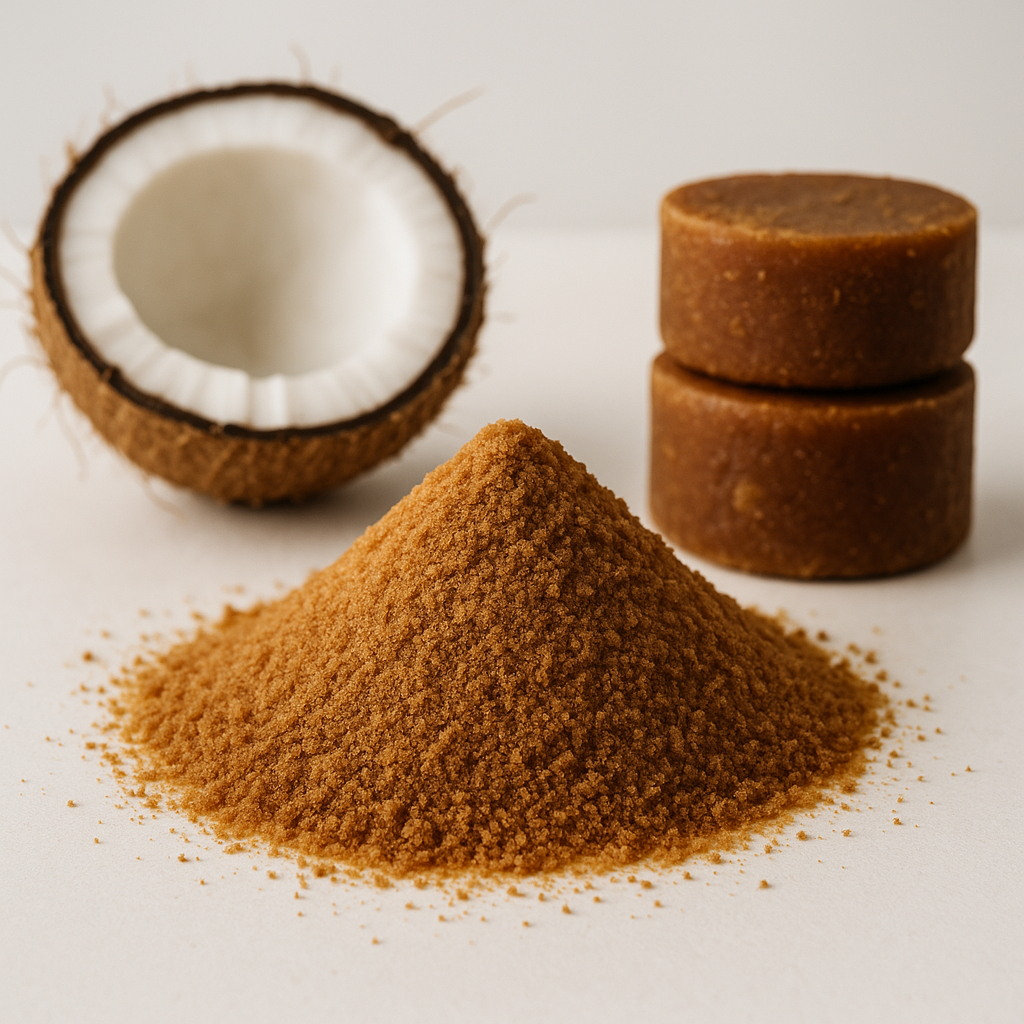
Sourcing coconut sugar in bulk requires more than finding a supplier with sufficient stock. Differences in moisture, color, particle size, flavor, processing, documentation, and batch consistency can affect production performance and finished-product quality. A sample may look suitable, yet larger shipments can reveal variations that create problems for food manufacturers.
For this reason, buyers should establish clear specifications before entering a long-term supply arrangement. They should also evaluate the supplier’s processing controls, quality documentation, packaging, logistics, and ability to maintain consistent quality across multiple batches.
This guide explains what buyers should know before sourcing Coconut Sugar in bulk and provides a practical framework for evaluating suppliers.
What Should Buyers Consider When Sourcing Coconut Sugar?
Bulk procurement works best when buyers define their requirements before comparing suppliers. Instead of asking only whether a supplier offers coconut sugar, procurement and quality teams should determine exactly what the production process requires.
Key considerations include:
- Product form and particle size
- Moisture content
- Color and appearance
- Flavor and aroma
- Purity and foreign-material control
- Microbiological specifications
- Packaging
- Shelf life and storage conditions
- Certificate of Analysis (COA)
- Traceability
- Production capacity
- Batch consistency
- Export and logistics requirements
These factors help buyers distinguish between a product that simply meets a general description and one that fits a specific industrial application.
Coconut Sugar: Key Specifications to Define Before Buying
A written product specification creates a common reference between buyer and supplier. It also makes incoming quality inspection much easier.
Moisture content
Moisture can influence texture, clumping, flowability, storage behavior, and processing performance.
Buyers should establish an acceptable moisture range based on the intended application and storage conditions. More importantly, they should ask suppliers to demonstrate consistency through batch-specific testing.
Do not evaluate moisture from one sample alone. Comparing COAs from several production batches provides a better indication of process control.
Color and appearance
Coconut sugar can show natural variation in color, ranging from lighter brown to darker brown shades. Processing conditions, raw material characteristics, and heating can contribute to these differences.
However, color should not act as the sole measure of quality.
Buyers should define an acceptable visual range based on the finished product. This becomes particularly important when coconut sugar contributes directly to the appearance of beverages, bakery products, sauces, snacks, or confectionery.
Particle size
Particle size affects handling, blending, dissolution, dosing, and texture.
A buyer should therefore specify whether the application requires fine granules, standard granules, powder, or another physical form.
Supplier terminology can vary, so measurable particle-size requirements are more useful than descriptions such as “fine” or “coarse” on their own.
Flavor and aroma
Coconut sugar typically provides a characteristic caramel-like sensory profile. Research examining coconut blossom sugar has identified caramel aroma and taste as characteristic sensory attributes, while also finding substantial variation among commercial samples.
For bulk buyers, sensory consistency matters because unexpected smoky, burnt, fermented, rancid, or otherwise abnormal notes can affect the finished formulation.
Purity and composition
Buyers should understand exactly what the supplier means by coconut sugar and how the product is processed.
This point matters because research has found that commercial coconut blossom sugar samples can contain undeclared or additional materials, including other sugars, starch, gluten, and oils. The study does not mean that all coconut sugar contains these materials; rather, it demonstrates why buyers should verify composition and supplier controls instead of relying solely on product descriptions.
Depending on the application, buyers may therefore request appropriate analytical and allergen documentation.
How Processing Affects Bulk Coconut Sugar Quality
The production process has a direct influence on the characteristics of the finished sweetener.
Coconut sugar generally starts with sap collected from coconut palm blossoms. Producers then handle, filter, concentrate, and process the sap until it reaches the desired consistency and physical form.
Sap collection and handling
Fresh coconut sap can change during handling. Proper collection practices and controlled processing help suppliers maintain a more consistent raw material.
For buyers, the important question is whether the supplier has defined procedures for raw material handling and traceability.
Filtration and preparation
Filtration helps remove unwanted physical material before further processing. Consistent preparation contributes to a cleaner and more predictable ingredient.
Heating and concentration
Heating removes water and concentrates the soluble solids. It can also influence the color, aroma, flavor, and texture of the finished product.
Consequently, processing control plays an important role in batch consistency. Buyers should ask how the supplier controls critical processing stages rather than evaluating the finished product alone.
For a deeper look at this relationship, read Coconut Sugar: How Processing Shapes Its Quality and Flavor.
Why Batch Consistency Matters in Bulk Purchasing
One approved sample does not guarantee that every future shipment will perform identically.
Bulk buyers should evaluate consistency across multiple production batches because variation can affect manufacturing in several ways.
For example:
- Different moisture levels can change handling characteristics.
- Different particle sizes can affect blending and dissolution.
- Color variation can alter the appearance of finished products.
- Flavor variation can change the sensory profile.
- Inconsistent microbiological results can create quality-control concerns.
A supplier qualification process should therefore include representative samples and historical batch data where available.
What Documents Should Buyers Request?
Documentation provides evidence that the supplier has defined and monitored its product specifications.
Product specification
The specification should clearly identify the expected characteristics of the ingredient, including relevant physical, chemical, microbiological, packaging, and storage requirements.
Certificate of Analysis
A COA provides analytical results for a particular batch. Depending on the agreed specification, it may include:
- Product identification
- Batch or lot number
- Production or analysis date
- Moisture
- Relevant chemical parameters
- Microbiological results
- Other application-specific tests
- Specification limits
- Test methods where applicable
Buyers should compare the COA with the approved specification rather than reviewing the document in isolation.
Food safety documentation
Depending on the destination market and application, buyers may request:
- Food safety certifications
- Allergen statements
- Traceability information
- Contaminant testing
- Microbiological documentation
- Packaging declarations
- Shelf-life information
For international procurement, buyers should also confirm that documentation meets the requirements of the destination country.
Understanding Standards and Regulatory Requirements
Food manufacturers should distinguish between a product specification and a legal or regulatory requirement.
Codex provides international food standards and related guidance, and its current standards list includes CXS 212-1999, Standard for Sugars, last modified in 2022.
However, buyers should not assume that this general Codex sugar standard automatically provides a complete specification for coconut sugar. The standard covers specified sugar products rather than functioning as a dedicated coconut sugar standard. Buyers should therefore check the regulations and standards applicable to their particular product and target market.
For reference, buyers can review the Codex Standard for Sugars.
How to Evaluate a Coconut Sugar Supplier
Supplier evaluation should combine technical, quality, operational, and commercial considerations.
1. Start with your application
Identify how the ingredient will be used. A beverage manufacturer may prioritize dissolution and sensory characteristics, while a bakery manufacturer may place greater emphasis on color, particle size, and handling.
2. Create a purchasing specification
Define acceptable ranges for the parameters that matter to your formulation.
3. Request technical documents
Ask for the product specification, recent COAs, relevant food safety documents, and packaging information.
4. Test representative samples
Run the product through your own formulation or application process. This provides more useful information than relying solely on laboratory specifications.
5. Compare multiple batches
Where possible, evaluate samples or COAs from different production lots. This helps reveal variation that a single sample cannot show.
6. Review production capacity
Bulk sourcing requires confidence that the supplier can support the required volume and delivery schedule without compromising agreed specifications.
Packaging, Storage, and Transportation
Bulk coconut sugar quality does not depend solely on production. Packaging and logistics can also affect the product before it reaches the buyer.
Buyers should ask about:
- Packaging material
- Bag or container size
- Moisture protection
- Batch identification
- Storage conditions
- Recommended shelf life
- Transportation controls
- Palletization and shipment preparation
Protection from environmental moisture is particularly important for a dry sweetener because moisture exposure can affect texture and handling.
For international shipments, buyers should also consider transit duration, warehouse conditions, and local climate when establishing packaging and storage requirements.
Sourcing Coconut Sugar From Indonesia
Indonesia has an established coconut industry and can be an important sourcing origin for coconut-derived ingredients. However, geographic origin should not replace technical supplier evaluation.
Buyers should still verify product specifications, processing controls, documentation, packaging, capacity, and consistency.
For businesses evaluating Indonesian suppliers, explore OilCocos as a coconut sugar supplier from Indonesia and compare the available product information with your purchasing specification.
You can also learn more about OilCocos and its coconut-derived ingredient portfolio.
Common Bulk Purchasing Mistakes
Buying from a sample alone
A successful sample does not prove long-term consistency. Evaluate multiple batches when possible.
Using vague specifications
Terms such as “high quality” or “premium” do not provide measurable acceptance criteria. Define technical parameters instead.
Ignoring the intended application
The right ingredient depends on how you plan to use it. Always conduct application testing before approving a product for regular production.
Focusing only on one quality parameter
Moisture, color, particle size, sensory quality, purity, microbiological performance, and documentation should be considered together.
Overlooking logistics
A supplier may meet technical requirements but still create problems if packaging, storage, or delivery conditions do not suit the supply chain.
A Practical Bulk Buying Checklist
Before approving a supplier, buyers can review the following:
- Product specification approved
- Intended application defined
- Moisture requirement established
- Particle size defined
- Color and sensory requirements established
- Purity requirements defined
- Microbiological requirements defined
- Recent COAs reviewed
- Food safety documentation reviewed
- Packaging approved
- Storage requirements understood
- Shelf life confirmed
- Traceability established
- Representative sample approved
- Multiple batches evaluated
- Production capacity reviewed
- Logistics requirements confirmed
This approach gives procurement and quality teams a consistent framework for supplier qualification.
FAQ About Bulk Coconut Sugar Sourcing
What should I check before buying coconut sugar in bulk?
Start with the product specification, moisture, particle size, color, flavor, purity, microbiological requirements, COA, packaging, and intended application.
How can I check whether a coconut sugar supplier is reliable?
Review technical documentation, test representative samples, compare multiple batches, assess processing controls, and confirm that the supplier can support your required volume and logistics.
Should I request a COA for every bulk shipment?
For quality-controlled food manufacturing, a batch-specific COA can help verify that each shipment meets the agreed specification. The required testing frequency should match your quality system and purchasing agreement.
Is darker coconut sugar better?
Not necessarily. Color can vary because of raw material and processing conditions. Buyers should specify an acceptable color range according to the finished application rather than treating darker color as an automatic quality indicator.
Why should I source coconut sugar from Indonesia?
Indonesia is a major coconut-producing country and offers access to coconut-derived ingredients. However, buyers should evaluate each supplier based on technical specifications, food safety, consistency, capacity, documentation, and logistics.
Conclusion
Before sourcing Coconut Sugar in bulk, buyers should establish a clear specification and evaluate more than the appearance or availability of the ingredient. Moisture, particle size, color, flavor, purity, documentation, batch consistency, packaging, and logistics can all influence the success of a bulk supply program.
A structured supplier-qualification process helps procurement teams make decisions based on measurable requirements and application performance. If you are evaluating Indonesian coconut sugar suppliers, learn more about OilCocos and compare the available product information with your technical and sourcing requirements.