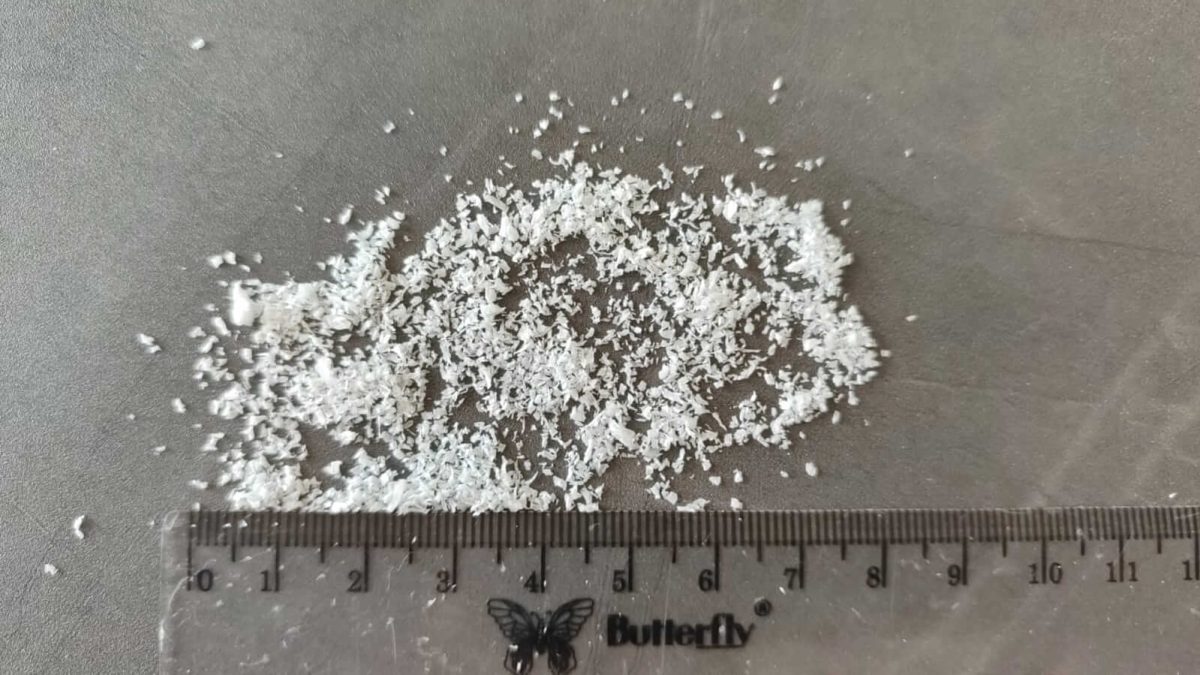
Buying desiccated coconut in bulk can look straightforward until differences in particle size, moisture, oil content, color, flavor, and microbiological quality start affecting production. A product may look acceptable during an initial inspection but perform differently once it enters a bakery, confectionery, snack, or other food manufacturing process.
For buyers, the solution starts with a clear purchasing specification. Before approving a supplier, manufacturers should evaluate the physical characteristics, chemical parameters, food safety documentation, packaging, and batch consistency of the ingredient. This guide explains what buyers should check before purchasing Desiccated Coconut and how to turn those checks into a practical supplier evaluation process.
What Should Buyers Check When Purchasing Desiccated Coconut?
A reliable purchasing decision should begin with measurable requirements rather than a supplier’s product name or grade description.
At minimum, buyers should review:
- Particle size and granulometry
- Moisture content
- Oil content
- Color and appearance
- Flavor and odor
- Texture
- Foreign matter
- Microbiological specifications
- Packaging and storage requirements
- Certificate of Analysis (COA)
- Traceability and food safety documentation
The Codex Standard for Desiccated Coconut, CXS 177-1991, provides a useful international reference for several of these characteristics. The current Codex document was adopted in 1991, revised in 2011, and amended in 2022 and 2023.
However, buyers should treat Codex as a reference framework rather than automatically assuming that every requirement applies identically to every commercial product, destination market, or formulation.
Desiccated Coconut: Key Specifications to Review Before Buying
A product specification gives buyers the technical baseline they need to compare suppliers consistently.
Particle size
Particle size is one of the first specifications manufacturers should define because it directly affects texture, distribution, appearance, and processing behavior.
Codex recognizes optional categories such as extra-fine, fine, medium, and other-sized desiccated coconut. These categories use sieve-based specifications rather than subjective descriptions alone.
For example:
- Extra-fine: at least 90% passes a 0.85 mm sieve
- Fine: at least 80% passes a 1.40 mm sieve
- Medium: at least 90% passes a 2.80 mm sieve
- Other-sized: includes specialty cuts such as flakes, chips, and different shred formats
Supplier terminology can vary, however. Therefore, buyers should request measurable sieve or granulometry data instead of relying only on terms such as “fine” or “medium.”
For manufacturers still deciding which particle size fits their product, see our guide on choosing the right desiccated coconut grade for food products.
Moisture content
Moisture is another critical parameter for a dried coconut ingredient.
Codex CXS 177-1991 specifies a maximum moisture level of 4% by mass for desiccated coconut covered by the standard.
Buyers should nevertheless establish the moisture requirement that fits their application and destination-market regulations.
When reviewing a supplier, compare the stated moisture specification with actual batch results. A supplier that consistently maintains moisture within the agreed range provides stronger evidence of process control than a supplier that simply provides one acceptable sample.
Oil content
Coconut naturally contains oil, so oil content can influence the ingredient’s formulation characteristics.
The Codex standard distinguishes oil-content requirements depending on the product definition. It specifies at least 60% oil for desiccated coconut without partial oil extraction and 35% to less than 60% for product from which oil has been partially extracted.
For buyers, the important point is to establish the required oil specification before purchasing. Different applications may require different product characteristics.
Color and appearance
Visual consistency can matter significantly when coconut remains visible in the finished food.
Codex describes the characteristic color of desiccated coconut as natural white to light creamy white. It also specifies characteristic texture.
During supplier evaluation, buyers should check for:
- Consistent color
- Excessive dark particles
- Burnt or abnormal material
- Clumping
- Uneven particle distribution
- Visible foreign material
A defined visual standard helps quality-control teams make more consistent incoming inspections.
Flavor and odor
Desiccated coconut should have the expected coconut flavor and aroma. Unusual sensory characteristics can indicate deterioration, contamination, or inappropriate processing or storage.
Codex specifies that the product should not have off-flavors and should not have mouldy, cheesy, smoky, fermented, rancid, or other undesirable odors.
Manufacturers should therefore include sensory evaluation in supplier qualification, particularly for products where coconut contributes significantly to the finished flavor profile.
How to Evaluate Food Safety and Microbiological Quality
A technically attractive specification does not guarantee that an ingredient meets a manufacturer’s food safety requirements.
Buyers should understand how the supplier controls microbiological and physical hazards throughout production, packaging, storage, and transportation.
Depending on the application and destination market, documentation may include:
- Microbiological test results
- Food safety certification
- Hygiene and sanitation controls
- Allergen information
- Pesticide residue documentation
- Contaminant testing
- Traceability records
- Corrective-action procedures
The Codex standard also addresses hygiene, contaminants, pesticide residues, and sampling or analytical methods relevant to the product.
For international procurement, buyers should additionally confirm that the supplier can provide documentation required by the importing country.
Why the Certificate of Analysis Matters
A product specification explains what the supplier agrees to deliver. A Certificate of Analysis provides analytical results for a particular batch.
These documents serve different purposes, so buyers should review both.
What should a COA include?
The exact parameters depend on the product specification, but buyers may expect information such as:
- Product identification
- Batch or lot number
- Production or analysis date
- Moisture
- Oil content
- Particle size where tested
- Microbiological results
- Other chemical parameters
- Applicable specification limits
- Test methods where relevant
A useful COA should allow the buyer’s quality team to determine whether the shipment meets the approved specification.
For regular bulk purchasing, comparing COAs from several batches can also reveal whether the supplier maintains stable quality over time.
How Processing Affects the Product You Receive
Processing strongly influences the final characteristics of desiccated coconut.
The Codex definition describes operations including de-husking, hatcheting, paring, washing, comminuting, drying, and sifting.
Preparation and washing
Proper preparation removes unwanted material and prepares the coconut kernel for further processing. Consistent raw material handling provides a more predictable starting point.
Comminution
Shredding or cutting determines the initial particle structure. Equipment settings can influence particle distribution and the proportion of fines.
Drying
Drying reduces moisture to the required level. However, manufacturers need to control the process carefully because drying conditions can influence color, texture, flavor, and moisture uniformity.
Sifting and grading
Screening separates particles according to size and helps produce a more consistent commercial grade.
For more detail on the relationship between drying and finished-product quality, read how processing affects desiccated coconut moisture and quality.
How to Evaluate a Desiccated Coconut Supplier
Supplier qualification should combine documentation, samples, testing, and production history.
A practical evaluation process can follow these steps:
1. Define your specification
Establish requirements for particle size, moisture, oil content, color, sensory characteristics, microbiological parameters, packaging, and other application-specific criteria.
2. Request technical documents
Ask for the product specification, recent COAs, food safety documentation, and relevant certifications.
3. Test a representative sample
Evaluate the coconut in your own formulation or production process. Check mixing, texture, appearance, flavor, and processing behavior.
4. Review batch consistency
Where possible, compare results from several batches instead of relying on one sample.
5. Confirm logistics
Review packaging format, storage conditions, transportation requirements, shelf-life information, and traceability.
6. Establish incoming inspection
Define how your quality team will inspect and approve each shipment after supplier qualification.
This process gives procurement and quality teams a common framework for supplier approval.
Packaging and Storage: What Buyers Should Consider
Good processing cannot compensate for poor handling after production.
Desiccated coconut needs packaging that protects the product from contamination and environmental moisture. Buyers should therefore ask suppliers about packaging materials, sealing, storage conditions, and transportation controls.
Consider:
- Is the packaging suitable for the planned shipping duration?
- Does it protect against humidity?
- Is the packaging food-grade?
- Can the supplier provide batch identification?
- Are storage conditions clearly defined?
- Does the recommended shelf life match your supply chain?
These questions become particularly important for international shipments where the product may experience different temperature and humidity conditions.
Common Mistakes Buyers Make
Choosing based only on price or availability
A low-cost ingredient can create additional quality-control or formulation costs if it does not consistently meet the required specification.
Assuming all suppliers use the same grade definition
Terms such as “fine” and “medium” can differ between suppliers. Request measurable particle-size specifications.
Checking only moisture
Moisture matters, but buyers should also evaluate oil content, sensory characteristics, particle distribution, microbiological quality, and foreign matter.
Approving a supplier after one sample
One successful sample does not demonstrate long-term consistency. Review multiple batches when possible.
Ignoring packaging
The ingredient can change after production if packaging and storage do not adequately protect it from environmental conditions.
What a Practical Purchasing Checklist Should Include
Before approving a supplier, buyers can use a simple checklist:
- ☐ Approved product specification
- ☐ Defined particle-size requirement
- ☐ Moisture specification
- ☐ Oil-content specification
- ☐ Color and sensory requirements
- ☐ Microbiological requirements
- ☐ Foreign-matter requirements
- ☐ Recent COA
- ☐ Food safety documentation
- ☐ Packaging specification
- ☐ Storage requirements
- ☐ Traceability information
- ☐ Sample approval
- ☐ Batch-consistency review
This checklist helps prevent important quality considerations from being overlooked during procurement.
Sourcing Desiccated Coconut From Indonesia
For international food manufacturers, Indonesia can be a relevant sourcing origin for coconut-derived ingredients. However, origin should form only one part of the supplier assessment.
Buyers should still evaluate technical specifications, processing controls, food safety systems, documentation, packaging, and consistency.
If you are looking for an Indonesian source, explore OilCocos as a desiccated coconut supplier from Indonesia and compare its product information with your purchasing requirements.
You can also learn more about OilCocos and its range of coconut-derived ingredients.
FAQ About Buying Desiccated Coconut
What should I check first when buying desiccated coconut?
Start with particle size, moisture, oil content, sensory characteristics, and the intended food application. Then review food safety documentation and batch-specific COA data.
What moisture level should desiccated coconut have?
Codex CXS 177-1991 specifies a maximum of 4% moisture by mass for products covered by the standard. Buyers should also consider their own application and destination-market requirements.
Why is particle size important?
Particle size affects texture, mixing, distribution, appearance, and processing behavior. Buyers should request measurable sieve specifications rather than relying only on grade names.
What documents should a supplier provide?
A typical supplier package should include a product specification, COA, food safety documentation, relevant certifications, packaging information, storage requirements, and traceability information.
How can I verify supplier consistency?
Request multiple recent COAs, test representative samples, compare batch results against the approved specification, and monitor incoming shipments after supplier approval.
Conclusion
Before purchasing Desiccated Coconut, buyers should evaluate the ingredient as a complete raw material rather than focusing on one specification. Particle size, moisture, oil content, color, flavor, odor, microbiological quality, foreign matter, packaging, and batch consistency all contribute to its suitability for food manufacturing.
The most practical approach is to define your requirements first, request measurable supplier specifications, test samples in your own application, and review batch documentation before committing to regular bulk purchases.
If you are sourcing desiccated coconut for bakery, confectionery, snacks, cereals, fillings, or other food applications, learn more about OilCocos and review the available product information against your technical requirements.