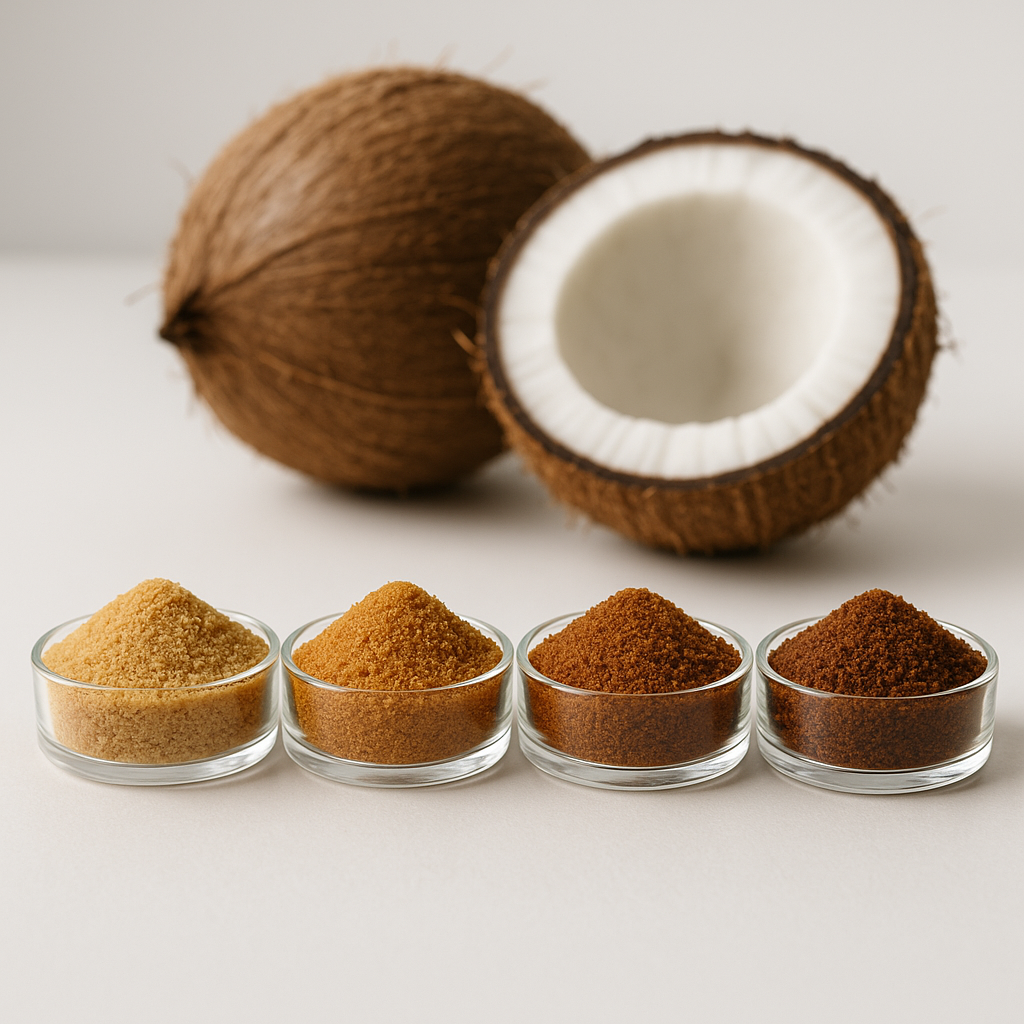
There’s a quiet standard shaping how coconut sugar moves through global markets. Pale golden crystals get labeled “premium” often enough, but what does that actually mean? Color Grading Systems for Coconut Sugar aren’t just about looks – they reflect purity, processing methods, and buyer expectations.
These systems borrow heavily from ICUMSA – the International Commission for Uniform Methods of Sugar Analysis – originally built for cane sugar. Adapting it for coconut sugar makes sense on paper, but in practice it hits real-world limits. Any grading approach has to account for natural variation in sap, regional processing, and small-scale production quirks that lab standards can’t always capture.
This isn’t grading a lab sample – it’s dealing with farmers, sun-dried batches, and inconsistent equipment. That’s where the practical limits kick in. The best systems balance scientific precision with on-the-ground reality, because a number on a scale doesn’t tell the whole story.
None of this is perfect – but it’s one of the few tools available to bring clarity to a complex, deliciously messy process.
What’s the deal with ICUMSA anyway?
White sugar has this super precise color scale based on how much light passes through a solution – that’s ICUMSA, a system built for crystal-clear, refined sucrose. But applied to coconut sugar, that same scale starts to feel a bit like using a ruler to measure wind. Color Grading Systems for Coconut Sugar weren’t part of the original ICUMSA design, so using it here means stretching a tool beyond its intended use.
Why white sugar rules don’t fit our coconut world
This is a whole different beast – coconut sap carries minerals, amino acids, and caramelized compounds from the start. White sugar’s purity is the goal, but coconut sugar thrives in its complexity. Judging it by ICUMSA standards made for refined clarity misses the point entirely. Grading needs to reflect richness, not just light transmission.
The real struggle with measuring unrefined stuff
Getting a consistent reading when every batch varies in moisture, smoke exposure, or cooking time is a daily reality here. Lab-grade spectrophotometers assume uniformity, but coconut sugar doesn’t play by those rules. Real-world production doesn’t happen in a vacuum, and grading systems bump up against that every time.
And here’s the kicker – most testing methods dissolve the sugar to measure color, but dissolving coconut sugar doesn’t give the full picture. Particulates, slight char, natural gums – none of that plays nice in a cuvette. Even following ICUMSA protocols to the letter, results can swing wildly between samples taken minutes apart. Texture, opacity, and batch variation all matter here – things traditional methods ignore. ICUMSA gives a starting point, but it’s not the final word when authenticity matters more than uniformity. Any useful system has to evolve beyond lab ideals and meet the farm, the kettle, and the market where they actually live.
How we’re actually making the system work
Picture a humid processing shed, two batches of coconut sugar that look almost identical – yet one fails grade standards. The difference comes down to adapting ICUMSA methods using calibrated spectrophotometers and consistent sample prep. The ICUMSA Sugar Color Chart – Avoid Grade Mistakes shows how small deviations impact classification. This isn’t guesswork anymore.
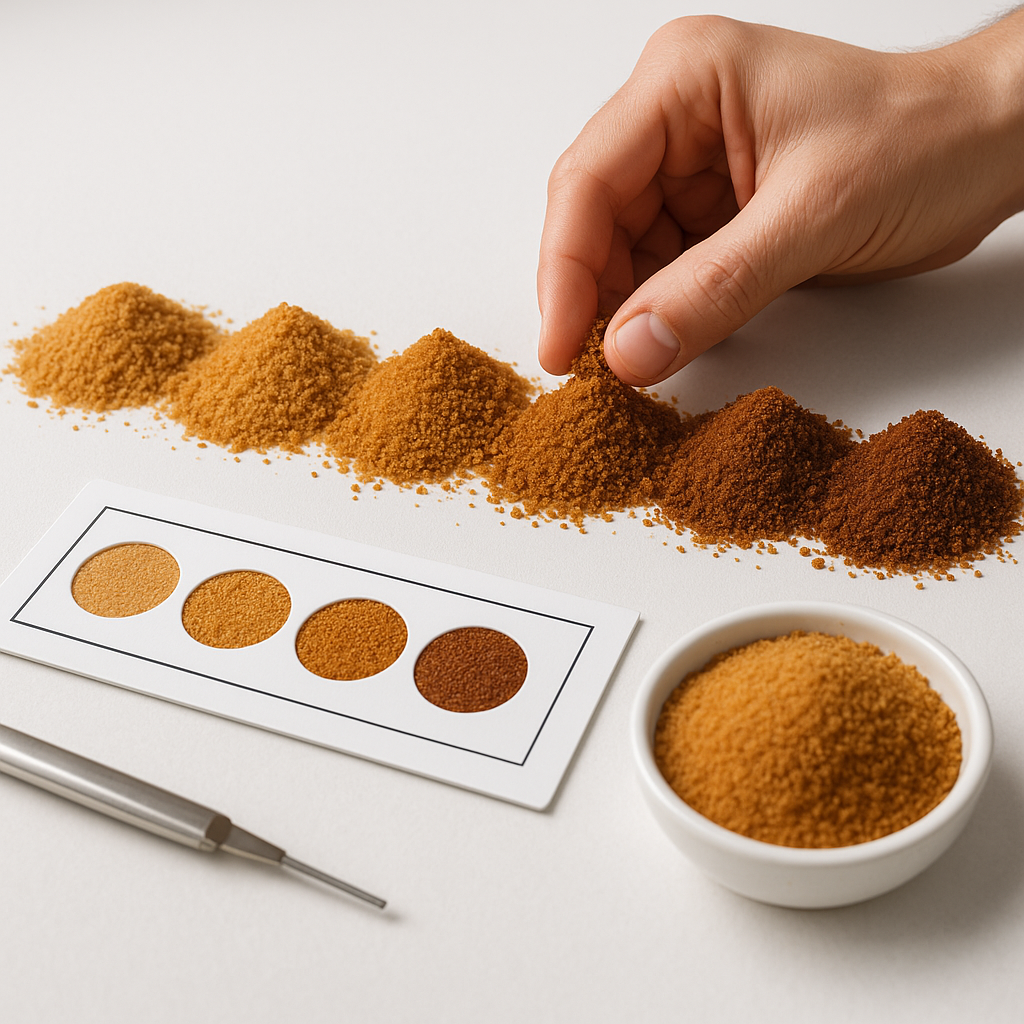
My take on the best way to prep your samples
Start with fully dissolved sugar in distilled water – no chunks, no haze. Filter it twice if needed. Lighting matters just as much as the solution itself, so testing under standardized conditions counts. Skipping steps here means risking costly misgrades.
Honestly, the math behind the color is key
Color isn’t just visual – it’s a number. Once absorbance readings at 420 nm get converted into ICUMSA units, the subjectivity drops off a cliff. That number becomes the final say. No debates. No “it looks fine.” Just data.
That single ICUMSA value comes from a precise calculation: absorbance multiplied by a path length factor and scaled to standard units. Labs using this method see consistency batch after batch because they treat Color Grading Systems for Coconut Sugar like science, not art. No PhD needed, but the formula has to be respected. Get it wrong, and a premium-grade claim falls apart under audit. Get it right, and buyers trust every label. This is where most small producers cut corners – until they lose a contract.
The real deal about where things get messy
Grading falls apart fast when real-world conditions hit the lab. Every protocol might get followed, but impurities, inconsistent drying, and variable harvest times muddy the results. Even the most precise ICUMSA adaptation can’t account for the chaos of smallholder production. According to a detailed Coconut Sugar: Chemical Analysis and Nutritional Profile – PMC study, natural fluctuations in sap composition directly interfere with color consistency – and that’s before processing even begins.
Why sediment is a total nightmare for grading
Sediment sneaks in during collection or boiling and throws off the entire assessment. It clings to particles that scatter light, making the sample appear darker than it really is. What looks like pure color readings might actually be gunk. And no – filtering it out doesn’t always fix the problem because some compounds re-precipitate later.
Here’s why you can’t always trust the readout
A spectrophotometer might say 450 ICUMSA units, but is that accurate? Instrument calibration drifts, ambient light leaks in, and sample prep varies between technicians. Precision matters here, yet most facilities lack standardized operating procedures. Results are only as good as the last maintenance log – and let’s be honest, who checks that weekly?
Even a 2°C difference during sample dissolution can shift the absorbance curve, so what shows up on screen might reflect lab error more than actual color. Humidity plays dirty too – hygroscopic sugars absorb moisture fast, altering transparency. Relying solely on the digital readout without environmental controls isn’t measuring quality – it’s guessing. This is why process audits matter as much as the numbers themselves. Without them, it’s just chasing ghosts in the data – and that undermines every claim about consistency in Color Grading Systems for Coconut Sugar.
Does a darker color actually mean better flavor?
Those rich, molasses-like coconut sugars at the market often look like the good stuff. Deeper hues often signal longer boiling or less filtration, which can mean more caramelization. But don’t be fooled – color alone doesn’t guarantee superior taste. The palate knows better than any grading chart, and sometimes the lightest batch delivers the cleanest, most balanced sweetness. Grading helps standardize appearance, but it doesn’t tell the whole flavor story.
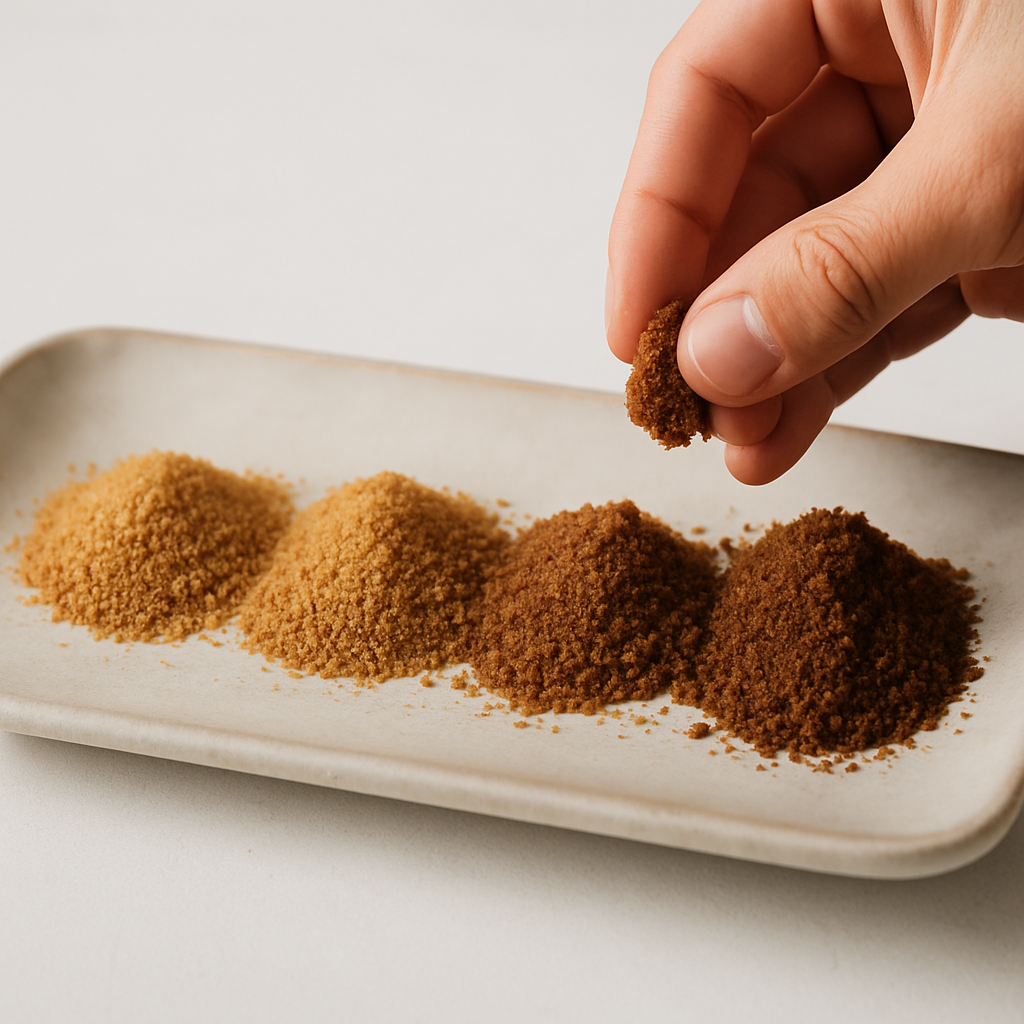
The link between that deep brown and caramel vibes
Open the bag and that warm, toasty aroma hits – smells like caramel, right? That deep brown shade in coconut sugar often comes from extended heat exposure, which develops those beloved roasted notes. Darker grades fall toward the higher ICUMSA values, meaning more colorants are present. And yes, that can mean deeper flavor – but it’s not a free pass to gourmet status. What gets tasted might be caramel, or it might be burnt edges and overcooked syrup.
Why darker isn’t always better in my book
One batch was so dark it looked like chocolate sugar – and it turned a smoothie bitter in seconds. Leaning toward the high end of the scale doesn’t mean a sugar is more authentic or tastier. Some producers darken the syrup intentionally to mimic artisanal quality, but what’s really there could be overprocessed or inconsistent. Lighter isn’t bland – sometimes it’s just cleaner. And that matters when baking or sweetening something delicate.
Darker sugar doesn’t automatically win in flavor or quality. In fact, excessive color often means the sap was boiled too long, or impurities weren’t removed properly. ICUMSA units measure this, but high numbers can reflect poor process control, not craft. What looks like depth might actually be acrid, smoky, or flat-out off. A well-balanced coconut sugar – golden, fragrant, smooth – often sits in the mid-range of the scale. It’s not about chasing darkness. It’s about consistency, purity, and respecting the sap’s natural character. Because at the end of the day, taste doesn’t care about ICUMSA numbers – it cares about flavor.
Why I think we need a simpler way to get it right
Implementing any kind of grading system runs into a wall fast – most small producers don’t have access to lab-grade spectrophotometers. Relying on complex ICUMSA standards without the right tools just leads to inconsistent results and frustrated teams. The system should work for the people using it, not against them. Whatever gets used needs to be practical, repeatable, and actually usable in real-world conditions.
Simple tools that won’t break the bank
A decent digital colorimeter costs less than a week’s wages in some regions – and it pays for itself fast. Perfection isn’t the goal, just consistency. These tools make Color Grading Systems for Coconut Sugar accessible, even on tight budgets. Over time, that small investment adds up in better pricing and fewer rejected batches.
Seriously, just keep your lighting consistent
Lighting changes everything. What looks golden under noon sun might appear muddy under fluorescent bulbs. Comparing samples by eye with inconsistent light ruins accuracy every single time. Stable viewing conditions matter – period.
Eyes aren’t calibrated machines. A slight shift in shadow or glare can make one batch look darker than it is. A lightbox with daylight-balanced LEDs, or sticking to the same time of day for visual checks, stabilizes results more than most fancy upgrades. Get the lighting right, and grading becomes way more reliable – no PhD required. And honestly, that’s half the battle won.
The Long-Term View
Standardizing coconut sugar quality means adapting ICUMSA methods for a tropical sweetener that never quite behaves like cane sugar. The goal isn’t to mimic cane sugar models, but to respond to real market demands for consistency. Natural variation in coconut sap means any system has to balance scientific precision with on-the-ground practicality.
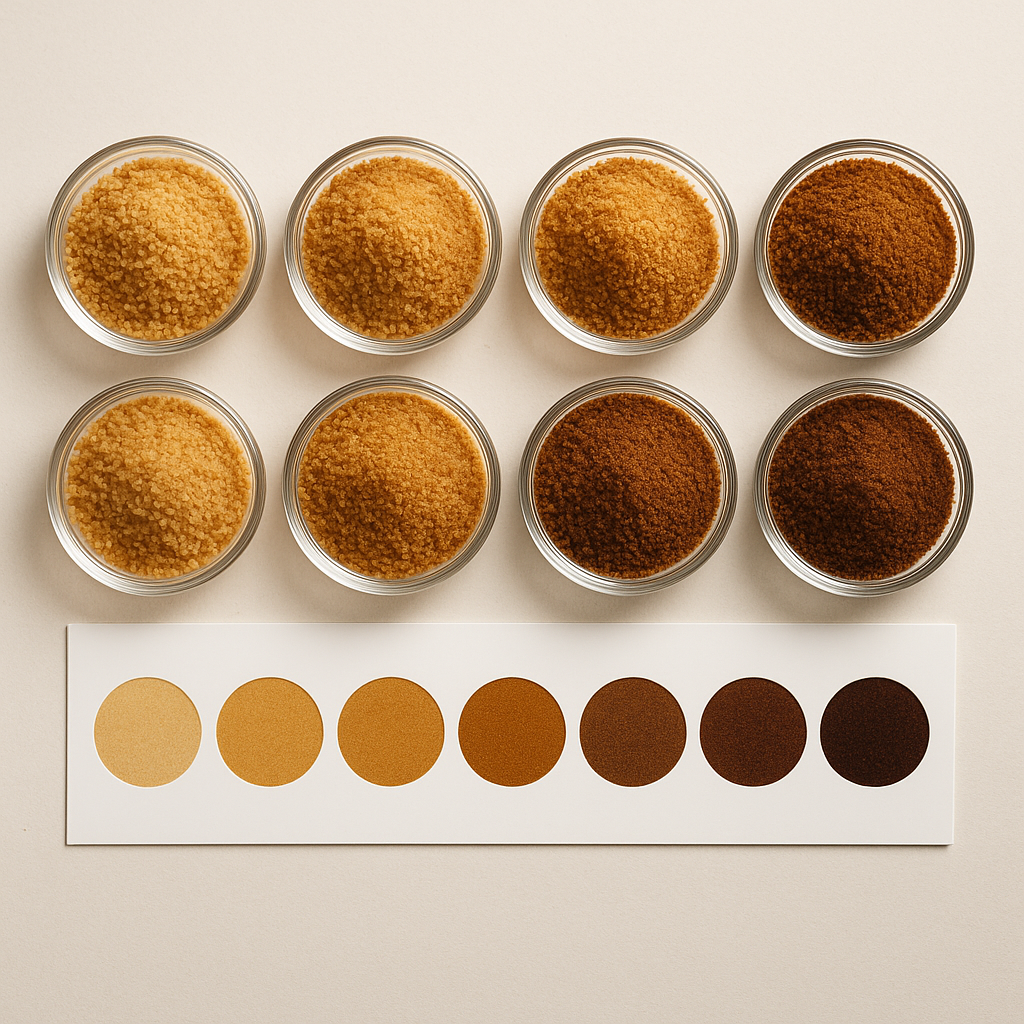
Labs can measure down to the ICUMSA unit, but small producers often rely on visual guides – because grading needs to work in humid processing huts, not just climate-controlled rooms. Color Grading Systems for Coconut Sugar only matter if they’re usable. That means training technicians, calibrating affordable tools regularly, and accepting that some variation will always exist.
The best approach combines objective measurements with trained sensory evaluation. Get the basics right – consistent lighting, proper sample prep, regular calibration – and color grading becomes a genuine quality tool rather than an arbitrary label. Adaptation has its limits, but it also has potential when paired with practical wisdom from producers who know their crop intimately.