Developing plant-based food products requires more than replacing animal-derived ingredients with plant alternatives. Manufacturers must also maintain appealing textures, balanced flavors, consistent quality, and reliable performance during processing. Finding ingredients that support these goals can be challenging, particularly when a product needs both nutritional functionality and a distinctive eating experience.
Desiccated coconut offers several opportunities for plant-based food manufacturers. Made from dried coconut meat, it provides characteristic coconut flavor and texture that can complement plant-based snacks, bakery products, confectionery, and selected dairy alternatives.
Understanding desiccated coconut uses in plant-based food products helps manufacturers identify suitable applications, select the right particle size, and develop formulations that meet their product requirements. This guide explores practical applications, formulation considerations, and important quality specifications for commercial buyers.
1. Why Desiccated Coconut Works in Plant-Based Formulations
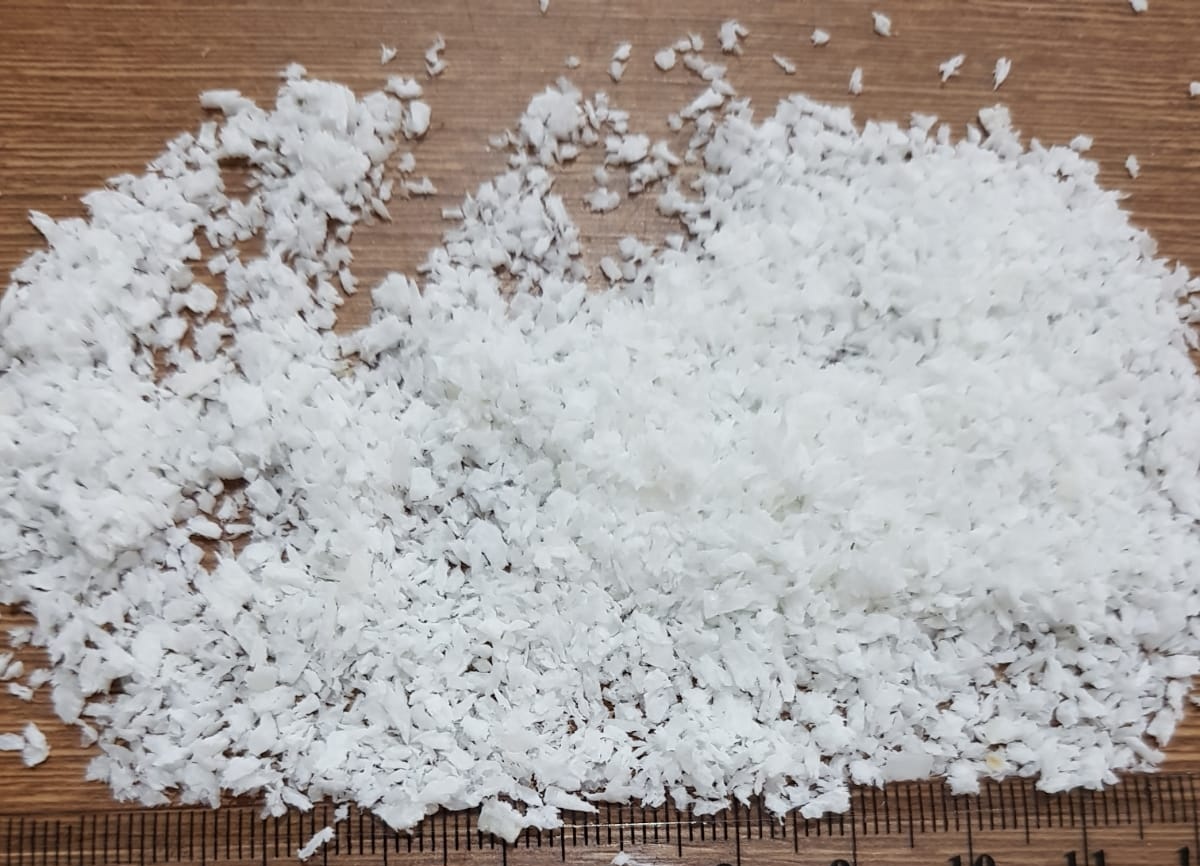
Desiccated coconut is produced by processing coconut meat into particles and drying it to meet the required product specification. Manufacturers can obtain different grades, including fine, medium, and coarse particles, to suit different food applications.
Its usefulness comes primarily from three characteristics: distinctive flavor, adjustable texture, and versatility across formulations.
Flavor and texture
Coconut provides a recognizable flavor that complements ingredients such as cocoa, oats, nuts, seeds, dried fruit, and plant-based sweeteners. Depending on the grade, desiccated coconut can create a subtle texture throughout a mixture or provide visible particles in the finished product.
For example, fine coconut may blend relatively evenly into a snack mixture, while coarse particles can create a more noticeable bite. This flexibility helps manufacturers develop products with different sensory profiles.
Ingredient versatility
Food manufacturers can incorporate desiccated coconut as a main ingredient, a supporting component, or a decorative topping. Its role depends on the recipe and the intended product characteristics.
However, desiccated coconut does not automatically replace every function of dairy, eggs, or other conventional ingredients. Manufacturers should evaluate its contribution to texture, moisture balance, flavor, and overall formulation before deciding how much to use.
2. Desiccated Coconut in Plant-Based Snacks and Energy Bars
Plant-based snacks often combine grains, nuts, seeds, dried fruit, and other ingredients to create convenient products with varied textures. Desiccated coconut can complement these combinations by adding coconut flavor and a distinct particle structure.
Energy bars and snack bars
Manufacturers can incorporate desiccated coconut into bars made with oats, nuts, seeds, dried fruit, or suitable binding ingredients. Fine and medium grades may distribute throughout the mixture, while coarser particles provide more noticeable coconut pieces.
When developing a bar formulation, consider:
- Binding performance: Check whether the mixture holds together during forming and cutting.
- Texture: Evaluate whether coconut particles remain evenly distributed.
- Moisture balance: Assess how the ingredient interacts with syrups, fruit, and other components.
- Storage stability: Monitor texture, aroma, and other relevant quality characteristics over the intended shelf life.
Desiccated coconut alone does not provide the binding properties needed in every bar formulation. Manufacturers must select suitable binding ingredients and test the complete recipe.
Plant-based snack mixes
Desiccated coconut can also complement roasted nuts, seeds, dried fruit, and cereal-based ingredients in selected snack mixes.
Particle size affects both appearance and distribution. Smaller particles may settle differently from larger pieces during transportation, so manufacturers should test the finished mixture for ingredient separation and packaging performance.
For products that require consistent portions, evaluate the blend after mixing and following simulated handling or distribution.
3. Applications in Plant-Based Bakery and Confectionery
Bakery products and confectionery offer practical opportunities for using desiccated coconut. Its flavor and texture can support product differentiation without requiring manufacturers to rely exclusively on artificial coconut flavoring.
Plant-based cakes, muffins, and cookies
Desiccated coconut can contribute texture and coconut flavor to cakes, muffins, cookies, and selected sweet breads. Fine particles may suit formulations that require relatively even distribution, whereas medium or coarse grades can create a more noticeable bite.
However, the ingredient can influence batter or dough consistency. Its interaction with water depends on particle size, fat content, the other ingredients, and the processing method.
Manufacturers should test the inclusion rate and monitor:
- Batter or dough consistency
- Ingredient distribution
- Finished-product texture
- Surface appearance
- Changes during storage
These tests help identify whether the recipe needs adjustments to its liquid ingredients, mixing conditions, or baking process.
Plant-based confectionery
Desiccated coconut can serve as a filling ingredient, coating, or inclusion in selected plant-based sweets. It can complement cocoa, nuts, and plant-derived fats in products such as coconut centers and chocolate-style confectionery.
For coatings, particle size and adhesion matter. Larger particles may create a more pronounced appearance, while fine coconut can provide a more delicate finish.
Manufacturers should assess how well the coconut adheres to the product and whether handling causes excessive particle loss. For more application examples, explore desiccated coconut applications in bakery and confectionery.
4. Desiccated Coconut in Plant-Based Dairy Alternatives
Plant-based dairy alternatives include products such as dairy-free desserts, coconut-based preparations, and selected non-dairy snack products. Desiccated coconut can contribute texture or coconut flavor in certain formulations, although its suitability depends on the intended product.
Dairy-free desserts and fillings
Manufacturers may incorporate desiccated coconut into plant-based dessert fillings, layered desserts, or toppings. It can provide visible particles and complement ingredients such as cocoa, fruit, and plant-based creams.
Nevertheless, desiccated coconut is not equivalent to coconut milk or coconut cream. Those products have different physical properties and serve different formulation purposes.
If a recipe requires a liquid coconut ingredient, substituting desiccated coconut directly may produce an unsuitable consistency. Manufacturers should select the ingredient according to its intended functional role.
Texture and moisture management
Moisture control is particularly important in mixed formulations. Desiccated coconut may interact with liquid ingredients during preparation and storage, which can change texture over time.
Evaluate the complete product rather than the coconut ingredient alone. Depending on the formulation, relevant tests may include texture measurements, sensory assessment, water activity, and microbiological evaluation.
A suitable formulation must also meet the manufacturer’s food safety and shelf-life requirements.
5. How to Choose the Right Desiccated Coconut Grade
Selecting the correct grade helps manufacturers achieve the desired appearance, texture, and processing performance. The best choice depends on how the ingredient functions in the finished product.
Match particle size to the application
Use these general guidelines as a starting point:
- Fine grade: Suitable for mixtures that need smaller particles and relatively uniform distribution.
- Medium grade: Useful for many snack, bakery, and confectionery applications that require a balance of distribution and texture.
- Coarse grade: Appropriate for products that emphasize visible coconut pieces or a more pronounced bite.
Grade names can vary among suppliers. Therefore, request the actual particle-size specification and evaluate a sample before confirming the product.
If you are comparing coconut ingredients for different formulations, read desiccated coconut vs. coconut flour: key differences. Coconut flour has a finer structure and different water-absorption characteristics, so the two ingredients should not be treated as interchangeable.
Review quality specifications
Particle size is only one part of ingredient selection. Buyers should also evaluate:
- Moisture content: Relevant to storage stability and texture.
- Fat content: Influences composition, flavor, and mouthfeel.
- Color and aroma: Help assess consistency with the agreed specification.
- Microbiological quality: Supports the food safety requirements of the application.
- Packaging: Protects the ingredient during transportation and storage.
For commercial production, request a product specification sheet and relevant quality documentation. Where necessary, verify the product through laboratory testing and production trials.
6. Sourcing Desiccated Coconut for Plant-Based Food Manufacturing
Ingredient sourcing affects product consistency, production planning, and the ability to maintain specifications across repeat orders. Manufacturers should therefore assess suppliers based on both product quality and supply requirements.
What commercial buyers should check
Before placing a bulk order, confirm:
- Product specifications: Verify grade, particle size, moisture content, and other relevant parameters.
- Sample suitability: Test the ingredient in the intended formulation.
- Quality documentation: Request applicable certificates of analysis and food safety records.
- Packaging and storage: Confirm that the packaging suits the expected shipping and storage conditions.
- Supply consistency: Clarify batch traceability, lead times, and procedures for managing specification changes.
Documenting these requirements helps purchasing and quality assurance teams evaluate deliveries consistently.
If your business is sourcing from Indonesia, visit the desiccated coconut supplier from Indonesia page to explore OilCocos’ product offering. You can also visit OilCocos to learn more about its coconut-based ingredients.
Before proceeding with a bulk order, share your intended application, target grade, and technical requirements with the supplier. This creates a practical starting point for determining whether the ingredient suits your manufacturing process.
Frequently Asked Questions
1. What are the main uses of desiccated coconut in plant-based foods?
Manufacturers use it in snack bars, trail mixes, bakery products, confectionery, dairy-free desserts, fillings, and toppings to add coconut flavor and texture.
2. Is desiccated coconut suitable for vegan products?
Desiccated coconut is derived from coconut, a plant source. However, manufacturers should verify the complete product’s ingredients, processing controls, and any applicable certification requirements before making vegan claims.
3. Which desiccated coconut grade is best for plant-based snacks?
Fine or medium grades can suit mixed snack formulations, while coarse grades provide more noticeable particles. The appropriate choice depends on the recipe and desired texture.
4. Can desiccated coconut replace coconut flour?
Not as a direct substitute in every formulation. Desiccated coconut generally provides more noticeable particles, while coconut flour has a finer structure and different water-absorption properties.
5. What should manufacturers check before buying desiccated coconut in bulk?
Check particle size, moisture content, fat content, sensory characteristics, microbiological requirements, packaging, and relevant quality documentation. Testing a sample in the intended formulation is also advisable.