Choosing between desiccated coconut and coconut flour can be confusing for food manufacturers, bakers, and ingredient buyers. Both products come from coconut, yet they serve different purposes in food formulations. Using one as a direct substitute for the other can change texture, moisture balance, and the consistency of the finished product.
The main difference lies in how manufacturers process the coconut and how they intend the resulting ingredient to perform. Desiccated coconut generally provides coconut texture and flavor, while coconut flour serves primarily as a flour-like ingredient in baking and other formulations.
Understanding the differences between desiccated coconut vs. coconut flour helps manufacturers select the right ingredient, develop more consistent recipes, and make informed purchasing decisions.
1. What Is Desiccated Coconut?
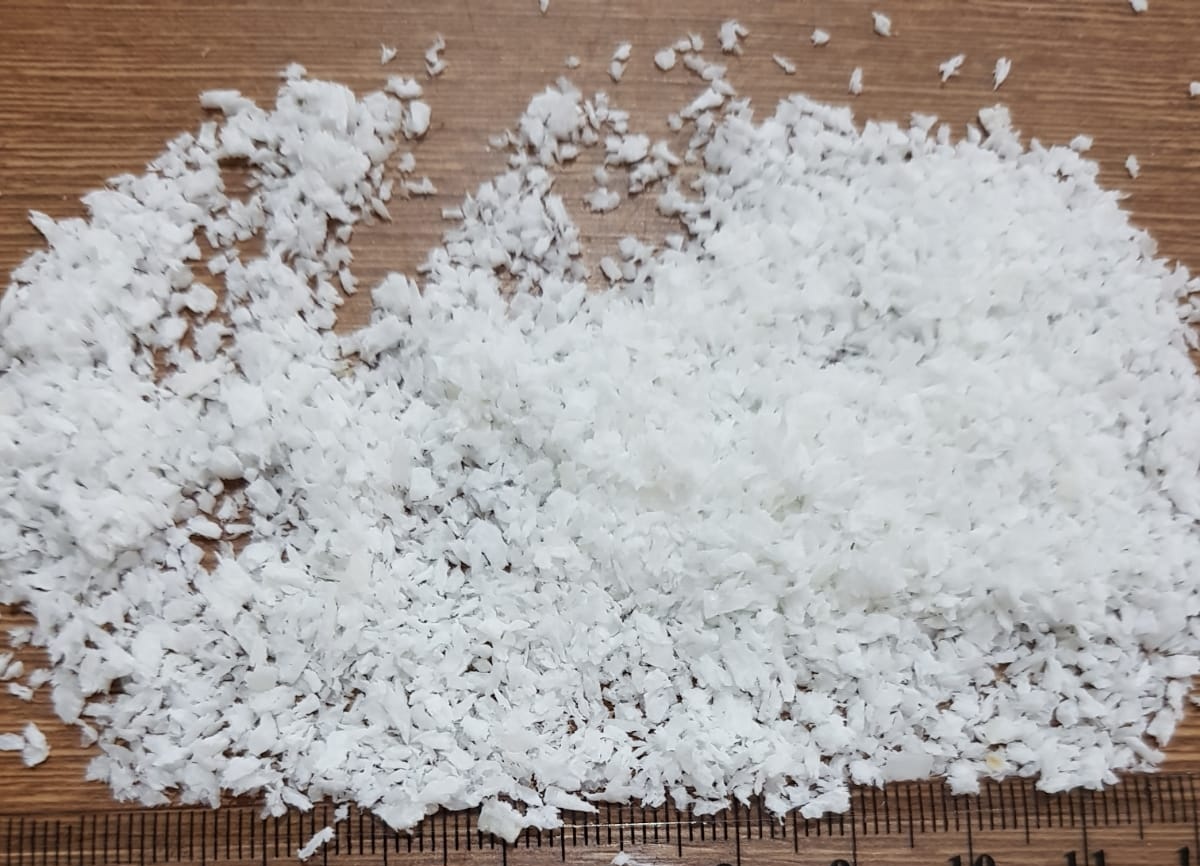
Desiccated coconut is made by processing coconut meat into small particles and drying it to achieve the required moisture specification. Manufacturers can produce different grades, including fine, medium, and coarse particles, depending on the intended application.
Unlike flour, desiccated coconut generally retains a recognizable coconut texture. Its particle size influences how it looks, mixes, and behaves in food products.
Common uses of desiccated coconut
Food manufacturers use desiccated coconut in a wide range of applications, including:
- Cakes, muffins, and biscuits
- Cookies and sweet breads
- Chocolate and confectionery fillings
- Decorative toppings and coatings
- Snack products and coconut-based desserts
Fine particles can blend more evenly into some mixtures, while medium and coarse grades provide a more noticeable bite. Therefore, the appropriate grade depends on the desired texture and the processing requirements.
What buyers should know
Desiccated coconut specifications can vary between suppliers. Buyers should check particle size, moisture content, fat content, color, aroma, and relevant food safety parameters before selecting a product.
For commercial applications, the product specification matters more than the grade name alone. Two suppliers may use the same grade label while offering different particle-size ranges.
2. What Is Coconut Flour?
Coconut flour is a flour-like ingredient made from coconut meat. Manufacturers typically dry and grind the material into a finer consistency. Depending on the production process, they may also remove some of the coconut’s fat before grinding.
Consequently, coconut flour can differ considerably from desiccated coconut in composition, particle structure, and functional behavior.
Common uses of coconut flour
Coconut flour commonly appears in:
- Gluten-free baking
- Pancakes and selected bread formulations
- Cookies and cakes
- Flour blends
- Recipes designed around coconut-derived ingredients
Its fine structure allows it to function as part of a flour blend. However, coconut flour has distinctive water-absorption characteristics, so it does not behave exactly like wheat flour or every other gluten-free flour.
Why formulation matters
Coconut flour can absorb substantial amounts of liquid relative to many conventional flours. This behavior can affect batter thickness, dough structure, and the texture of the finished product.
For this reason, replacing wheat flour or another flour with coconut flour often requires recipe adjustments. Manufacturers should test the ingredient within the intended formulation rather than assume that equal weights produce equivalent results.
3. Desiccated Coconut vs. Coconut Flour: The Main Differences
Although both ingredients originate from coconut meat, they differ in particle structure, typical composition, and functionality.
Particle size and texture
Desiccated coconut generally contains visible coconut particles, although fine grades can have relatively small particles.
Coconut flour has a finer, flour-like consistency. This makes it more suitable for formulations that require a finely ground ingredient rather than distinct coconut pieces.
The distinction matters when the finished product must meet a specific texture or appearance requirement. A manufacturer developing a coconut-topped biscuit, for example, may prefer desiccated coconut, while a gluten-free flour blend may require coconut flour.
Fat content and composition
The two products can have different fat contents because manufacturers may use different processing methods. Some coconut flour products undergo partial defatting, while desiccated coconut generally serves as a dried coconut ingredient rather than a flour replacement.
However, fat content varies by product and supplier. Buyers should compare the actual nutrition information or technical specifications instead of assuming that every coconut flour product contains less fat than every desiccated coconut product.
Water absorption and processing behavior
Coconut flour often absorbs liquid differently from desiccated coconut because of its fine particle structure and composition. This can influence batter viscosity, dough consistency, and the amount of liquid required in a recipe.
Desiccated coconut also interacts with moisture, but its main role often involves adding texture, flavor, or visible coconut particles rather than functioning as the primary flour component.
These differences mean that the ingredients are not automatically interchangeable.
4. Which Ingredient Is Better for Bakery and Confectionery?
Neither ingredient is universally better. The right choice depends on the product’s formulation, texture, and intended function.
Choose desiccated coconut for texture and toppings
Desiccated coconut is a practical choice when manufacturers want recognizable coconut particles or a distinctive coconut texture.
Consider it for:
- Coconut toppings on cakes and pastries
- Cookies with visible coconut pieces
- Confectionery coatings
- Coconut fillings and snack products
- Bakery recipes that benefit from coconut texture
Particle size remains important. Fine grade may distribute more evenly in a mixture, whereas coarse grade can provide a more pronounced visual and textural effect.
Choose coconut flour for flour-based formulations
Coconut flour may suit formulations that require a finely ground coconut ingredient, particularly selected gluten-free recipes.
However, developers should account for its water absorption and its effect on the structure of the finished product. In many recipes, coconut flour works more effectively as part of a carefully balanced formulation than as a direct one-for-one replacement for conventional flour.
Can manufacturers use both ingredients?
Yes. Some recipes can use both ingredients when each serves a distinct purpose. For example, coconut flour may contribute to the dry ingredient blend, while desiccated coconut adds texture or a decorative finish.
Nevertheless, combining them changes the formulation’s overall composition. Conduct trials to establish appropriate proportions, liquid levels, mixing procedures, and finished-product characteristics.
For more examples of how desiccated coconut works in food production, explore desiccated coconut applications in bakery and confectionery.
5. How to Choose the Right Coconut Ingredient for Your Business
For commercial buyers, the decision should begin with the product’s technical requirements rather than the ingredient name.
Define the intended application
Identify the ingredient’s role in the recipe. Does it need to provide visible particles, a coconut flavor, a flour-like structure, or a combination of these characteristics?
This distinction helps narrow the available options and prevents unnecessary formulation changes.
Review the product specification
Before purchasing, request documentation covering relevant characteristics, such as:
- Particle size or fineness
- Moisture content
- Fat content
- Color and aroma
- Microbiological requirements
- Packaging and storage conditions
For desiccated coconut, the required grade should match the intended application. For coconut flour, the fineness, composition, and water-absorption behavior may deserve greater attention.
Test samples before bulk purchasing
A sample trial helps determine whether the ingredient performs as expected in your manufacturing process. Evaluate mixing behavior, texture, appearance, and consistency after processing.
Where appropriate, conduct laboratory tests to verify technical specifications. For recurring purchases, establish acceptance criteria so your team can compare deliveries consistently.
Consider supply and handling requirements
Packaging, shelf life, transportation, and supplier consistency also affect the purchasing decision. Confirm that the product can maintain the required quality throughout the expected storage and distribution period.
If your business needs desiccated coconut for commercial production, review the desiccated coconut supplier from Indonesia page to explore OilCocos’ product offering. You can also visit OilCocos to learn more about its coconut-based ingredients.
6. Common Mistakes When Comparing Desiccated Coconut and Coconut Flour
A few purchasing and formulation mistakes can lead to disappointing results, even when buyers choose a product from a reputable supplier.
Assuming the ingredients are interchangeable: Their particle structures and functional properties differ. Evaluate the role each ingredient must perform before making substitutions.
Comparing products by name alone: Processing methods and specifications can vary. Request technical data to understand the actual differences between products.
Ignoring moisture and fat content: These characteristics can influence storage stability, formulation performance, and product consistency.
Skipping production trials: A small sample test can identify formulation problems before a large order or production run.
Overlooking storage requirements: Suitable packaging and handling help preserve product quality after delivery.
By addressing these issues early, manufacturers can make better sourcing decisions and reduce avoidable formulation changes.
Frequently Asked Questions
1. Is desiccated coconut the same as coconut flour?
No. Desiccated coconut generally consists of dried coconut particles, while coconut flour has a finer, flour-like consistency. Their composition and uses can also differ.
2. Can I substitute desiccated coconut for coconut flour?
Not as a direct one-for-one substitute in every recipe. Desiccated coconut provides more noticeable texture, while coconut flour functions as a finely ground ingredient with different liquid-absorption characteristics.
3. Which is better for baking, desiccated coconut or coconut flour?
It depends on the recipe. Desiccated coconut suits toppings, inclusions, and texture-focused applications, while coconut flour can support selected flour-based formulations.
4. Does coconut flour contain less fat than desiccated coconut?
Not necessarily in every case. Fat content depends on the product and manufacturing process, so buyers should compare the actual nutritional information or technical specifications.
5. How should food manufacturers choose between the two?
Start with the intended application, then compare particle size, composition, moisture, and processing behavior. Test samples in the actual recipe before approving bulk purchases.