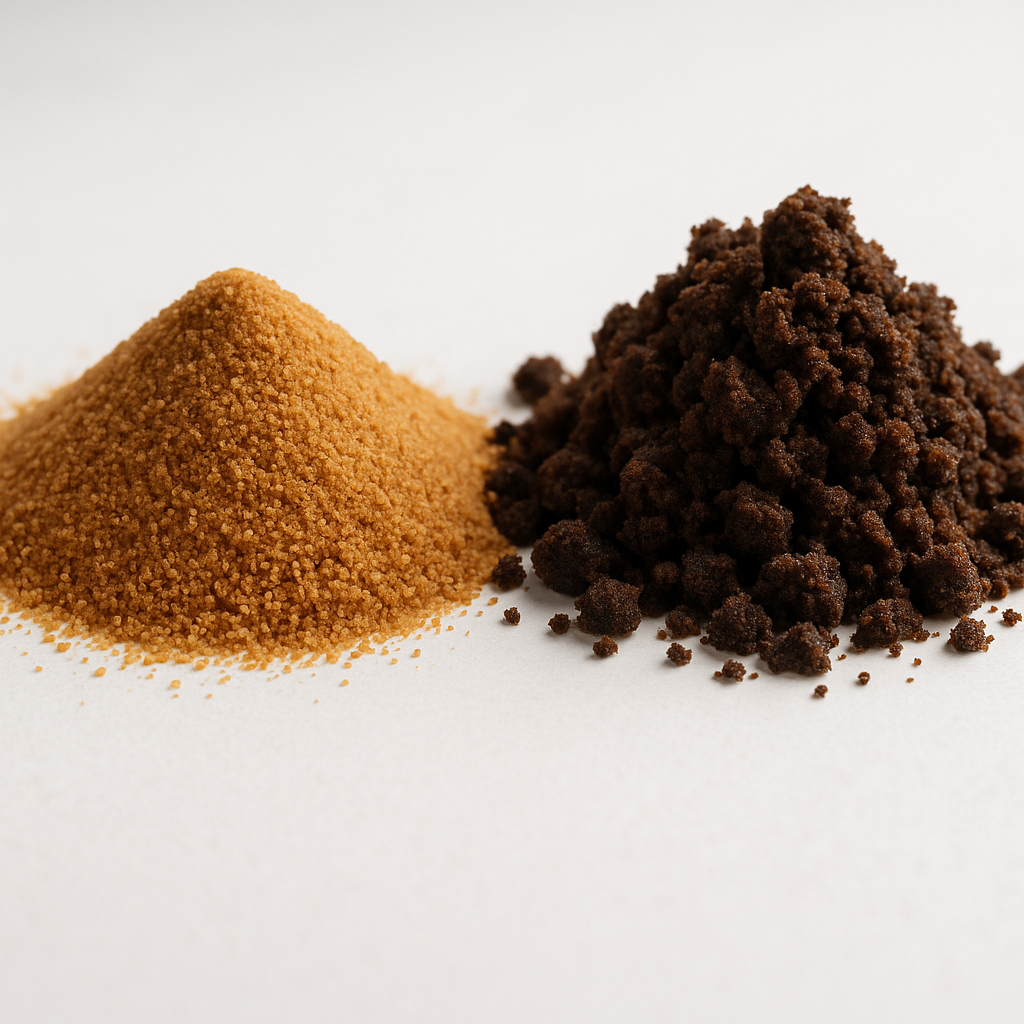
Food manufacturers need more than a naturally sweet ingredient when sourcing coconut sugar. Variations in moisture, color, texture, flavor, and processing can affect formulation, production efficiency, and finished-product consistency. Coconut Sugar can perform differently from one supplier or batch to another, so manufacturers need clear quality specifications before approving a raw material.
Understanding the key quality factors helps buyers compare suppliers more effectively, reduce batch-to-batch variation, and select coconut sugar that fits their application. This guide explains the main parameters manufacturers should evaluate before using coconut sugar in commercial food production.
What Is Coconut Sugar?
Coconut sugar is a sweetener produced from the sap of coconut palm flower buds. Producers collect the sap, filter it, concentrate it through controlled heating, and process the concentrated sap into a granular or powdered sweetener.
The processing method strongly influences the final characteristics of the ingredient. For manufacturers, this means that two coconut sugar products may have different color, moisture, particle size, aroma, and flavor even when both originate from coconut palm sap.
Therefore, manufacturers should evaluate coconut sugar based on a defined specification rather than relying only on its product name or general appearance.
Coconut Sugar: Key Quality Factors to Evaluate
Several parameters can influence how the ingredient performs during manufacturing. The right specification depends on the application, but the following factors deserve particular attention.
1. Moisture Content
Moisture is one of the most important quality parameters for dry coconut sugar.
Excessive moisture can contribute to:
- Clumping during storage
- Changes in texture
- Reduced flowability
- Increased risk of quality deterioration
- Difficulties during automated dosing and packaging
Manufacturers should establish an acceptable moisture specification according to their formulation and storage conditions. Consistent moisture also helps maintain predictable handling characteristics across production batches.
2. Color and Appearance
Coconut sugar commonly ranges from light brown to darker brown shades. Color develops partly through the concentration and heating of coconut sap.
However, color should not serve as the only indicator of quality. A darker product does not automatically mean better flavor or higher quality.
Manufacturers should instead define an acceptable color range based on the finished product. For example, a beverage or bakery formulation may require a different visual profile from a sauce, snack, or confectionery product.
Consistency matters because significant color variation can change the appearance of the finished food.
3. Flavor and Aroma
Coconut sugar can contribute a characteristic caramel-like, earthy, or coconut-derived flavor profile. Processing conditions influence how these sensory characteristics develop.
Food manufacturers should assess:
- Sweetness profile
- Caramel-like notes
- Coconut-related aroma
- Unwanted burnt or smoky notes
- Off-odors
- Overall sensory consistency
A suitable ingredient should complement the formulation rather than introduce unexpected flavors.
For products with a delicate flavor profile, sensory evaluation becomes particularly important during supplier qualification.
4. Particle Size and Texture
Particle size affects how coconut sugar behaves during production.
Fine particles can dissolve or disperse more quickly, while larger granules may provide different handling and dissolution characteristics. Particle size also affects packaging, conveying, blending, and dosing.
Manufacturers should therefore specify the required physical form, such as:
- Fine granules
- Standard granules
- Powdered form
- Other application-specific particle sizes
The specification should match the processing equipment and the intended finished product.
5. Solubility and Dispersibility
Manufacturers using coconut sugar in beverages, sauces, syrups, instant products, or other liquid formulations should consider how efficiently the ingredient dissolves or disperses.
Particle size, moisture, and processing history can influence this behavior.
Instead of assuming that every coconut sugar product performs identically, manufacturers should conduct application testing under their actual processing conditions. This simple step can identify formulation issues before commercial production begins.
6. Purity and Foreign Material Control
Raw agricultural ingredients require appropriate controls against physical contaminants and other quality hazards.
Manufacturers should evaluate supplier procedures for:
- Foreign material control
- Cleaning and sorting
- Hygienic processing
- Storage conditions
- Packaging integrity
- Traceability
- Microbiological control
A supplier should be able to provide appropriate documentation supporting the product’s food-grade status and quality controls.
How Processing Affects Coconut Sugar Quality
The production process has a direct relationship with the characteristics of the final ingredient.
Coconut sap must undergo collection, filtration, concentration, and drying or crystallization. Each stage can influence moisture, color, flavor, texture, and consistency.
For a deeper explanation, manufacturers can read Coconut Sugar: How Processing Shapes Its Quality and Flavor.
Sap Collection and Handling
Fresh sap requires controlled handling because raw agricultural materials can change during storage and transportation. Good handling practices help maintain consistent raw material quality before processing begins.
Filtration and Clarification
Filtration helps remove unwanted physical materials from the collected sap. Effective filtration supports a cleaner final ingredient and contributes to consistent processing.
Concentration and Heating
Producers concentrate the sap by removing water through controlled heating. The temperature and duration of heating can influence color, aroma, flavor, and final texture.
Consequently, manufacturers should consider processing consistency when evaluating a coconut sugar supplier.
Why Batch Consistency Matters to Food Manufacturers
A coconut sugar specification has little value if the supplier cannot consistently meet it.
Batch variation can create problems throughout production. A change in moisture may affect handling, while a different particle size can influence mixing or dissolution. Similarly, variations in color or flavor can affect the finished product.
Manufacturers should therefore evaluate consistency across multiple batches rather than approving a supplier based on a single sample.
A practical supplier qualification process can include:
- Reviewing the product specification.
- Testing representative samples.
- Conducting application trials.
- Reviewing the Certificate of Analysis (COA).
- Comparing results across different batches.
- Establishing acceptance criteria for future deliveries.
This approach provides a stronger basis for long-term procurement decisions.
Food Safety and Documentation
Quality goes beyond physical and sensory characteristics. Food manufacturers also need appropriate food safety documentation.
Depending on the market and application, buyers may request documentation covering:
- Certificate of Analysis
- Microbiological parameters
- Heavy metals or contaminants, where applicable
- Allergen information
- Product specification
- Traceability information
- Packaging details
- Shelf-life information
- Relevant certifications
Manufacturers should also consider applicable national regulations in their target market.
For international food businesses, Codex standards can provide useful reference material for food standards and related requirements. The Codex Standard for Sugars (CXS 212-1999) was adopted in 1999 and amended in 2001, 2019, and 2022. However, manufacturers should verify whether a specific Codex provision applies to their particular coconut sugar product and market.
How to Build a Coconut Sugar Specification
Before purchasing in bulk, manufacturers should translate their quality requirements into a written specification.
A useful specification can cover:
- Product name and description
- Source and origin
- Moisture requirement
- Color range
- Particle size
- Sensory characteristics
- Microbiological requirements
- Contaminant requirements
- Packaging format
- Storage conditions
- Shelf life
- Required documentation
The specification should also identify which parameters require testing for every batch and which can follow periodic verification.
This creates a clear quality benchmark for both the buyer and supplier.
Choosing a Reliable Coconut Sugar Supplier
Supplier selection should involve more than comparing product samples. Manufacturers need to consider whether a supplier can maintain consistent specifications at commercial scale.
Important questions include:
- Can the supplier provide a detailed specification?
- Is a COA available for each shipment?
- Can the supplier explain its processing controls?
- Does the supplier maintain traceability?
- Can the supplier provide samples for application testing?
- Are packaging and storage conditions clearly defined?
- Can the supplier support long-term bulk requirements?
For manufacturers sourcing directly from Indonesia, OilCocos provides coconut sugar supply from Indonesia for businesses evaluating coconut-derived food ingredients.
You can also learn more about OilCocos and its coconut-based ingredient solutions when reviewing potential sourcing options.
Common Mistakes When Evaluating Coconut Sugar
Manufacturers can avoid several common purchasing mistakes.
Choosing based only on color: Color does not provide a complete picture of quality.
Ignoring moisture: Moisture can affect storage, flowability, and processing.
Testing only one sample: One batch cannot always represent long-term supplier consistency.
Skipping application trials: A product can meet a specification but still perform differently in a specific formulation.
Focusing only on price: Procurement decisions should consider quality consistency, documentation, logistics, and application performance together.
Using an unclear specification: Without defined acceptance criteria, buyers may struggle to manage quality differences between shipments.
FAQ About Coconut Sugar Quality
What is the most important quality factor in coconut sugar?
There is no single parameter that suits every application. Moisture, color, flavor, particle size, purity, and microbiological quality can all matter depending on the finished product.
Does darker coconut sugar mean higher quality?
Not necessarily. Color mainly reflects the characteristics of the raw material and processing conditions. Manufacturers should evaluate color against the requirements of their specific application.
Why is moisture important in coconut sugar?
Moisture can affect texture, clumping, flowability, storage stability, and processing performance. Manufacturers should establish an appropriate moisture specification for their application.
Should food manufacturers request a COA for coconut sugar?
Yes. A Certificate of Analysis helps manufacturers verify that a batch meets agreed quality parameters. Buyers should define which parameters the COA should report before purchasing.
How can manufacturers ensure consistent coconut sugar quality?
Use a written specification, qualify suppliers through representative samples, conduct application testing, review batch COAs, and monitor quality across multiple shipments.
Conclusion
For food manufacturers, Coconut Sugar quality depends on more than sweetness or appearance. Moisture, color, flavor, particle size, purity, food safety, processing controls, and batch consistency can all influence manufacturing performance.
A clear specification and structured supplier evaluation process can help manufacturers select an ingredient that fits their formulation and production requirements. For businesses exploring coconut sugar from Indonesia, reviewing product specifications and discussing application requirements with a qualified supplier can be a practical next step.