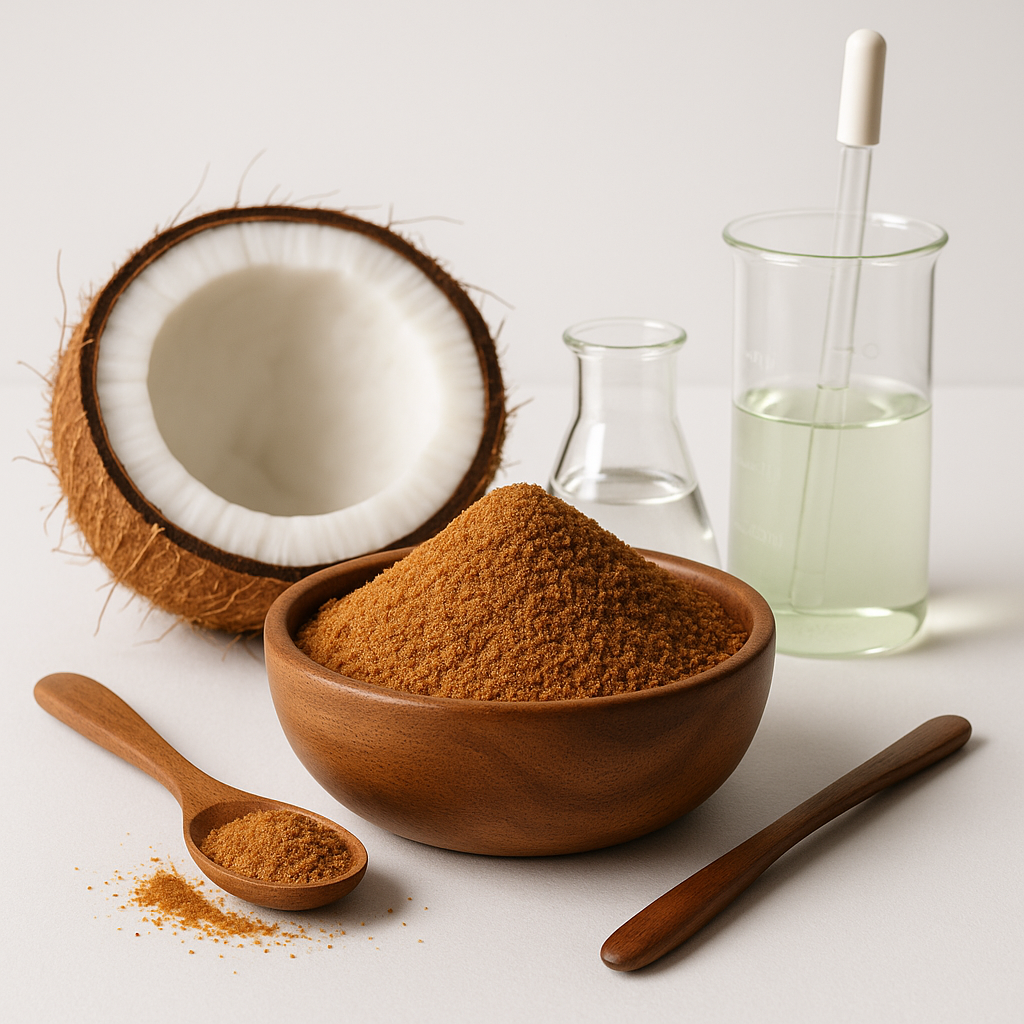
Most people never think about what helps a medication dissolve — but if a capsule ever seemed to do… nothing, solubility might have been the culprit. Caprylic/Capric Triglyceride in Oral Drug Delivery plays a quiet but important role behind the scenes in how oral drugs get absorbed.
It isn’t some exotic lab invention — it’s derived from coconut oil, yet it’s become a go-to ingredient for formulators trying to improve drug absorption. It helps poorly water-soluble drugs stay dissolved longer in the gut, which means more of the active ingredient actually makes it into the bloodstream instead of passing through untouched.
Precipitation is the real enemy here. When a drug comes out of solution too soon, it loses potency fast. This lipid carrier reduces that risk by slowing down crystallization, giving the body more time to absorb the drug before it crashes out.
Bioavailability isn’t just a technical term — it’s the difference between a medication working and not. By enhancing solubilization and delaying precipitation, this ingredient directly affects how consistent the results are from dose to dose.
All of that adds up to more than just an ingredient on a list — it’s become a key player in modern formulation science. Not magic, just smart chemistry working quietly in the background.
What’s the big deal with CCT anyway?
It’s worth asking why this ingredient keeps showing up in research papers and formulation labs. It’s not just another buzzword — it genuinely changes how drugs behave. It helps them dissolve better, stay dissolved longer, and actually get absorbed where they’re supposed to. For oral medications, that’s close to the holy grail.
It’s basically a super-refined coconut oil
Most people have eaten it without realizing — caprylic/capric triglyceride starts life as coconut oil, then gets refined down to its most useful fatty acid chains. Think of it as coconut oil’s sleek, lab-ready cousin. Odorless, colorless, and flavor-neutral, it slips into pills and liquids without anyone noticing it’s there.
Why researchers are actually obsessed with it
Anyone who’s tried getting a stubborn drug to dissolve in water knows how frustrating that can be. This is where CCT shines — it dissolves poorly water-soluble drugs effectively, keeps them from crashing out in the gut, and boosts how much actually reaches the bloodstream. No surprise labs keep testing it.
So what’s behind the interest? This lipid doesn’t just carry drugs — it protects them. In the harsh environment of the digestive tract, many drugs break down or clump together before they’re absorbed. Wrapped in this triglyceride, they stay stable and soluble instead. Researchers value it because it turns weak, inconsistent absorption into something predictable. And when developing a new drug, predictability is everything. It’s not just a helper ingredient — it’s a performance enhancer.
Let’s talk about the solubility struggle
Over 70% of new drug candidates fail due to poor solubility — a major roadblock in oral delivery. Caprylic/Capric Triglyceride in Oral Drug Delivery steps in as a real fix here, helping drugs dissolve where they need to. Formulations often fall apart because the active ingredient won’t stay in solution, and that’s exactly where lipid-based systems earn their place. For more on how droplet size affects performance, this study on Droplet Size Reduction of Self-Emulsifying Drug Delivery is worth a look.
How it helps those stubborn drugs dissolve
This triglyceride acts like a molecular escort, wrapping around poorly soluble drugs and keeping them stable in the gut. It doesn’t just boost solubility — it keeps the drug available long enough to actually be absorbed. Some medications pass through the body almost untouched; this ingredient helps make sure that doesn’t happen.
Finding the sweet spot so things don’t get messy
Too much oil and a formulation turns greasy; too little and the drug crashes out. Getting the balance right with this ingredient takes some care — the goal is a zone where solubility stays high and precipitation stays low, which is easier said than done.
Nailing that balance means understanding how the triglyceride interacts with other excipients and with the drug itself. There’s no one-size-fits-all ratio — chain length and lipophilicity affect how well it integrates into micelles and resists enzymatic breakdown. Formulators tweak ratios, test dispersion, and watch how the drug behaves in simulated fluids. One small change can mean the difference between a stable formulation and phase separation. The real challenge isn’t just dissolving the drug — it’s keeping it dissolved until it’s absorbed, and that only works if the formulation science behind it is respected.
Why do drugs sometimes just crash out?
Drugs don’t always stay dissolved — sometimes they fall out of solution like sand settling in water. A once-clear liquid turning cloudy after sitting is a visible sign of this. That’s precipitation, and it’s a significant problem in oral drug delivery. When active ingredients drop out of solution, the body can’t absorb them properly. Caprylic/Capric Triglyceride in Oral Drug Delivery helps slow this down by keeping drugs in solution longer, especially the ones that hate water.
The real deal on the precipitation problem
Precipitation isn’t just inconvenient — it kills bioavailability. Once a drug crashes out, it’s essentially useless; it gets swallowed but the gut can’t take it in. This happens quickly with poorly soluble compounds, especially as conditions in the gut shift. This lipid acts like a molecular bodyguard, shielding the drug from harsh environments and delaying that drop.
My take on keeping the mix stable for longer
Stability isn’t about brute force — it’s about smart formulation. The goal is keeping a drug dissolved until it reaches the absorption zone. Caprylic/capric triglyceride does this by combining solubility enhancement with controlled release. Not magic — just clever chemistry working quietly in the background.
It’s a bit like keeping oil and vinegar mixed in a dressing — without the shake, they separate. In the gut, there’s no shake, so ingredients that resist separation matter. This triglyceride reduces interfacial tension and stabilizes the drug within micellar structures, buying time for absorption before things fall apart. Real gains in bioavailability happen here — not through higher doses, but through smarter delivery. It’s not just a carrier. It’s a meaningful piece of the formulation.
Does it actually boost bioavailability?
It’s often said that Caprylic/Capric Triglyceride in Oral Drug Delivery improves how much drug reaches the bloodstream — but does it really? The answer is yes, though not through any kind of magic. It works by keeping poorly soluble drugs dissolved longer in the gut, giving the body more time to absorb them. This deep dive into Strategies to Formulate Lipid-based Drug Delivery Systems shows how formulation choices make or break performance. This ingredient isn’t a shortcut — it’s a useful tool when applied correctly.
How CCT pulls a fast one on your gut
The gut expects drugs to behave a certain way — dissolve, get absorbed, move on. This triglyceride changes that sequence. It forms tiny lipid droplets that trap drug molecules, shielding them from harsh stomach conditions. These micelles slip through the intestinal wall almost unnoticed, and more of the drug gets in before it can break down or pass through unused.
Why your liver isn’t the boss anymore
Most oral drugs take the long route — absorbed into the blood, then routed straight to the liver for processing. This ingredient reroutes part of that journey. Instead of heading to the liver first, some of the dose travels through the lymphatic system, meaning less of the drug gets broken down by liver enzymes before it reaches general circulation.
Think of the liver as a strict checkpoint for systemic circulation — most drugs have to pass through it, and a lot don’t make it through intact. With Caprylic/Capric Triglyceride in Oral Drug Delivery involved, part of the dose slips in through a side route via lymphatic uptake. This bypass reduces first-pass metabolism considerably. Instead of the liver breaking down a large share of the drug before it has any effect, a much larger portion reaches the bloodstream intact — which is why this ingredient matters for more than just solubility. It translates to real-world efficacy, not just numbers in a lab report.
Why I think this is the future of oral meds
Most people picture pills when they think of oral medication, but that picture is shifting. This isn’t a minor tweak to the existing system — it’s a meaningful change in how medicine gets into the bloodstream efficiently. Once the way it tackles solubility and absorption becomes clear, today’s tablets start to look a bit outdated.
Moving past the boring old tablets we’re used to
Tablets haven’t changed much in decades — crush one, swallow it, hope it dissolves. Plenty of drugs fail right there in the gut because they simply don’t dissolve well. This lipid-based approach sidesteps that problem by working with the body’s chemistry instead of against it, using carriers the body already recognizes and absorbs.
Honestly, the potential here is just massive
Some medications barely work for some people, and a lot of that comes down to how the drug is delivered rather than the drug itself. This changes that equation — boosting bioavailability, allowing smaller doses, and reducing gut irritation. And it’s not limited to one drug category; the improvements span everything from antifungals to antivirals.
Right now, many promising compounds never make it to market because they’re too poorly soluble. With Caprylic/Capric Triglyceride in Oral Drug Delivery in the formulation, those compounds get another shot — it stabilizes the mixture, prevents premature precipitation, and keeps active ingredients in solution long enough to be absorbed. That means faster onset, more consistent blood levels, and fewer side effects. This is shaping up to be a backbone technology for next-generation oral therapies, and once the broader industry catches up, the old chalky pills won’t be missed.
What Keeps This Ingredient in Demand
Why does Caprylic/Capric Triglyceride in Oral Drug Delivery keep showing up in high-performing formulations? Because it directly addresses the solubility hurdles that hold back so many modern drugs. It reduces precipitation risk and improves