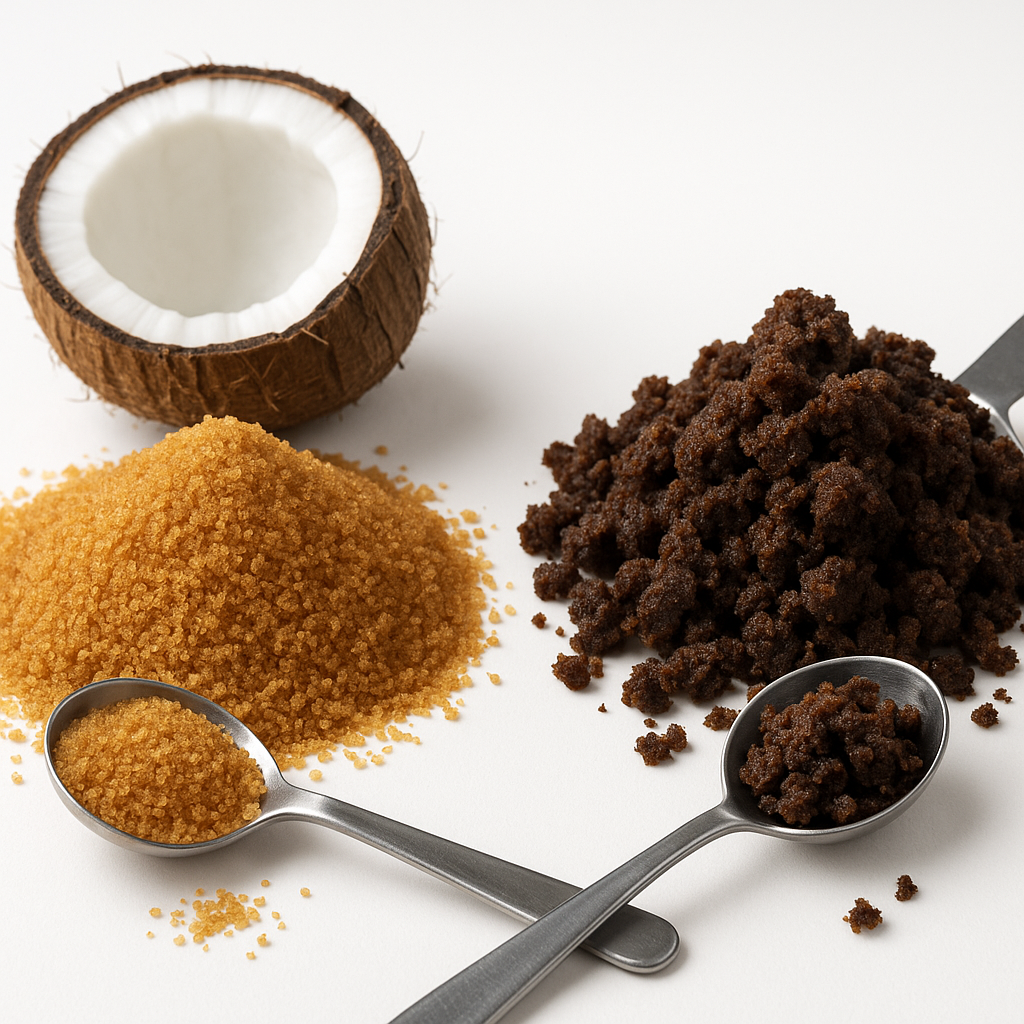
Choosing between coconut sugar and cane sugar can affect more than the sweetness of a finished product. Food manufacturers must also consider flavor, color, particle size, dissolution, formulation consistency, and the expectations of their customers. A sweetener that works well in cookies, for example, may produce a different result in a beverage, confectionery filling, or dry ingredient blend.
Both sweeteners come from plant sources, but they differ in origin, processing, and typical sensory characteristics. Understanding coconut sugar vs. cane sugar helps food makers determine which ingredient best suits their formulations and production requirements.
This guide compares their production methods, flavor, functionality, nutritional considerations, and commercial applications to help manufacturers make informed ingredient decisions.
1. How Coconut Sugar and Cane Sugar Are Produced
The first difference lies in the raw material and the way manufacturers process it.
Coconut sugar production
Coconut sugar typically comes from the sap of coconut palm flower buds. Producers collect the sap and heat it to remove water, concentrating the natural sugars until they form a thick syrup or crystallized product. They then process the material into the required granulated or other commercial form.
Because production involves concentrating and heating the sap, coconut sugar can develop a characteristic caramel-like aroma and a color that ranges from golden brown to darker brown.
However, the final characteristics depend on the production process, handling, and product specification. Buyers should not assume that every coconut sugar product has identical color, moisture content, or granulation.
Cane sugar production
Cane sugar comes from sugarcane juice. Producers extract the juice, clarify it as needed, concentrate it through evaporation, and crystallize the sugar. Further refining can produce white sugar with a relatively neutral flavor and consistent appearance.
The exact process depends on whether the final product is raw, partially refined, or fully refined cane sugar.
The processing method matters: white refined cane sugar generally has a more neutral sensory profile, while less-refined cane sugars may retain more color and characteristic flavor.
For manufacturers, understanding these differences helps determine whether a sweetener’s flavor and appearance suit the intended application.
2. Flavor, Color, and Sweetness
Sensory characteristics often determine whether a manufacturer chooses coconut sugar or cane sugar. Although both provide sweetness, they do not necessarily create the same flavor profile.
Flavor differences
Coconut sugar commonly offers caramel-like, toasted, or molasses-like notes. These characteristics can complement products that benefit from a warmer, more complex sweetener flavor.
Cane sugar, particularly refined white sugar, generally provides a cleaner and more neutral sweetness. This makes it useful when manufacturers want other ingredients to dominate the flavor profile.
Consider the intended product:
- Coconut sugar: May suit cookies, baked goods, sauces, and selected confectionery products where caramel-like notes complement the recipe.
- Refined cane sugar: Often suits beverages, delicate desserts, and formulations that require a neutral sweetener.
- Less-refined cane sugar: May offer additional color and flavor, depending on the product.
These are general guidelines rather than strict rules. The actual result depends on the sweetener specification and the other ingredients in the formulation.
Color and finished-product appearance
Coconut sugar typically has a brown appearance, which can darken a formulation. This may work well in cookies, snack bars, and other products that naturally have a golden or brown color.
By contrast, refined white cane sugar generally has less influence on the finished product’s color.
Manufacturers should evaluate color during recipe trials, particularly when producing light-colored cakes, beverages, frostings, or products with strict visual specifications.
Are they equally sweet?
Both ingredients provide sweetness, but perceived sweetness depends on the formulation, concentration, and other flavor components.
Do not assume that an identical weight of every coconut sugar and cane sugar product will produce an identical sensory result. Conduct controlled trials to determine the appropriate inclusion rate for your product.
3. Functional Differences in Food Formulations
For food manufacturers, the most important question is not simply which sweetener tastes better. It is how each ingredient performs during mixing, heating, baking, storage, and distribution.
Dissolution and particle size
Granulated sweeteners differ in particle size and moisture characteristics. These differences can affect how quickly they dissolve and how evenly they distribute in a formulation.
For beverages or products that require rapid dissolution, test the sweetener under the actual processing conditions. Consider liquid temperature, mixing time, particle size, and the desired final consistency.
For dry blends and bakery mixes, evaluate how the sweetener distributes throughout the ingredients and whether it remains free-flowing during storage.
Baking performance
Sugar influences more than sweetness in baked products. Depending on the recipe, it can affect browning, texture, moisture retention, and overall structure.
Coconut sugar may contribute a darker color and characteristic flavor. Therefore, manufacturers may need to adjust the recipe when replacing refined cane sugar.
Potential areas to evaluate include:
- Finished-product color
- Crumb texture and softness
- Spread and structure in cookies
- Moisture changes during storage
- Flavor balance after baking
A direct substitution may work in some recipes but produce noticeable differences in others.
Moisture and storage stability
Moisture content can influence granulation, clumping, and handling. Manufacturers should compare the actual product specifications rather than assume that all coconut sugar or cane sugar products behave identically.
For bulk purchasing, review moisture limits, packaging integrity, and recommended storage conditions. Keep the sweetener in suitable sealed packaging and protect it from humidity to help maintain consistent handling characteristics.
4. Nutritional Considerations and Sweetener Claims
Coconut sugar sometimes attracts attention because it comes from coconut palm sap rather than sugarcane. However, its plant origin does not automatically make it nutritionally superior to cane sugar.
Both ingredients contain substantial amounts of sugar and contribute energy to the diet. Their exact composition depends on the product and processing method.
Does coconut sugar contain more nutrients?
Coconut sugar may retain small amounts of minerals and other compounds, depending on how the producer processes it. However, these amounts vary, and they do not establish that coconut sugar is a nutritionally equivalent substitute for a nutrient-rich food.
Food manufacturers should rely on verified compositional data when making nutritional comparisons. Avoid assuming that trace nutrients provide a meaningful health advantage in typical serving sizes.
Is coconut sugar better for blood glucose?
Do not assume that coconut sugar has a reliably lower glycemic effect than cane sugar in every product or serving. Glycemic responses depend on several factors, and claims require appropriate scientific support.
Manufacturers should avoid describing coconut sugar as a diabetes-friendly sweetener or making other health claims without adequate evidence and compliance with applicable regulations.
Labeling and marketing considerations
Sweetener names, ingredient declarations, and nutrition information must comply with the requirements of the destination market.
If a product uses coconut sugar because of its flavor, origin, or formulation characteristics, communicate those attributes accurately. Avoid implying that a plant-derived sweetener is inherently healthier simply because of its source.
5. Which Sweetener Is Better for Different Food Applications?
Neither coconut sugar nor cane sugar is universally better. The appropriate choice depends on flavor objectives, processing conditions, appearance, and product specifications.
Bakery and confectionery
Coconut sugar can suit cookies, selected cakes, snack bars, and confectionery products that benefit from caramel-like flavor or darker color.
Refined cane sugar may be preferable when manufacturers need a neutral flavor or want greater control over a light-colored finished product.
Beverages and dry mixes
Refined cane sugar often suits formulations where a neutral sweetness and predictable appearance are priorities. However, either sweetener may work depending on the product design.
For beverage applications, test dissolution, sediment formation where relevant, and flavor impact. For dry mixes, assess flowability, moisture control, and ingredient distribution.
Sauces and specialty products
Coconut sugar may complement sauces, marinades, and specialty formulations that benefit from deeper flavor notes. Cane sugar may suit products that require a cleaner sweetness or a specific color profile.
In each case, assess the complete formulation rather than choosing solely on the ingredient’s origin.
6. How Food Manufacturers Should Choose a Supplier
Selecting the right sweetener also requires reliable product specifications and consistent supply. Even a suitable ingredient can create production problems if its granulation, moisture content, or sensory characteristics vary between deliveries.
Before approving a supplier, check:
- Product specifications: Confirm granulation, moisture content, color, and relevant compositional parameters.
- Sample performance: Test the sweetener in your actual formulation.
- Quality documentation: Request relevant specifications and batch-specific documentation where applicable.
- Packaging: Check suitability for transportation, storage, and production handling.
- Supply consistency: Clarify lead times, batch traceability, and procedures for handling specification changes.
For manufacturers evaluating coconut sugar from Indonesia, visit the coconut sugar supplier from Indonesia page to review OilCocos’ product offering. You can also explore OilCocos to learn more about its coconut-based ingredients.
Before placing a bulk order, compare the available specifications and test a representative sample. This approach helps establish whether the ingredient meets your technical requirements and performs as expected in production.
Frequently Asked Questions
1. What is the main difference between coconut sugar and cane sugar?
Coconut sugar comes from coconut palm sap, while cane sugar comes from sugarcane juice. They also differ in typical flavor, color, processing, and formulation behavior.
2. Is coconut sugar sweeter than cane sugar?
Perceived sweetness varies by product and formulation. Manufacturers should conduct controlled trials rather than assume the two sweeteners perform identically at the same inclusion rate.
3. Can coconut sugar replace cane sugar in baking?
Sometimes, but substitution may change color, flavor, moisture behavior, and texture. Test the recipe and adjust the formulation when necessary.
4. Is coconut sugar healthier than cane sugar?
Coconut sugar is still a sugar-rich sweetener. Its plant source and possible trace nutrients do not automatically make it a healthier alternative.
5. What should food manufacturers check when buying coconut sugar?
Check granulation, moisture content, color, flavor, relevant compositional data, packaging, quality documentation, and supply consistency.