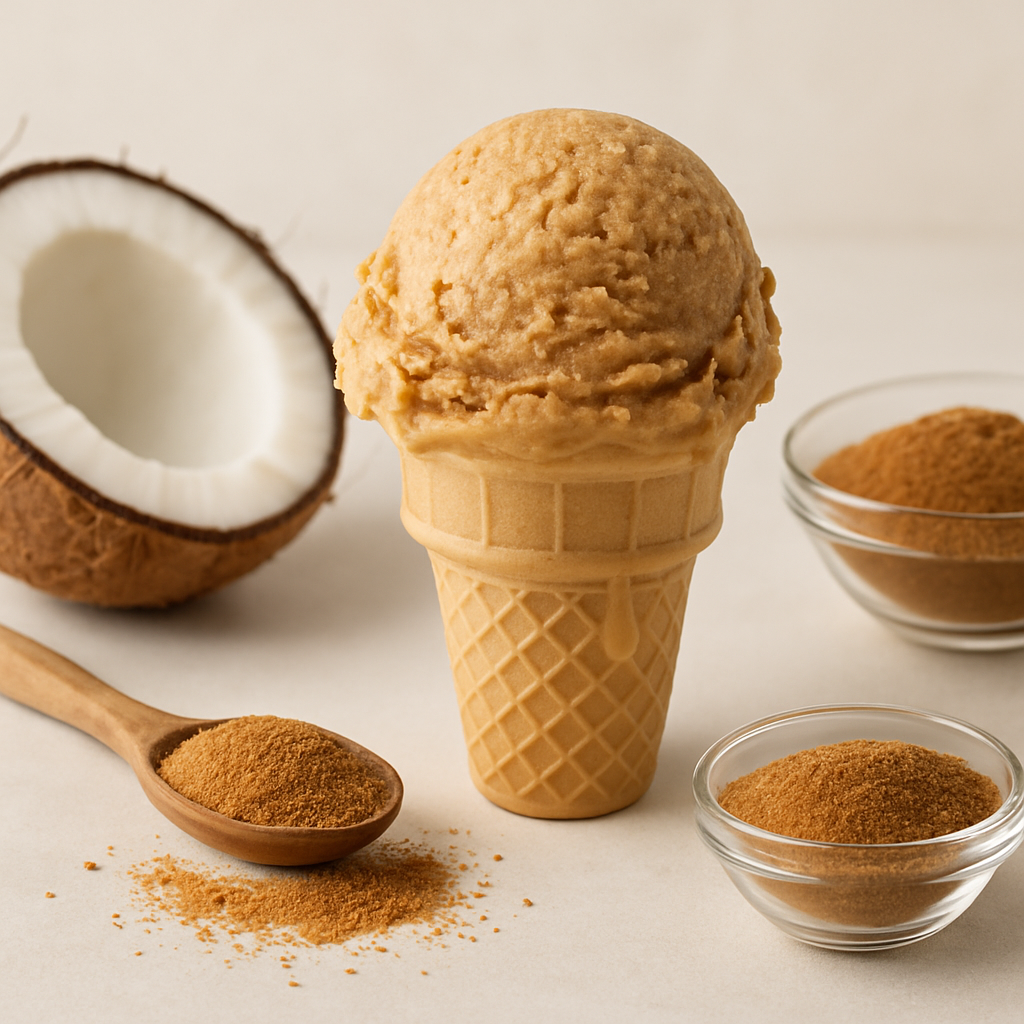
Ice cream manufacturers constantly balance texture, melting behavior, flavor, cost efficiency, and production consistency. Choosing the right fat can influence several of these factors at once. This is why coconut oil in ice cream has become an interesting option for manufacturers developing coconut-flavored products, dairy alternatives, frozen desserts, and specialty formulations.
Coconut oil can contribute fat to an ice cream formulation while offering a distinctive fatty acid profile and relatively high solid-fat characteristics at lower temperatures. However, using it successfully requires more than simply replacing another fat with coconut oil. The formulation needs to account for melting behavior, crystallization, flavor, emulsification, and processing conditions.
For B2B food manufacturers, understanding these factors can help determine when coconut oil makes technical sense and how to evaluate it before commercial production.
Why Use Coconut Oil in Ice Cream?
Coconut oil can serve several functional roles in frozen dessert formulations. Its primary contribution comes from its fat content, which can influence body, texture, and sensory properties.
Depending on the formulation, coconut oil may help manufacturers achieve:
- A creamy mouthfeel
- Increased fat content
- Coconut flavor in suitable products
- A smooth texture
- Different melting characteristics
- A plant-based fat source for selected formulations
However, its performance depends heavily on the rest of the recipe. Milk solids, sugar, emulsifiers, stabilizers, water content, and other fats all interact with the coconut oil.
Therefore, manufacturers should evaluate coconut oil as part of the complete fat system rather than as an isolated ingredient.
Coconut Oil and Fat Structure
Ice cream contains a complex mixture of water, fat, air, sugar, proteins, and stabilizing ingredients.
During freezing, fat droplets partially coalesce and contribute to the structure of the frozen product. The fat phase also affects lubrication and perceived creaminess.
Coconut oil can participate in this fat structure, but the proportion and type of coconut oil matter. A formulation with too much solid fat at the serving temperature may produce an undesirable texture, while insufficient structure can affect body and melting resistance.
How Coconut Oil Can Affect Ice Cream Texture
Texture represents one of the most important considerations when introducing coconut oil into frozen desserts.
The right formulation can produce a smooth and creamy product, while an unsuitable fat system can create waxiness or an overly firm mouthfeel.
Creaminess and Mouthfeel
Fat contributes significantly to the perception of richness and creaminess.
Coconut oil can provide a concentrated fat source, which may help manufacturers develop a rich sensory profile when used at an appropriate level.
However, coconut oil has a relatively high proportion of saturated fatty acids. As a result, its physical behavior differs from many liquid vegetable oils.
This difference becomes particularly relevant at refrigeration and serving temperatures.
Melting Behavior
The melting characteristics of the selected coconut oil grade can influence how the ice cream feels in the mouth and how quickly it melts.
Manufacturers should consider whether the selected fat remains too structured at serving temperature or melts sufficiently to provide the intended sensory experience.
For additional context, the coconut oil 76 vs 92 guide explains how different coconut oil melting grades can influence processing and application decisions.
Coconut Oil in Plant-Based Ice Cream
Coconut oil has particular relevance for plant-based frozen desserts because manufacturers need alternatives to traditional dairy fat.
A coconut-based fat system can help create a richer texture while supporting formulations that do not rely on dairy butterfat.
However, plant-based ice cream presents its own technical challenges.
Building the Fat System
Manufacturers may combine coconut oil with other plant oils or fats to balance:
- Firmness
- Creaminess
- Melting rate
- Flavor
- Fat crystallization
- Processing behavior
For example, a formulation may require both solid and liquid fat fractions to achieve the desired structure.
The objective should not necessarily be to maximize coconut oil content. Instead, formulators should determine the fat profile that delivers the desired finished-product characteristics.
Flavor Considerations
Virgin coconut oil can contribute a noticeable coconut aroma and flavor. That can be beneficial for coconut-flavored ice cream but less desirable in formulations where manufacturers want a neutral taste.
Refined coconut oil can offer a different sensory profile.
Therefore, food manufacturers should specify the required refining level based on the finished product.
Choosing the Right Coconut Oil Grade
Not all coconut oils behave identically during freezing and melting.
The grade can influence the physical state of the fat during processing and consumption.
Coconut Oil 76
Coconut oil 76 has a nominal melting point around 76°F (approximately 24°C). Its relatively lower melting profile can make it easier to melt during processing.
For certain ice cream formulations, this characteristic may help the fat integrate into the mix without excessive heating.
However, formulators should still evaluate the fat at actual serving temperatures because melting behavior directly influences mouthfeel.
Higher-Melting Grades
Higher-melting coconut oil grades can provide a more structured fat phase.
This may be useful in formulations where manufacturers need greater firmness or specific structural characteristics. However, excessive solid fat at serving temperature can negatively affect sensory properties.
Consequently, the correct grade depends on the desired balance between structure and meltability.
Processing Coconut Oil in Ice Cream Production
Successful use of coconut oil starts with proper process control.
The oil needs to integrate into the mix before homogenization and freezing.
Melting and Mixing
Manufacturers should establish a suitable temperature for melting the coconut oil completely.
The goal is to achieve a uniform liquid fat phase without unnecessary thermal exposure.
Once melted, the oil can enter the formulation with other ingredients according to the manufacturer’s established mixing sequence.
The exact procedure depends on equipment, batch size, recipe composition, and the selected coconut oil.
Homogenization
Homogenization reduces fat droplet size and helps create a stable emulsion.
Coconut oil therefore needs to enter the homogenization process in a suitable physical state.
Poor dispersion can contribute to uneven texture or instability. For this reason, manufacturers should validate homogenization pressure and temperature during product development.
Freezing
The freezing stage determines much of the final ice cream structure.
During dynamic freezing, manufacturers control ice crystal formation, air incorporation, and fat structuring.
The coconut oil’s crystallization behavior can interact with these processes. Therefore, pilot-scale trials are important before introducing the ingredient into full-scale production.
Does Cloud Point Matter for Ice Cream?
Cloud point is generally more relevant to liquid oil handling than to the final frozen product. Nevertheless, manufacturers handling coconut oil as a raw material should understand how temperature affects its appearance and physical state.
As coconut oil cools, some components can crystallize and create visible cloudiness.
This does not necessarily indicate deterioration.
Manufacturers can learn more about temperature-related crystallization from the guide to the cloud point of coconut oil.
This information can be useful when planning raw material storage, transportation, and pre-processing.
Quality Specifications for Food Manufacturers
Food manufacturers should define technical requirements before approving coconut oil for ice cream production.
Depending on the application, relevant specifications may include:
- Free fatty acid level
- Moisture
- Peroxide value
- Color
- Odor
- Fatty acid profile
- Melting characteristics
- Refining level
- Microbiological requirements where applicable
- Packaging and storage requirements
Certificate of Analysis
A Certificate of Analysis (COA) provides batch-specific analytical results.
Buyers should compare the COA against the agreed specification and confirm that the testing methods meet their quality requirements.
A sample trial should follow before commercial procurement, particularly when coconut oil will significantly affect the finished product.
How to Test Coconut Oil in Ice Cream
Laboratory and pilot trials should reproduce the intended manufacturing process as closely as possible.
A useful evaluation should examine:
Before Freezing
Check:
- Oil dispersion
- Mix viscosity
- Homogeneity
- Aroma and flavor
- Emulsion stability
After Freezing
Evaluate:
- Texture
- Creaminess
- Firmness
- Overrun
- Melting rate
- Ice crystal perception
- Flavor release
During Storage
Monitor the product over the expected shelf-life conditions.
Look for changes in:
- Texture
- Ice crystal growth
- Fat separation
- Flavor
- Appearance
- Melting characteristics
This process helps manufacturers distinguish the performance of coconut oil from other formulation variables.
Coconut Oil for Commercial Ice Cream Manufacturing
For B2B buyers, supplier selection matters as much as formulation design.
A supplier should be able to provide consistent product specifications, documentation, samples, and appropriate technical information.
When evaluating suppliers, consider:
- Manufacturing capability
- Product consistency
- Quality systems
- Technical documentation
- Batch traceability
- Packaging
- Export experience
- Storage recommendations
- Communication and technical support
For manufacturers sourcing coconut ingredients from Indonesia, the OilCocos website provides information about its coconut-derived products and supply capabilities.
A supplier that understands the intended application can also help buyers identify relevant specifications rather than simply supplying a generic coconut oil grade.
Final Considerations for Coconut Oil in Ice Cream
Using coconut oil in ice cream can offer food manufacturers a practical way to modify the fat phase, develop coconut-based products, and support selected plant-based frozen dessert formulations.
However, successful application depends on choosing an appropriate grade, controlling melting and mixing conditions, managing crystallization, and balancing coconut oil with the other components of the recipe.
Before commercial production, manufacturers should test the oil in a representative formulation and evaluate texture, melting behavior, flavor, stability, and storage performance.
If you are considering coconut oil for an ice cream or frozen dessert formulation, discussing the intended application and technical requirements with a qualified supplier can help narrow down the appropriate product specification.
Frequently Asked Questions
1. Why is coconut oil used in ice cream?
Coconut oil can provide fat that contributes to texture, body, mouthfeel, and structure. It can also support selected plant-based and coconut-flavored frozen dessert formulations.
2. Can coconut oil replace dairy fat in ice cream?
It can replace part of the fat in some formulations, but it does not automatically provide the same functionality as dairy fat. Formulators may need to adjust the complete fat system.
3. Which coconut oil grade is suitable for ice cream?
The suitable grade depends on the formulation, processing conditions, serving temperature, and desired texture. Sample testing should determine the best option.
4. Does coconut oil affect ice cream texture?
Yes. Its melting and crystallization characteristics can influence firmness, creaminess, mouthfeel, and melting behavior.
5. What should manufacturers check when buying coconut oil for ice cream?
Buyers should review the melting characteristics, FFA, moisture, peroxide value, color, odor, refining level, COA, packaging, and application performance.