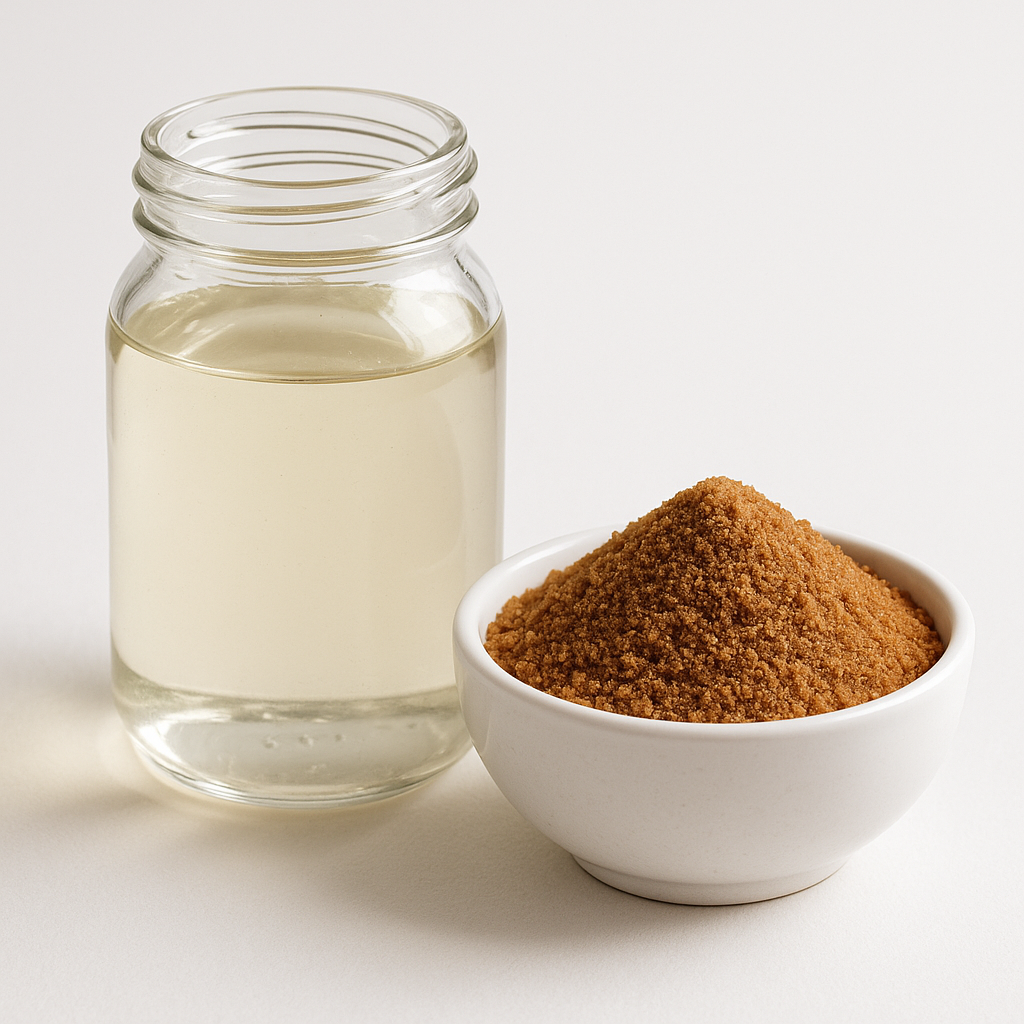
Manufacturers across personal care, home care, food processing, and industrial cleaning increasingly look for surfactants that combine reliable performance with suitable raw material characteristics. This demand has increased interest in coconut based surfactants, which use coconut-derived fatty acids or other coconut feedstocks as building blocks for surfactant production.
However, “coconut-based” does not describe one single chemical. It refers to a broader group of surfactants produced from coconut-derived fatty acids, alcohols, or related intermediates. Each type has different properties, processing requirements, performance characteristics, and suitable applications.
For B2B buyers, understanding the relationship between coconut feedstock and the resulting surfactant is essential. The right choice depends on the formulation, required functionality, regulatory requirements, and production process.
What Are Coconut Based Surfactants?
Surfactants, or surface-active agents, are compounds that reduce surface or interfacial tension between substances such as water and oil.
According to the U.S. Environmental Protection Agency’s explanation of surfactants, surfactants are widely used because they can help substances spread, mix, wet surfaces, or remove soils.
Coconut-based surfactants use coconut-derived raw materials somewhere in their manufacturing chain. Coconut oil contains fatty acids that can serve as feedstocks for producing various oleochemical intermediates.
These intermediates can then become components of surfactant systems used in different industries.
Common Coconut-Derived Feedstocks
Depending on the production route, manufacturers may use:
- Coconut fatty acids
- Fatty alcohols
- Methyl esters
- Other oleochemical intermediates
The resulting surfactant can belong to different chemical classes, including anionic, nonionic, amphoteric, or cationic systems.
Therefore, buyers should evaluate the actual surfactant chemistry rather than assuming that all coconut-derived products perform similarly.
How Coconut Feedstocks Become Surfactants
The production pathway generally begins with separating or processing coconut oil into useful oleochemical components.
Coconut oil contains a mixture of fatty acids with different chain lengths. Manufacturers can process these components through reactions such as esterification, amidation, ethoxylation, sulfation, or other chemical transformations depending on the target ingredient.
The final molecule determines the surfactant’s behavior.
For example, a coconut-derived fatty acid can serve as a starting material for producing surfactants used in detergents or personal-care formulations. However, the properties of the final surfactant depend on its molecular structure, not simply on the original coconut source.
Why Feedstock Quality Matters
Consistent feedstock can support consistent downstream production.
B2B manufacturers should therefore consider:
- Fatty acid composition
- Purity
- Free fatty acid level
- Moisture
- Color
- Odor
- Oxidation indicators
- Traceability
- Processing consistency
A stable raw material specification can help reduce variability during oleochemical processing.
Coconut Based Surfactants in Personal Care
Personal-care manufacturing represents one of the most visible application areas for coconut-derived surfactants.
They can appear in formulations such as:
- Shampoos
- Body washes
- Facial cleansers
- Liquid soaps
- Hand washes
- Toothpaste
- Facial cleansing products
The specific surfactant determines its role.
Some ingredients primarily provide cleansing, while others contribute foam, emulsification, viscosity, mildness, or formulation stability.
Formulation Flexibility
Personal-care products often use multiple surfactants rather than relying on a single ingredient.
A formulator may combine surfactants with different charge characteristics to balance:
- Cleansing strength
- Foam profile
- Skin feel
- Viscosity
- Compatibility
- Stability
Consequently, a coconut-derived surfactant should be selected according to its technical function rather than its feedstock alone.
Coconut Based Surfactants in Home Care
Household cleaning products require effective interaction with oils, dirt, and water.
Coconut-derived surfactants can contribute to detergent and cleaning formulations where wetting, emulsification, dispersion, or soil removal matters.
Potential applications include:
- Laundry detergents
- Dishwashing liquids
- Surface cleaners
- Degreasers
- Industrial cleaning products
The required surfactant system depends on the type of soil, water conditions, cleaning temperature, contact time, and target surface.
Cleaning Performance Depends on the Formulation
A surfactant does not operate independently.
Manufacturers may combine surfactants with builders, solvents, chelating agents, enzymes, fragrances, preservatives, and other functional ingredients.
Therefore, laboratory testing remains important when changing the surfactant source or grade.
Industrial Applications of Coconut Based Surfactants
Industrial users often require specific performance characteristics rather than a particular marketing profile.
Coconut-derived surfactants can support applications involving:
- Emulsification
- Wetting
- Dispersion
- Foaming
- Detergency
- Solubilization
- Surface modification
Potential industries include textile processing, agriculture, metalworking, industrial cleaning, and chemical manufacturing.
The appropriate surfactant depends on the process conditions and desired performance.
Emulsification
Surfactants can help stabilize mixtures of materials that naturally separate, such as oil and water.
This property can be useful in industrial formulations where consistent dispersion matters.
Wetting
Wetting agents help liquids spread over surfaces more effectively.
This can improve contact between a formulation and a substrate, depending on the application.
Dispersion
Surfactants can also assist with keeping particles or droplets distributed throughout a formulation.
The exact mechanism depends on the surfactant chemistry and the dispersed material.
Coconut Oil and Oleochemical Production
The relationship between coconut oil and surfactants becomes clearer when viewed through the oleochemical supply chain.
Coconut oil can serve as a source of fatty acids that manufacturers further process into oleochemical intermediates.
This creates a connection between coconut oil suppliers and downstream industries producing:
- Fatty acids
- Fatty alcohols
- Esters
- Amides
- Surfactants
- Specialty chemicals
For buyers interested in coconut-derived industrial ingredients, understanding this supply chain can help when assessing raw material availability and specifications.
OilCocos supplies coconut-derived products from Indonesia, and its main product information provides an overview of its coconut oil and related product portfolio.
What B2B Buyers Should Check
When sourcing raw materials for coconut-based surfactant production, purchasing teams should focus on technical specifications and supply reliability.
1. Fatty Acid Profile
The fatty acid distribution can affect downstream processing and the characteristics of the resulting oleochemical intermediates.
Ask suppliers for a current fatty acid profile rather than relying only on a generic product description.
2. Quality Parameters
Relevant specifications may include:
- FFA
- Moisture
- Peroxide value
- Iodine value
- Saponification value
- Color
- Odor
- Insoluble impurities
The exact parameters should match the intended downstream process.
3. Consistency Between Batches
Commercial surfactant production requires predictable raw materials.
A supplier should have appropriate quality-control procedures and batch documentation to support consistent procurement.
4. Documentation
B2B buyers may need:
- Certificate of Analysis
- Technical Data Sheet
- Safety Data Sheet
- Origin documentation
- Certification information
- Batch traceability
- Export documentation
Documentation requirements vary according to the market and end application.
Hydrogenated Coconut-Derived Ingredients
Some industrial applications require fats with modified physical characteristics.
Hydrogenation can change the degree of saturation and therefore affect melting behavior and other physical properties.
This can matter when developing specialty oleochemical ingredients.
For more background, see the B2B guide to hydrogenated coconut oil before deciding whether a modified coconut-derived feedstock fits the intended process.
The important distinction is that hydrogenated coconut oil and standard RBD coconut oil are not interchangeable by default. Manufacturers should evaluate each against their process requirements.
Coconut Oil and Soap-Related Surfactant Systems
Soap and synthetic surfactants are chemically different, although both can perform cleansing functions.
Coconut oil has long been used as a feedstock in soap manufacturing because its fatty acid composition can contribute cleansing and lather characteristics.
For manufacturers working with soap formulations, understanding the behavior of coconut oil provides useful context when evaluating related oleochemical ingredients.
The guide to coconut oil for soap making covers the properties that B2B buyers should consider when sourcing coconut oil for commercial soap production.
How to Evaluate a Coconut-Based Surfactant Supplier
Supplier qualification should combine technical, commercial, and operational criteria.
Before entering a long-term supply arrangement, manufacturers should consider:
- Product specifications
- Production capability
- Quality-management systems
- Batch consistency
- Technical support
- Traceability
- Packaging options
- Export experience
- Regulatory documentation
- Sample availability
A supplier should also understand the intended downstream application.
For example, the requirements for a personal-care surfactant may differ significantly from those for an industrial detergent.
Start With Application Requirements
The most efficient procurement process begins with the application.
Define:
- What the surfactant must do.
- Which formulation it will enter.
- Which processing conditions apply.
- Which regulatory market the product will enter.
- Which technical specifications are mandatory.
Only then should buyers compare raw materials or suppliers.
Final Considerations for Coconut Based Surfactants
Coconut based surfactants offer a broad range of possibilities across personal care, household cleaning, and industrial applications. Their performance comes from the chemistry of the finished surfactant, while coconut-derived feedstocks provide an important starting point for many oleochemical production routes.
For B2B buyers, the most important consideration is therefore not simply whether an ingredient comes from coconut. Buyers should evaluate fatty acid composition, quality parameters, processing requirements, documentation, batch consistency, and downstream performance.
A clear technical specification followed by sample testing can help manufacturers determine whether a coconut-derived feedstock or surfactant fits their process. When evaluating supply options, working with a supplier that can provide consistent specifications and relevant documentation can also simplify qualification.
If your business is evaluating coconut-derived raw materials for an oleochemical or surfactant application, OilCocos can be contacted to discuss the required specification and intended use.
Frequently Asked Questions
1. What are coconut based surfactants?
Coconut-based surfactants are surface-active ingredients produced using coconut-derived fatty acids, alcohols, or related oleochemical feedstocks. Their applications vary according to their chemical structure.
2. Where are coconut based surfactants used?
They can be used in personal care, household cleaning, detergents, industrial cleaning, emulsions, agricultural formulations, and other chemical applications.
3. Are all coconut based surfactants the same?
No. Different surfactants have different molecular structures and functional properties. Buyers should evaluate the specific chemical and technical specification.
4. Why is coconut oil useful for oleochemical production?
Coconut oil contains fatty acids that can serve as feedstocks for producing fatty acids, fatty alcohols, esters, amides, and other oleochemical intermediates.
5. What should B2B buyers check before sourcing coconut-derived raw materials?
Buyers should check fatty acid profile, FFA, moisture, oxidation indicators, color, documentation, batch consistency, traceability, and suitability for the intended downstream process.